Creating a tattoo stencil isn’t just about copying an image; it's the crucial first step, connecting the artist's vision to the skin. It requires respect for both the artwork and the body itself.
The Significance of Tradition
In Chinese artistry, even a simple brushstroke carries profound meaning—a reflection of harmony and balance. This philosophy extends to stencils, ensuring the final tattoo is truly worthy of its permanent place.
Understanding Hand-Cut Stencils
While modern methods often use electronics, appreciating the traditional hand-cut stencil process reveals a deeper understanding of the craft. It also allows for subtle artistic adjustments that digital tools simply can’t achieve.
The Drafting Process
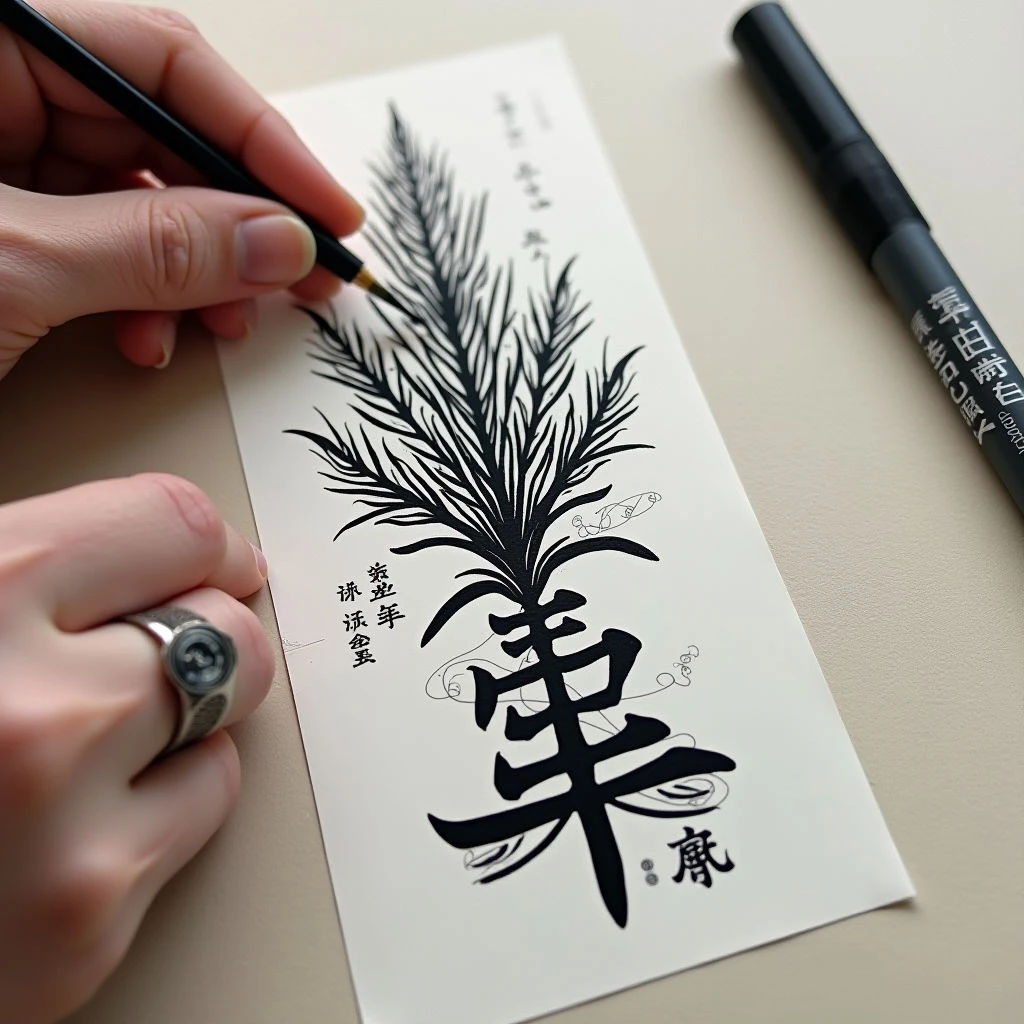
Traditionally, the design is carefully drawn onto translucent paper using fine ink brushes or specialized pens. Each line isn't just placed; it’s rendered with intention, mirroring the flow of energy—or Qi—that guides Chinese aesthetics.
Transferring to Stencil Material
Next, the design is transferred to a thicker stencil material. Rice paper reinforced with thin layers of silk was—and often still is—the preferred choice. This step demands incredible skill; even a slight tremor can ruin the entire image.
The Cutting Process
Once stabilized, the artist uses a sharp blade—often made from bamboo or obsidian—to meticulously cut away the areas that won't be inked. This requires intense focus and an understanding of negative space, a core principle in Chinese painting.
A Sacred Moment
Finally, the stencil is gently pressed onto the skin, ensuring complete contact before carefully lifting to reveal the transferred design. It's more than just a transfer; it’s a sacred moment, honoring generations of artisans who have perfected this practice.