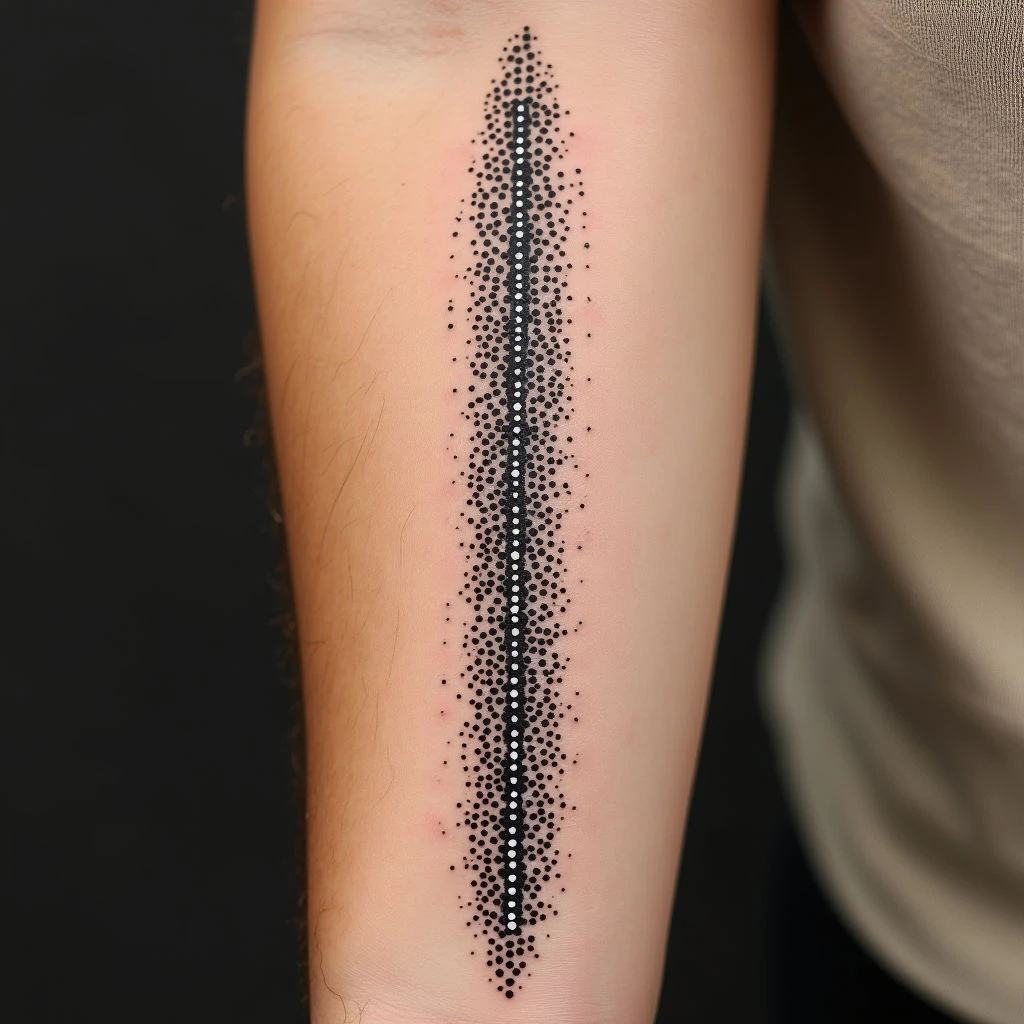
That simple line – a black stripe on the skin – it carries stories far older than any written record. Western eyes might see minimalism, but for Aboriginal people, this mark holds deep cultural meaning. It's more than just ink; it’s a whisper from the Dreamtime.
Understanding the Dreamtime
The Dreaming, also known as Dreamtime, is central to Aboriginal spirituality. It's a timeless realm where ancestral beings shaped our land and established its laws. Think of it as the foundation upon which everything rests.
The Significance of a Black Stripe
A black stripe can echo the journey lines carved into the landscape by creator spirits. These aren't just geographical markers; they represent life’s passage, our connection to family and ancestors, and our commitment to ancient laws.
Resilience and Kinship
Often, a single, unbroken line symbolizes resilience – that ability to keep going even when things are tough. Imagine a river relentlessly carving its path through stone; that’s the kind of strength it represents. It also speaks to kinship—the powerful bonds connecting us to our community and those who came before.
The Depth of Connection
The richness of the black ink itself signifies how enduring these connections are—something timeless, something that won’t fade. It's a constant reminder of who we are and where we come from.
Dot Painting: A Living Narrative
Consider dot painting, a technique deeply rooted in our traditions. Each tiny dot isn't random; it represents a word, a story, a connection. When you put countless dots together to form a stripe, that becomes a living narrative etched onto the skin.
Cultural Respect is Essential
If you're considering such a design, please remember the importance of cultural respect. It’s vital to engage with Aboriginal artists and communities directly—to ensure authenticity and avoid appropriation. The land speaks through these symbols; take the time to listen carefully.