
Covering a black tattoo can seem daunting, but it's really an opportunity—a chance to refresh your skin with some new art. The boldness of blackwork makes it perfect for creating striking cover-ups, though careful planning is essential.
The Challenge: Working With Darkness
Black ink absorbs a lot of light. Just layering new designs on top can easily lead to a muddy, unclear result. The trick is to embrace the existing tattoo and use its darkness as part of your canvas.
Creative Approaches for Black Cover-Ups
-
Geometric Patterns
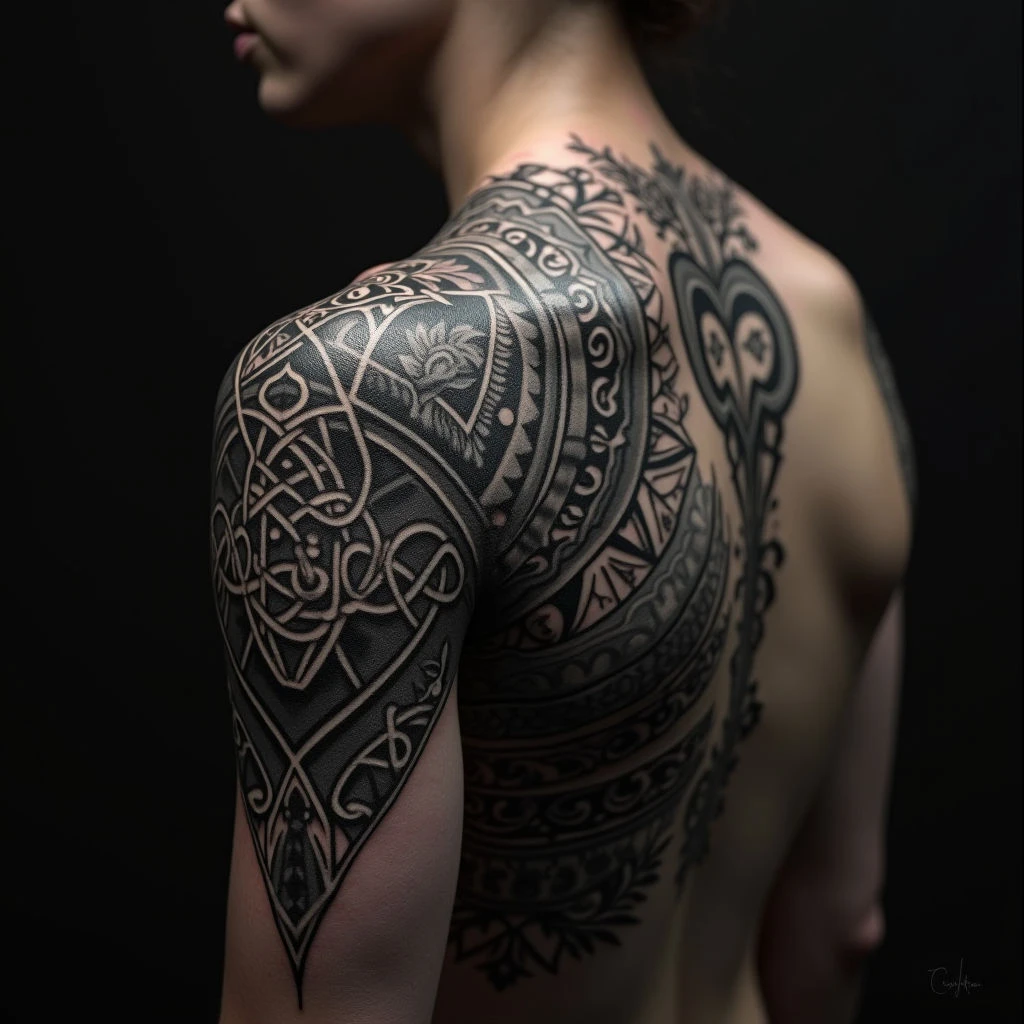
Intricate geometric patterns, especially those with sharp angles and contrasting negative space, can cleverly hide the original ink. Islamic designs are fantastic—their complexity creates real visual depth. Think about tessellations, where a tile or shape is repeated; they’re incredibly adaptable. -
Blackwork Transformations
Expand the existing tattoo with more blackwork. This creates a seamless look, almost as if the original design was always part of the new one. -
Dark Art & Imagery
Use dark and moody imagery—skulls, ravens, gothic architecture—to create a dramatic cover-up. The existing black ink can even become part of the artwork itself; imagine the darkness of a skull’s eye socket. -
Abstract Designs
Abstract patterns using different densities of black ink and negative space can effectively camouflage unwanted tattoos.
Key Considerations for Success
- Artist Expertise: Find an artist experienced with cover-ups, especially those involving black ink. Their knowledge is invaluable.
- Design Complexity: More complex designs generally offer better coverage, but they’ll also require more session time and investment.
- Size & Placement: A larger cover-up is often needed to completely hide the original tattoo. Think carefully about placement, considering existing lines and contours.
Ultimately, a successful black tattoo cover-up isn't just about hiding something; it’s about transforming a challenge into an artistic statement.