Celtic tattoos offer a striking blend of ancient symbolism and artistry. They’re deeply rooted in the cultures of Ireland, Scotland, Wales, Cornwall, and Brittany—designs that resonate with those seeking connection to their heritage or spiritual beliefs.
A Look Back at Celtic History
The Celts were known for their intricate metalwork, illuminated manuscripts, and rich oral traditions. Their art often showcased complex knotwork patterns, spirals, and depictions of nature—motifs that have been beautifully preserved in tattoo designs.
Understanding the Symbols
Let's explore some popular Celtic symbols:
-
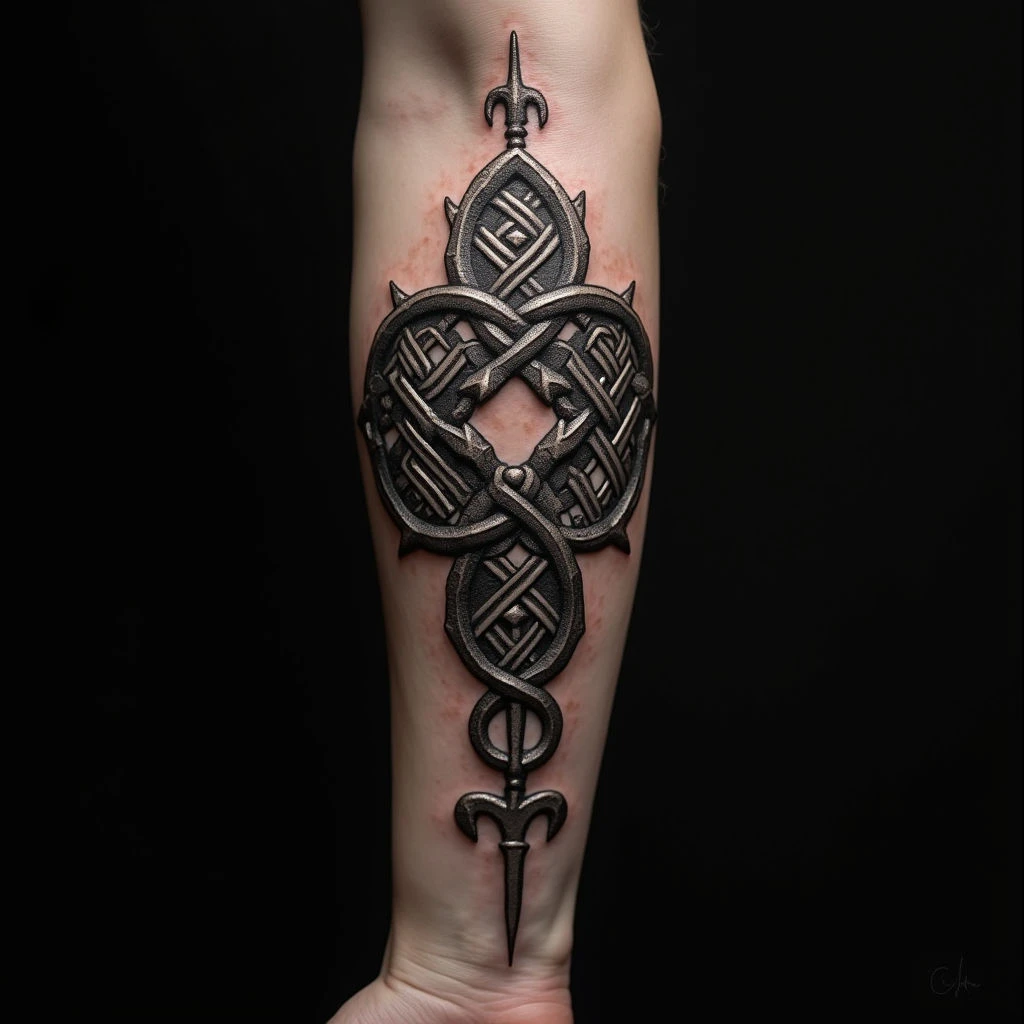
Celtic Knotwork (Nótaí)
These interwoven lines represent eternity, interconnectedness, and the cyclical nature of life. The lack of a clear beginning or end in many knots symbolizes this ongoing journey. -
Triskelion (Trinity Knot)
This spiral shape embodies progress, competition, and existence—the past, present, and future. It’s also linked to Celtic deities and spiritual concepts. -
Celtic Cross
A fusion of Christian symbolism and pre-Christian Celtic traditions, the Celtic cross combines a traditional cross with a circle—representing eternity and the connection between heaven and earth. -
Animals in Celtic Lore
Animals like wolves (loyalty, family), stags (nobility, strength), boars (courage), and birds (freedom) hold deep meaning. Their depictions often symbolize personal qualities or ancestral connections.
Designing Your Tattoo
When planning your Celtic tattoo, think about placement and size. Knotwork patterns often look great wrapping around arms or legs, while a smaller cross or animal symbol might suit a wrist or ankle well. Adding blackwork or dotwork can add depth and visual interest.
Finding the Right Artist
It's important to find a tattoo artist experienced in Celtic art. This ensures your design is executed with precision and respect for the tradition. Discuss your desired meaning and incorporate personal elements—it’s about creating something truly unique.