


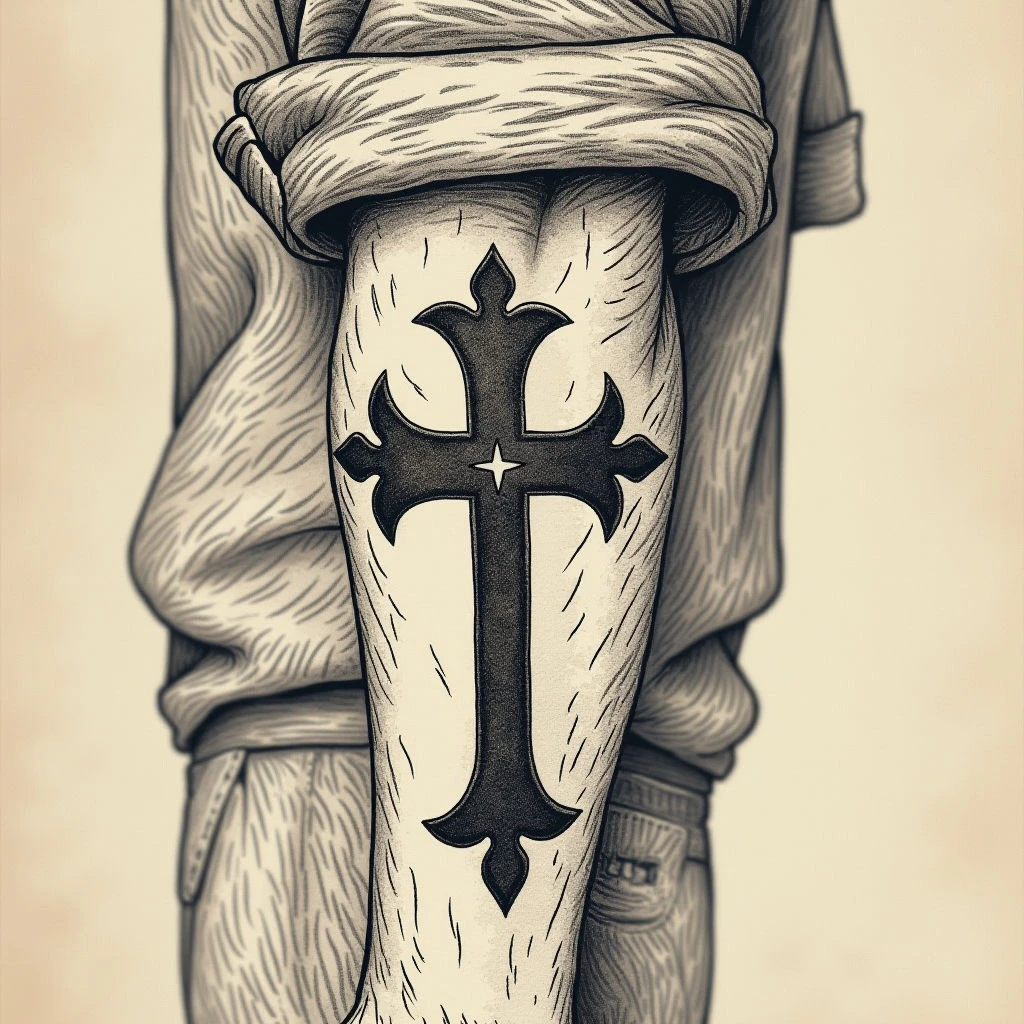
It’s an image you recognize instantly—the cross. It carries a weight far beyond its simple shape, and when it appears as a tattoo, it becomes a powerful statement.
Christian Roots
Of course, the most common association is with Christianity. The cross represents the crucifixion of Jesus Christ—a symbol of sacrifice, redemption, and unwavering faith.
The Latin Cross
A simple Latin Cross – just a vertical line crossed by a horizontal one – often embodies this core Christian belief. But the story goes much deeper.
Ancient and Cultural Significance
Long before Christianity embraced it, the cross held meaning for various ancient cultures. Consider the Celtic Cross, with its intricate ring of knots—it beautifully blends Christian symbolism with pre-Christian Celtic imagery, representing both eternity and interconnectedness.
Beyond Religion: Symbols of Hope and Heritage
Then there’s the St. George's Cross—a bold red cross on a white background, an emblem deeply tied to England.
Sailors often chose cross tattoos too, and not always for religious reasons. The 'St. Andrew’s Cross,' shaped like an X, served as a symbol of hope and protection at sea—a way to invoke the patron saint of Scotland and pray for safe passage home. It's a stark reminder of those lost to the ocean.
Personal Meaning in Modern Times
Today, a cross tattoo can be deeply personal. It might be a tribute to loved ones, a declaration of faith, or simply an appreciation for its striking aesthetic.
Ultimately, the meaning is intertwined with your individual story and beliefs—the power lies not just in the symbol itself, but in what it represents to you.