
Time moves on—it’s a certainty. We mark it with dates, the milestones of our lives. A death date tattoo isn't about morbidity; it's often a deeply personal way to remember, accept, and even celebrate a life lived.
Understanding the Symbolism
Beyond just displaying a date, these tattoos can carry layers of meaning. Imagine a clock slowly decaying, intertwined with natural forms—a visual representation of time’s constant flow. Or consider geometric patterns blended with skeletal imagery; it's an elegant way to acknowledge mortality.
The presentation itself matters too. The date doesn't have to be plain. A futuristic font, for example, can hint at our enduring fascination with time and how we measure it.
Creative Design Ideas
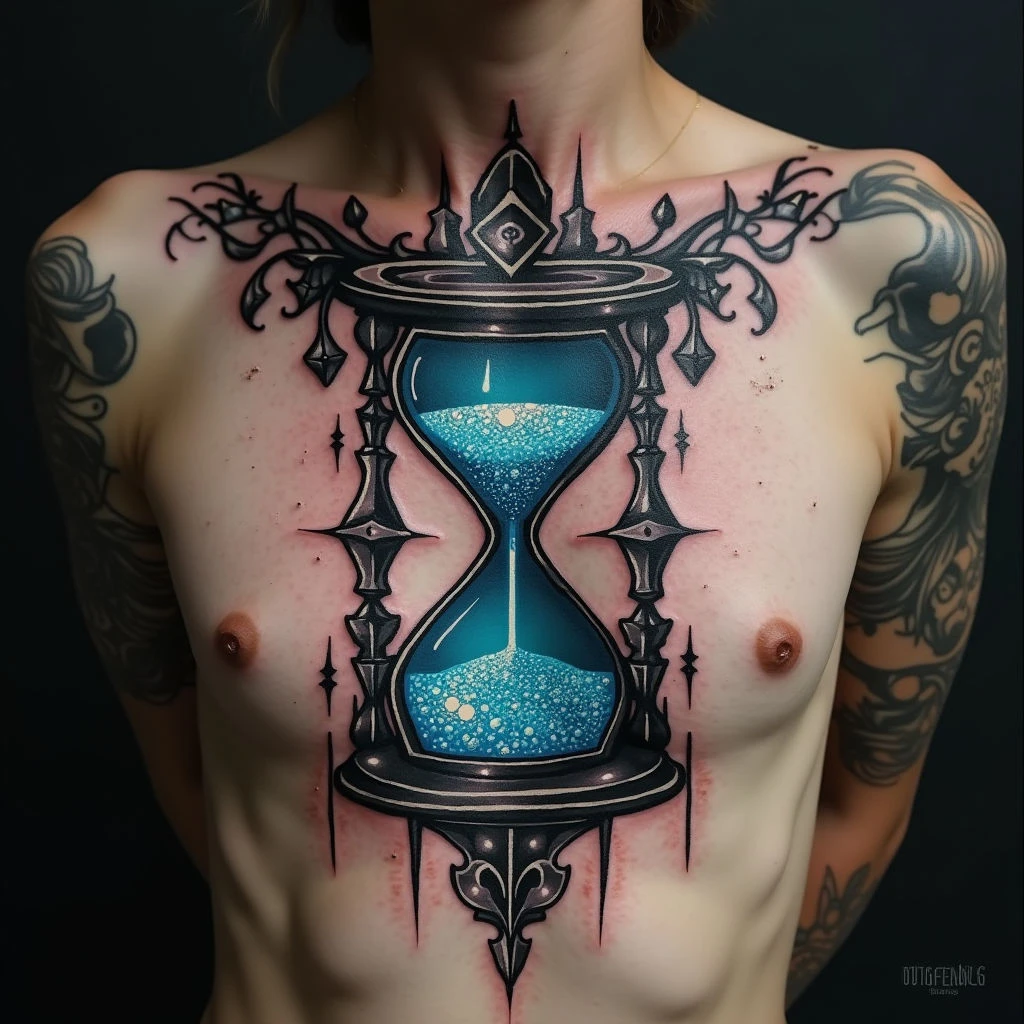
Let’s move beyond simple numbers. Picture a stylized hourglass, filled with particles that seem to glow—a powerful image of how quickly time passes.
You could also incorporate constellations tied to the birth or death date; it's like creating a personal map of the cosmos, marking someone’s place within it. Or perhaps a biomechanical heart, with the date subtly etched into its gears—a striking blend of life and machinery.
Placement: Where Meaning Resides
The location of the tattoo is important, too. A wrist tattoo might serve as a constant reminder of mortality. A piece on your chest could feel like a guardian’s presence.
Placing it on the sternum, close to the heart, can be particularly resonant—it's almost like marking a moment suspended in time, connected to the rhythm of your heartbeat.