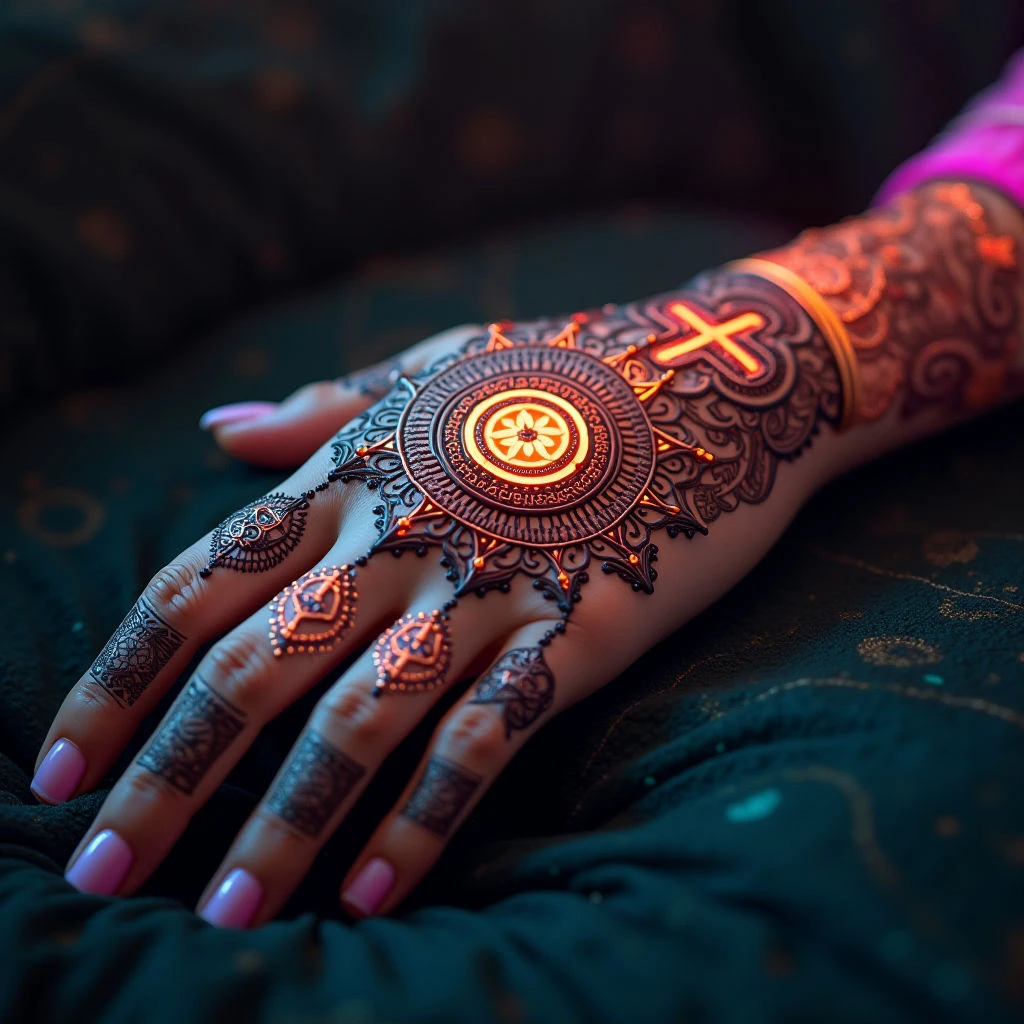
Henna, often called mehndi, is more than just beautiful body art; it's a practice rich in history and tradition. Across cultures—from India to Africa, the Middle East, and beyond—henna designs carry deep symbolic meaning, each pattern telling a story or expressing hopes for the wearer.
A History Rooted in Culture
The tradition of adorning skin with henna stretches back thousands of years. Initially used in religious ceremonies, and for celebrations like weddings, it also served as a form of protection against negative influences—a testament to its profound cultural significance.
Decoding the Symbols
While interpretations can shift from region to region, certain symbols are widely recognized. Let's look at a few:
-
Paisley (Buta)
Represents fertility, prosperity, and love—common in Persian and Indian designs. -
Floral Patterns
Symbolize beauty, grace, and femininity. -
Geometric Shapes
These can represent various elements: triangles for strength, circles for eternity, and diamonds for a prosperous future. -
Animals (Elephants, Peacocks)
Often symbolize wisdom, good fortune, and royalty. -
Hands & Feet
The hands are believed to attract good fortune, while the feet offer protection against negative spirits—a fascinating detail.
Henna Today
Nowadays, henna is frequently used simply for its aesthetic appeal. However, many people still incorporate traditional symbols to connect with their heritage or express personal beliefs. Even when a design isn't meant to convey a specific meaning, the artistry and beauty remain captivating.