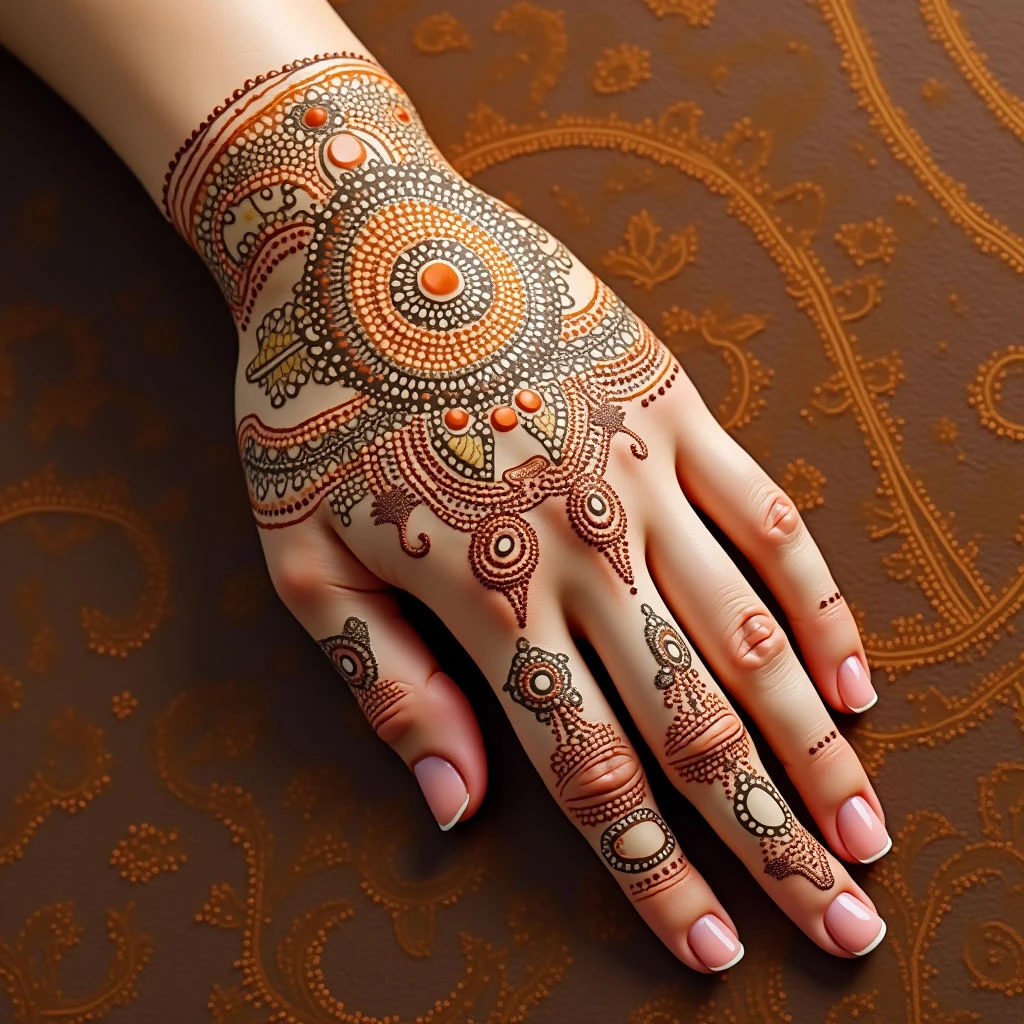
Welcome, beauty seekers. Let's explore the whispers of our ancestors through the delicate art of Mehndi—a practice often linked to South Asian traditions, but with surprising echoes in the storytelling and dot paintings of my people, the Aboriginal Australians.
Mehndi, much like our Dreamtime stories, is a language. It's a way to share joy, blessings, and connection—and these simple designs honor that tradition while deeply respecting the cultural significance of both art forms.
We’ll find inspiration in the ochre-stained hands of elders, the patterns carved into ancient rock formations, and the spirit animals guiding us through our lands. It's a beautiful blend.
Understanding Aboriginal Symbolism
Before you begin, it’s important to understand that every dot and line in Aboriginal art carries meaning. These designs aren't meant to be exact copies—they are an homage, a gentle echo of the stories held within the land.
Easy Design Ideas
The 'Wombat's Path'
This design mirrors the winding paths wombats carve through the bush, symbolizing resilience and our connection to the earth. Simply create a dot pattern following a curved line across your hand—add small, stylized leaf shapes along the path to represent nourishment.
'Emu Feathers'
The emu is a powerful spirit animal representing strength and guidance. Start with a central teardrop shape (like a feather) made of tightly packed dots, then radiate lines of smaller dots outward to mimic the barbs.
'The Seven Sisters Constellation'
Inspired by the traditional story of the Pleiades, arrange seven small dot clusters in a gentle curve. These represent the stars and their journey across the night sky—connect them with delicate lines to enhance the sense of movement.
A Note on Respect
When adapting cultural art forms, respect is everything. Take time to research the significance of symbols before using them, and always approach this craft with humility and appreciation.