Geometric tattoos have become incredibly popular, and it's easy to see why. Their intricate designs aren’t just visually appealing; they often carry deep spiritual or philosophical weight.
What Exactly Is Geometric Tattooing?
Geometric tattooing is all about using precise shapes, lines, and patterns to create detailed artwork. Think sacred geometry, mathematics—it pulls inspiration from a lot of different places. The level of precision required means you're looking at artists with serious skill and an eye for detail.
Common Geometric Symbols & Their Significance
Let’s explore some of the most popular symbols:
-
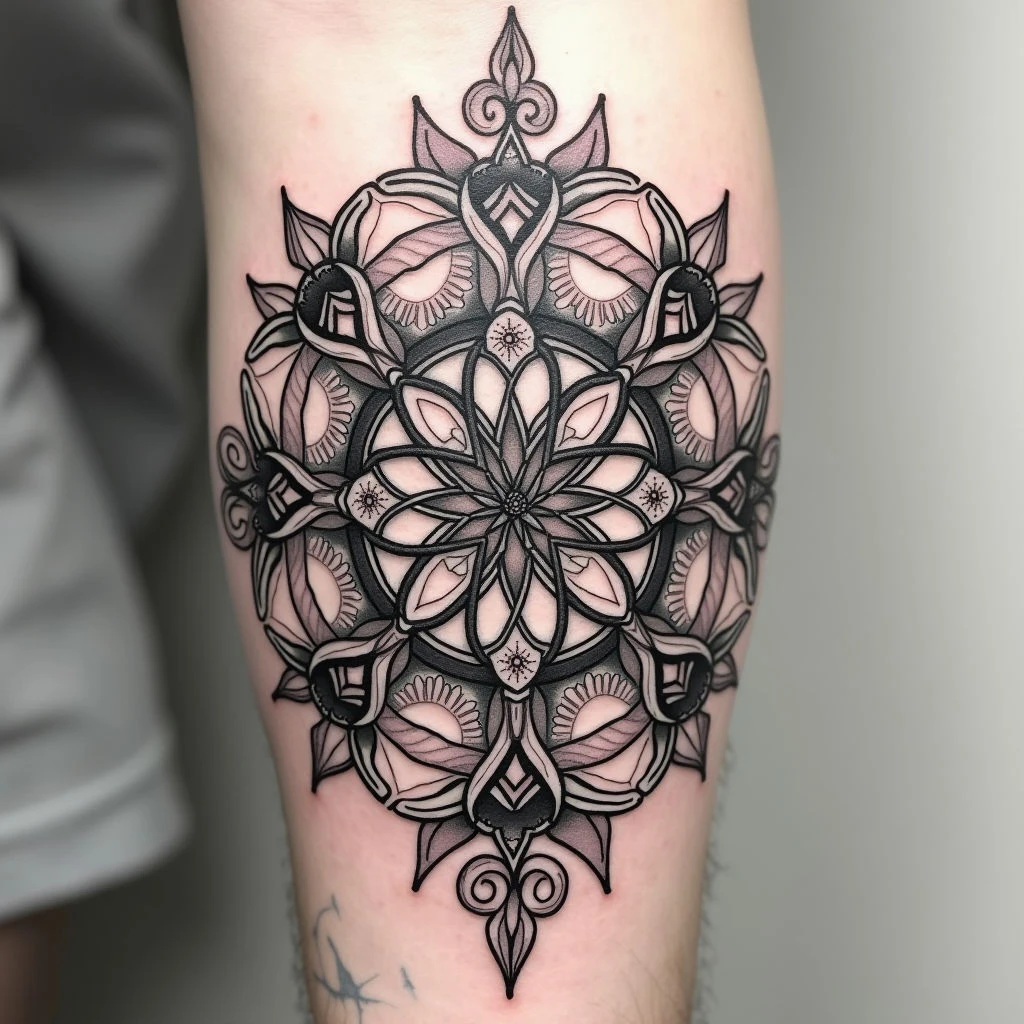
Mandalas
Originally used in Hindu and Buddhist meditation, mandalas represent the universe as a whole. A mandala tattoo often symbolizes a spiritual journey toward balance and harmony. -
Fractals
These repeating patterns found in nature speak to infinite growth, interconnectedness, and the sheer beauty of complexity. They can represent personal evolution or a connection to something larger than yourself—a feeling I know many people seek. -
Metatron's Cube
This shape is believed to contain all five Platonic solids, essentially the building blocks of everything. It’s a powerful symbol representing cosmic order and harmony. -
Seed of Life
A foundational pattern in sacred geometry, the Seed of Life represents potential and growth—a fresh start or a cycle beginning anew. -
Flower of Life
Considered by some to be the blueprint for creation, the Flower of Life embodies unity and interconnectedness. -
Triangles
These often represent balance—the connection between heaven, earth, and humanity.
A Look Back: Historical & Cultural Context
Geometric patterns have appeared in art and symbolism for thousands of years, across cultures worldwide. From Celtic knots to Islamic star patterns, these designs held deep spiritual meaning. Today's geometric tattoos are a way to connect with those ancient beliefs.
Design Ideas & Considerations
Placement is key—geometric tattoos work well almost anywhere. Larger pieces, like mandalas, often look stunning on the back or thigh, while smaller symbols can be placed on wrists or ankles.
Style-wise, you'll see them in traditional blackwork and dotwork, but color can really elevate the visual impact. Neo-traditional styles blend geometric patterns with a more illustrative feel.
Finally, choose your artist carefully! Because of the intricate nature of these designs, experience is essential. Take some time to review portfolios and find someone who demonstrates precision and attention to detail—it makes all the difference.