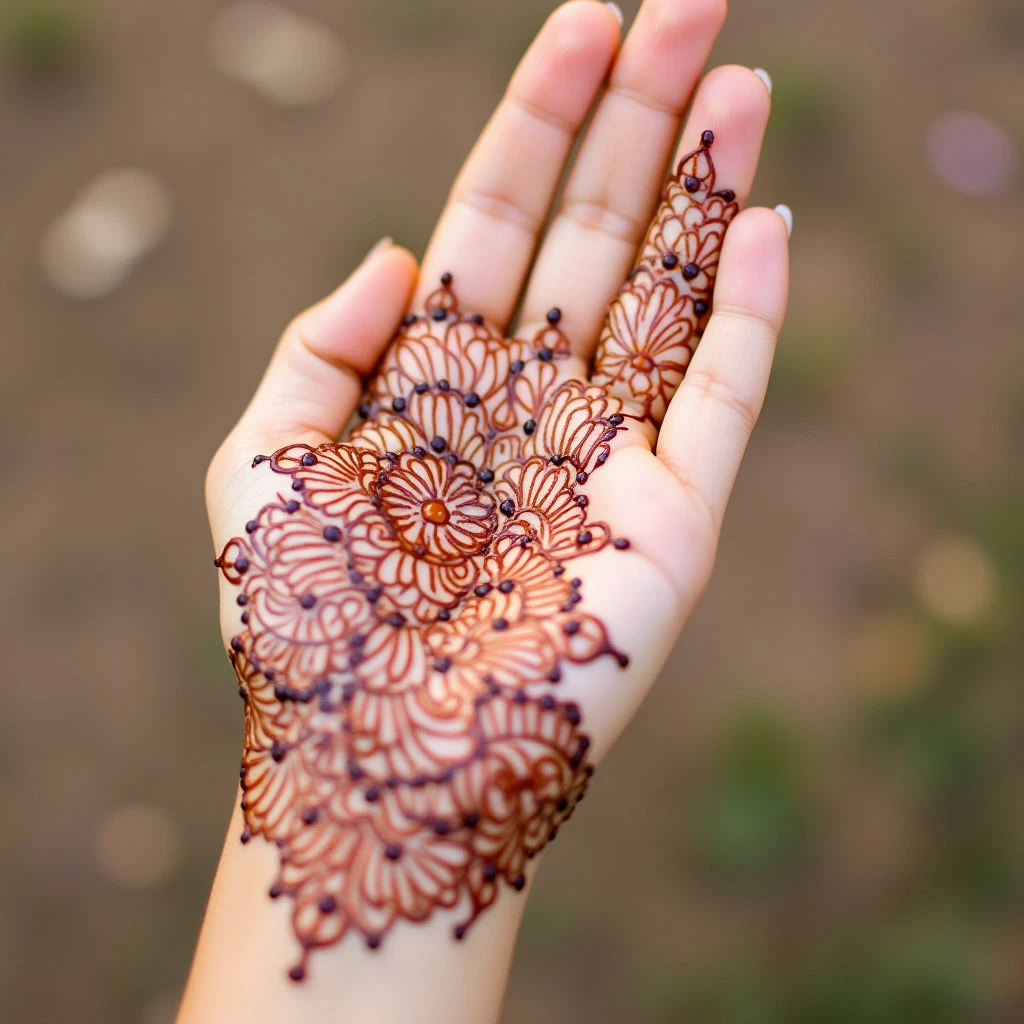
Henna body art—often called Mehndi—comes in a surprising number of styles. Each has its own name and history. Understanding these differences can really deepen your appreciation for this beautiful tradition.
Understanding the Terminology
Let's start with some common terms. You’ll hear these a lot when talking about henna designs.
Mehndi
Primarily used in India, Pakistan, Bangladesh, and Nepal, Mehndi designs are often incredibly intricate. Think floral patterns, paisleys (sometimes called boteh), and geometric shapes—all symbolizing joy, prosperity, and fertility. You’ll most commonly see them at weddings and other festive celebrations.
Sudi
Moving west, Sudi designs originate from Iraq and have spread throughout the Middle East and North Africa. They’re characterized by bolder, more graphic motifs inspired by nature—leaves, vines, even stylized animals. Notice that Sudi often uses thicker lines and a more symmetrical layout compared to Mehndi.
Andalusian Henna
Then there's Andalusian henna, which developed in Southern Spain during Al-Andalus (the period of Moorish rule). This style is known for its striking geometric patterns and repeating motifs—think zigzags, diamonds, and stars. It’s a beautiful reflection of Islamic art and architecture.
Regional Styles Offer Even More Variety
Beyond these core styles, there's a whole world of regional variations. Here are just a few examples:
-
Rajasthani
A vibrant Mehndi style from Rajasthan, India, known for its elaborate floral designs and bold outlines. -
Gujarati
Another Indian Mehndi style with a distinctive mirror-image design, often applied to the palms. -
Lucknowi
Popular in Uttar Pradesh, India, Lucknowi henna is known for its delicate floral patterns and fine lines.
Knowing the names of these different styles can be really helpful. It allows you to communicate your vision more clearly when working with a henna artist—and it gives you a deeper appreciation for the rich cultural heritage behind each design.