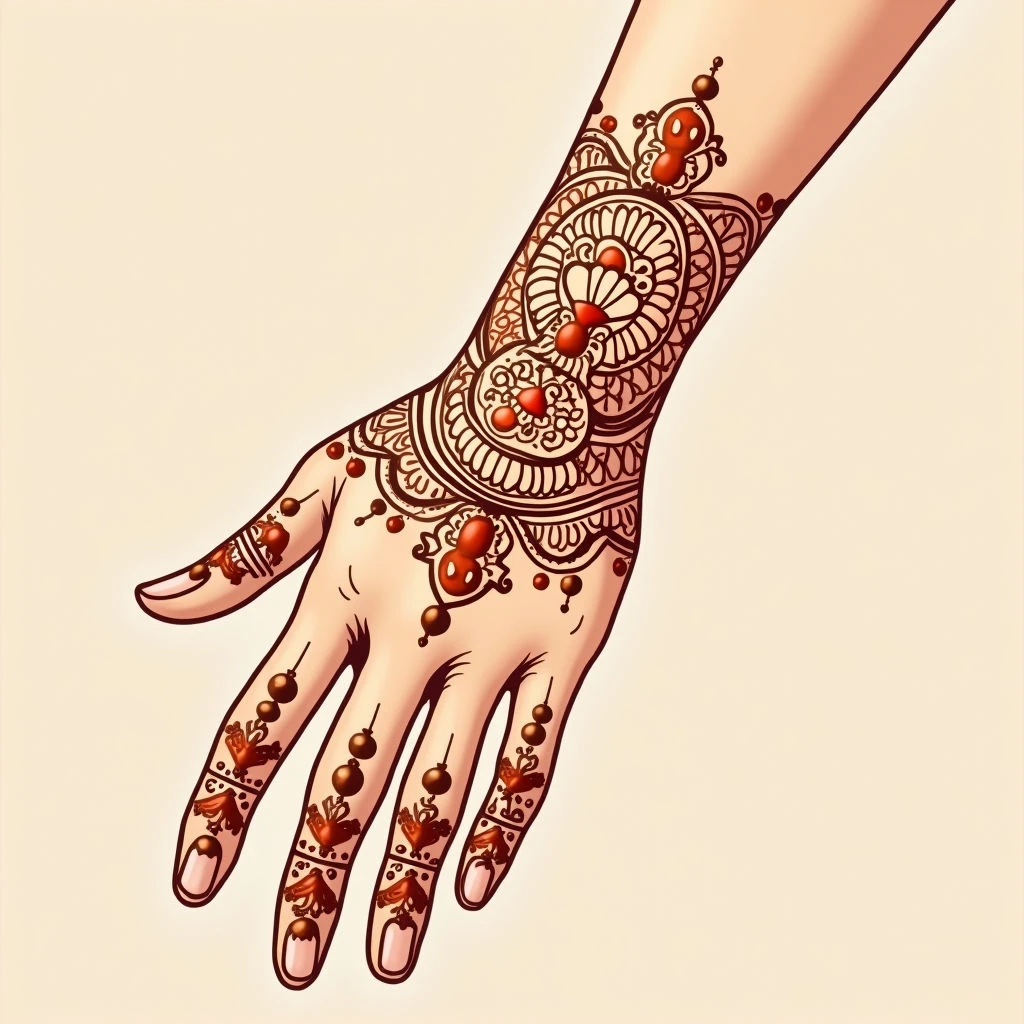
Henna designs are more than just pretty patterns—they’re rich with history, culture, and symbolism. For centuries, across regions like North Africa, the Middle East, South Asia, and parts of Africa, henna has been a central part of ceremonies: weddings, births, celebrations, even spiritual rituals.
Traditional Significance
Traditionally, the deep color of henna was seen as a sign of blessings, good luck, fertility, and protection from negative influences. Over time, different regions developed their own distinct symbolic representations.
Arabic Henna (Hennah)
Arabic designs often feature bold teardrop shapes and intricate floral patterns—symbols of beauty, grace, and a prosperous marriage.
Indian/Pakistani Designs
You’ll frequently see paisleys (representing fertility), elephants (symbolizing strength and wisdom), and peacock feathers (a nod to beauty and royalty).
Moroccan Henna
Moroccan designs are known for their complex geometric patterns, which represent a spiritual connection and offer protection.
Modern Expressions
While deeply rooted in tradition, modern henna design offers plenty of room for personal expression. People often choose designs that reflect their individual stories, beliefs, or simply what they find beautiful.
What It Means to You
Ultimately, the meaning of a henna design is deeply personal. Maybe it’s a tribute to your heritage, a celebration of love, or simply an appreciation for beauty—what matters most is what it means to you. Don't be afraid to experiment with fusion techniques and modern interpretations to create something truly unique that resonates with your story.