Henna, often called Mehndi, is so much more than a temporary tattoo—it's a vibrant tradition with deep roots in history and rich symbolic meaning across cultures. It began in the Middle East and North Africa, but its use has spread worldwide, changing and adapting as it travels.
A History Rooted in Ritual
For centuries, henna adornments have been a key part of celebrations like weddings, births, and religious festivals. These intricate patterns weren't just decoration; they were meant to bring wishes for good luck, prosperity, fertility, and protection.
Decoding Common Motifs
While the specific meanings can shift from place to place, certain motifs appear again and again with powerful symbolism. Let's look at a few:
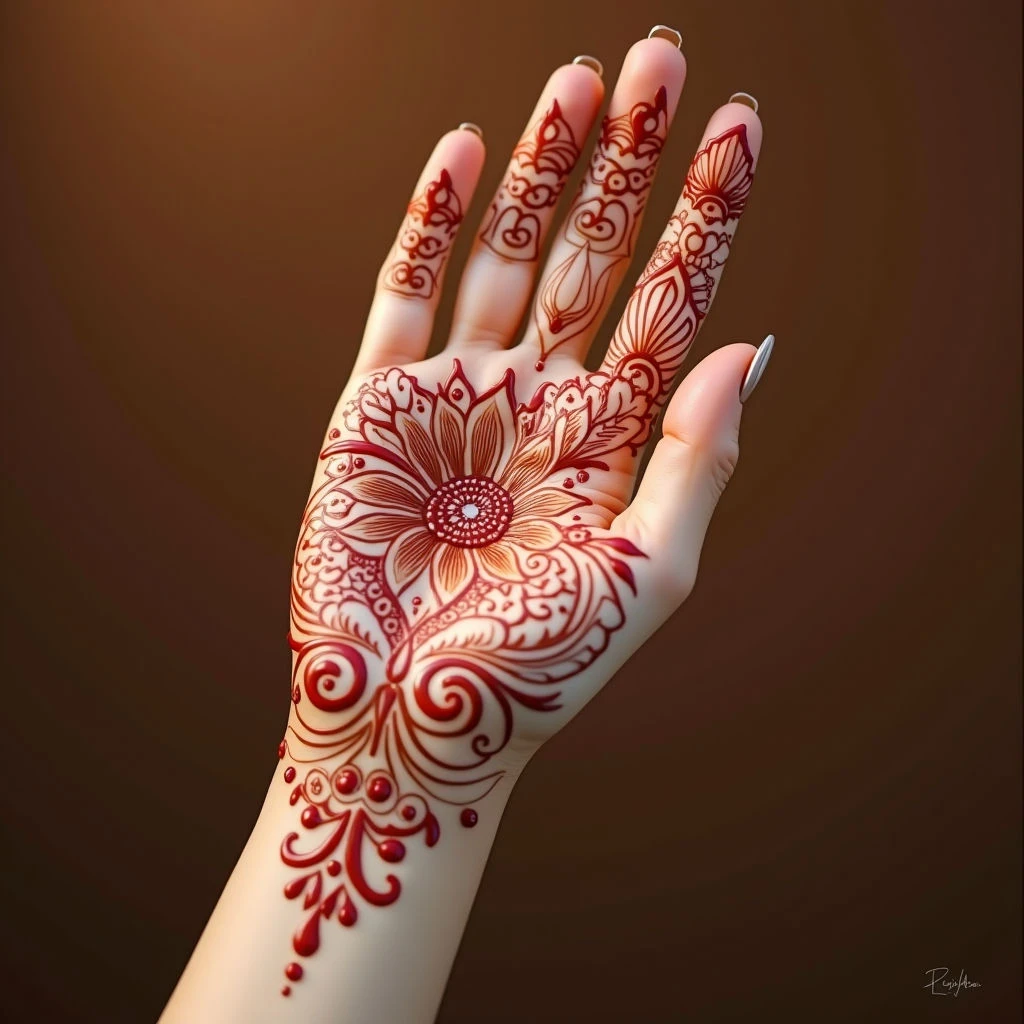
- Paisleys (Buta): Often represent fertility, abundance, and the journey of life.
- Floral Patterns: Symbolize beauty, grace, and femininity.
- Geometric Shapes: Can signify spirituality, balance, and harmony.
- Peacock Feathers: Represent good fortune, beauty, and protection from the evil eye.
- Hands & Feet: Traditionally adorned to represent blessings for the bride and groom; a darker stain is often seen as a sign of strong love.
Cultural Variations
Henna plays a significant role in Indian wedding ceremonies, where the complexity of the design is thought to reflect both the artist’s skill and the bride's beauty. Moroccan henna designs often incorporate Berber symbols with protective meanings, while in Middle Eastern cultures, it’s used for blessings and celebrations.
Beyond Tradition: Personal Expression
Today, henna designs are evolving. While still honoring tradition, people increasingly use them as a form of personal expression, choosing patterns that connect with their own stories and beliefs.