
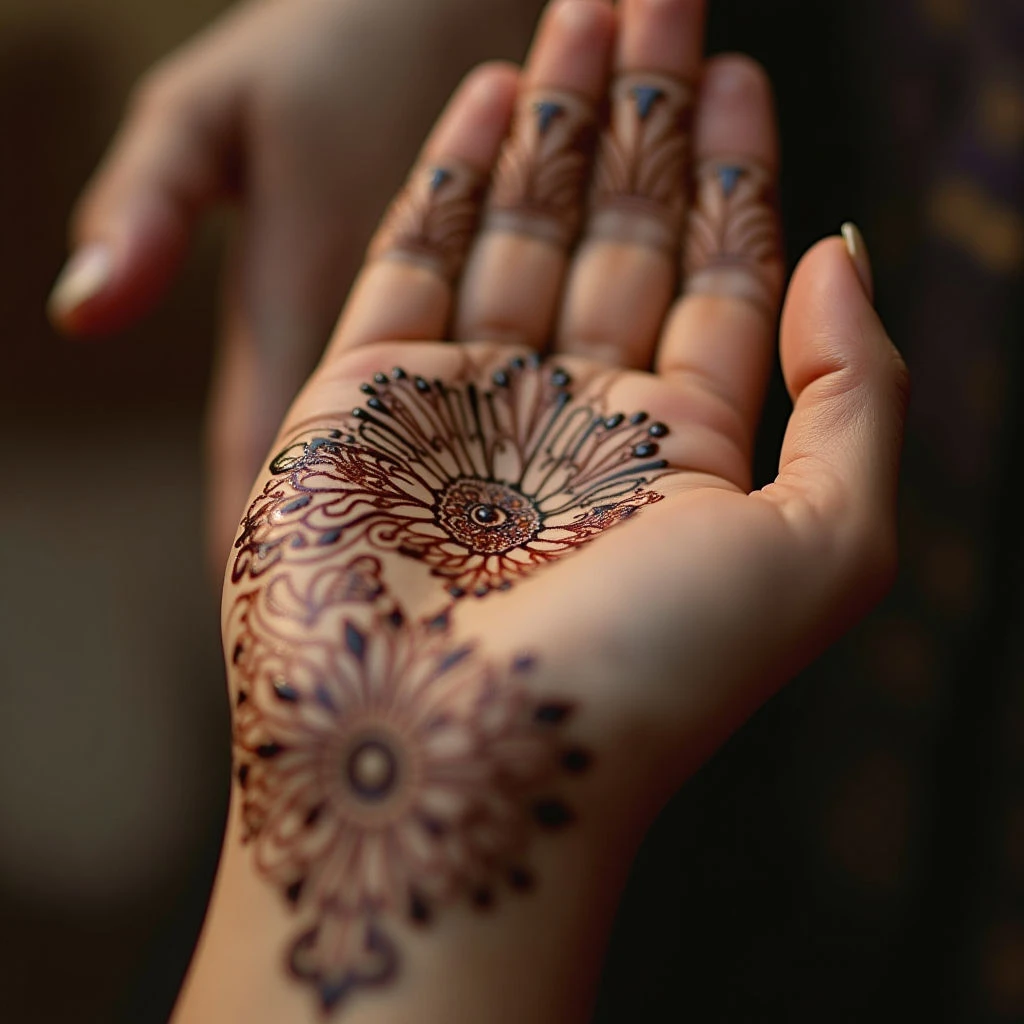
Henna hand tattoos, often called Mehndi, are more than just body art—they’re a tradition steeped in history and meaning. Unlike permanent tattoos, henna uses a natural dye that temporarily stains the skin, usually lasting between one and three weeks.
The Beauty of Mehndi Designs
These intricate designs aren't simply beautiful; they often carry stories or blessings, making them perfect for celebrations like weddings and festivals. The process itself is an art form: a cone-shaped applicator is used to carefully squeeze henna paste onto the hand, creating delicate patterns of leaves, flowers, and geometric shapes.
A Tradition Passed Down Through Generations
Historically, these designs were created by women for other women—a beautiful tradition passed down through generations. It’s a practice that feels deeply personal and connected to heritage.
Henna Today: Blending Tradition with Modernity
While firmly rooted in tradition, henna art has also embraced modern interpretations and styles. There's a real sense of creativity at play.
Exploring Cultural Variations
It’s fascinating to explore the different cultural variations—Indian Mehndi, for example, has a distinct aesthetic, as does North African Henna. Each carries its own unique symbolism and beauty.
From simple dots to elaborate, sprawling patterns, the possibilities with henna are truly endless.