
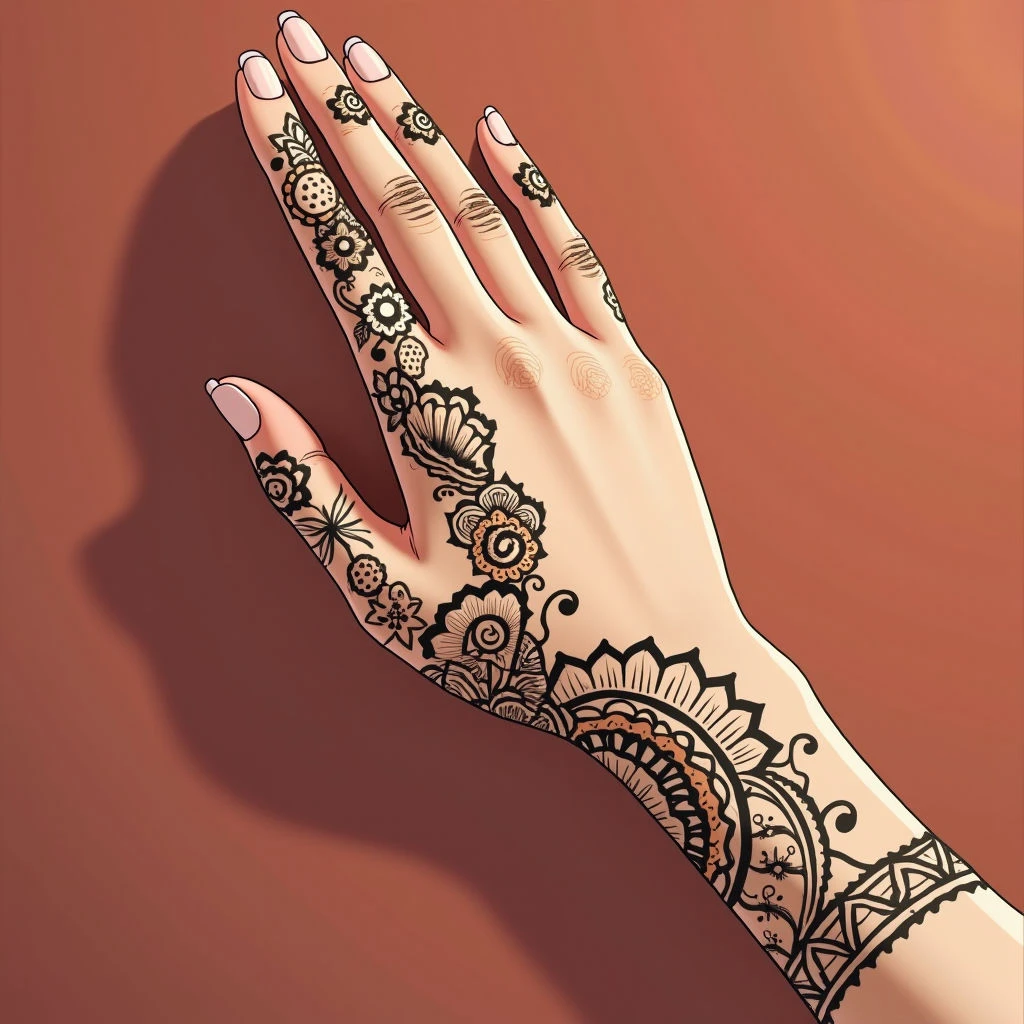
Henna hand tattoos are more than just beautiful adornments—they’re steeped in history and symbolism. These intricate designs have been used for centuries across Africa, Asia, and the Middle East, playing a role in ceremonies, celebrations, and personal expression.
A Journey Through History & Culture
The tradition of adorning hands and feet with henna stretches back thousands of years. It's a practice rich in meaning, often symbolizing blessings, protection, good luck, and joy. Think about Moroccan wedding ceremonies—the bride’s hands and feet are adorned with incredibly detailed henna patterns.
Decoding the Symbols
The beauty of henna lies not just in its visual appeal, but also in the symbolism woven into each design. Let's take a look at some common motifs:
-
Paisley (Buta)
Represents fertility, abundance, and good fortune. -
Floral Patterns
Symbolize beauty, grace, femininity, and growth—a celebration of life’s blossoming. -
Circles & Spirals
Represent eternity, the vastness of the universe, and the continuous cycles that shape our lives. -
Geometric Shapes
Often signify protection, strength, and balance—a visual reminder of inner harmony.
Modern Interpretations
Today, henna tattoos continue to evolve. People are increasingly personalizing their designs, incorporating symbols and elements that hold special meaning for them—creating truly unique works of art.