Irish tattoo designs carry a deep history and symbolism, reflecting Ireland’s rich cultural heritage. They're more than just decorative; these tattoos often tell stories—stories of faith, family connections, the beauty of nature, and ancient mythology.
Common Irish Tattoo Motifs
Let’s take a look at some common motifs and what they represent.
Celtic Knots
Perhaps the most recognizable Irish symbol, Celtic knots are intricate patterns that seem to weave on forever. They symbolize eternity and interconnectedness—the idea that everything is linked in a continuous cycle.
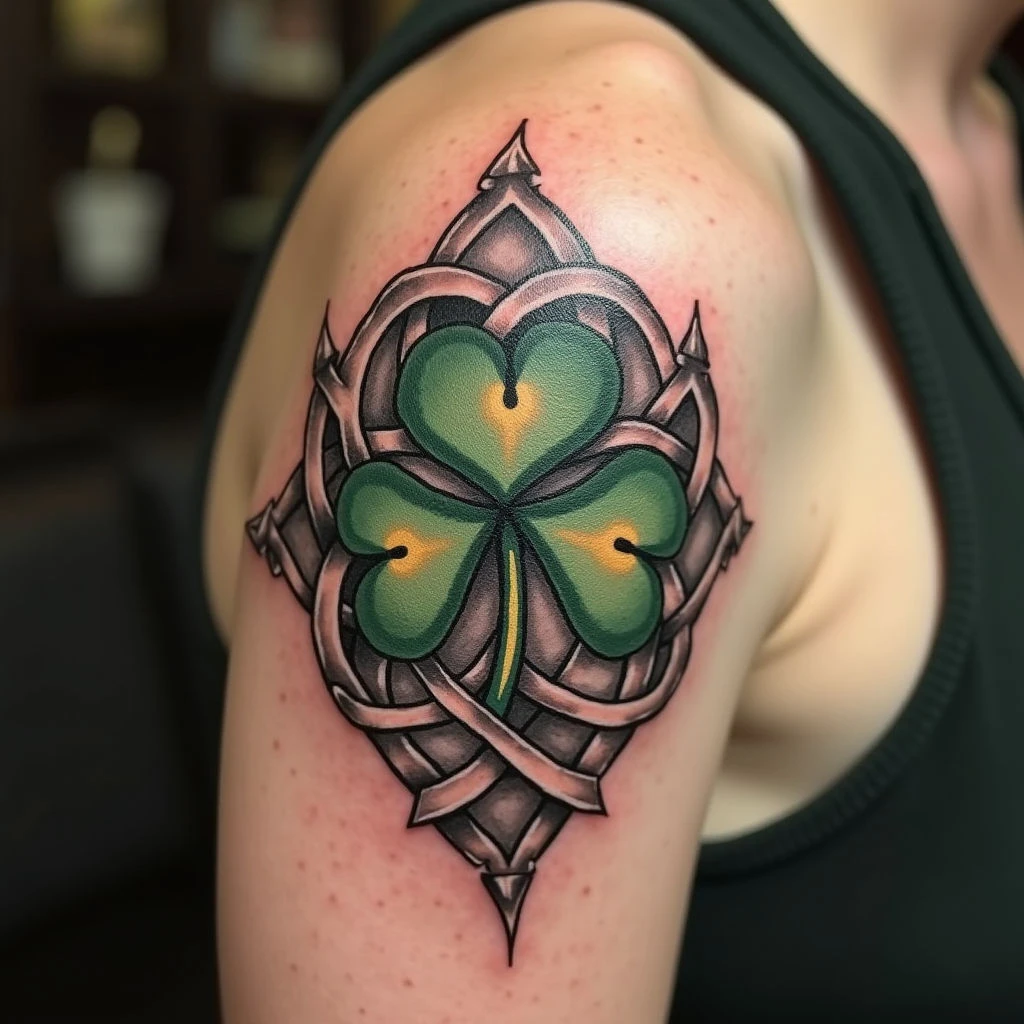
Different variations of these knots carry their own specific meanings. For instance, a triquetra – a three-pointed knot – often represents the Holy Trinity within Christian faith.
Shamrocks (Clovers)
The shamrock is practically synonymous with Ireland. Like the Celtic knots, it also represents the Holy Trinity. Beyond its religious meaning, a shamrock is widely associated with good luck and fortune.
Harps
The harp holds a special place as Ireland’s national symbol. It embodies music, heritage, and the country's unique cultural identity. Seeing a harp tattoo often brings back feelings of nostalgia and a strong connection to Irish roots.
Celtic Crosses
The Celtic cross beautifully combines Christian symbolism with traditional Celtic artistry—intertwined knotwork that’s visually striking. It represents faith, eternity, and a sense of spiritual guidance.
Animals: Wolves, Bears, Eagles
Various animals also hold significant meaning in Irish culture. Wolves often represent strength and loyalty; bears symbolize courage and protection; eagles signify freedom and a connection to the spirit world.
Cultural Sensitivity is Key
When you’re considering Irish tattoo designs, it's really important to approach them with respect and a genuine understanding of their cultural context. Avoid taking symbols out of their original meaning—take the time to learn about their significance and honor their origins.
If you’re unsure, consider talking to someone knowledgeable in Celtic culture or traditions for guidance; it's a thoughtful way to ensure your tattoo is meaningful and respectful.