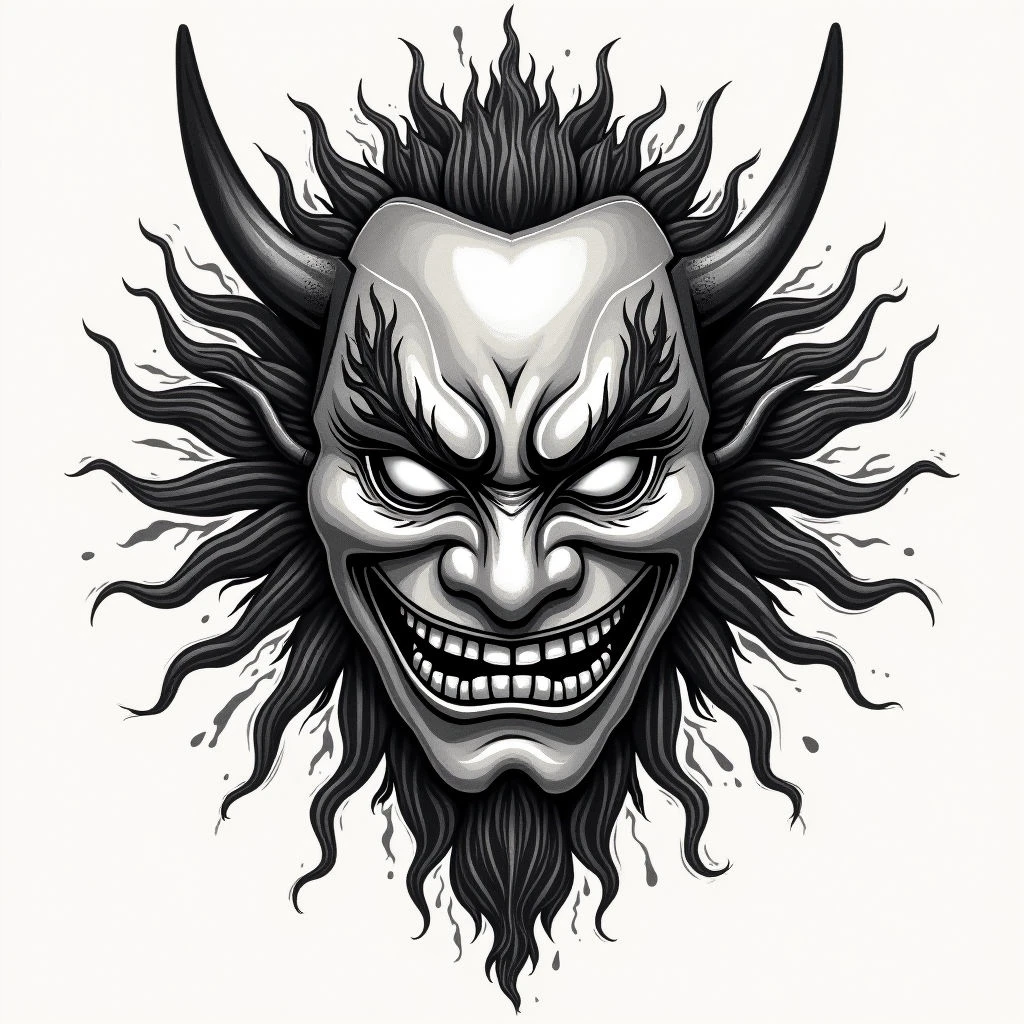
The Hannya mask—it’s more than just a striking image; it's a symbol steeped in Japanese folklore and theater. Emerging from Noh masks, this representation of a female demon consumed by jealousy and rage embodies feminine fury and transformation. These tattoos aren’t merely beautiful; they hold deep meaning and offer a powerful form of self-expression.
History & Symbolism
The Hannya mask first appeared in the 14th century, initially used in Noh performances to portray female demons. It gained popularity as a tattoo subject over time, representing intense emotions—jealousy, anger, and suppressed rage. The symbolism is layered, though; while it acknowledges challenging feelings, the hannya can also signify resilience and embracing inner strength.
Design Variations
Hannya mask designs are incredibly diverse. You'll find everything from simple black outlines to elaborate depictions with multiple horns, piercing eyes, and dynamic expressions. Some artists incorporate cherry blossoms or other traditional Japanese motifs—each detail adding another layer of meaning.
Placement & Size
Where you place the tattoo matters. It’s about conveying a specific message. Common areas include the back, shoulder, arm, and thigh. The size can range from small and subtle to large and impactful—it's really about personal preference.
Choosing Your Design
When selecting a Hannya mask tattoo, think about your own story. What do you want to express? Are you looking to represent inner strength, acknowledge past struggles, or simply appreciate the artistry of it all? I always recommend consulting with an experienced tattoo artist—they can help bring your vision to life.