Japanese masks aren't just decorative; they’re steeped in cultural significance, often depicting deities, spirits, demons, or characters from traditional theater. When someone chooses to have these powerful images tattooed on their skin, it carries layers of symbolism deeply rooted in Japanese folklore, spirituality, and artistry.
Exploring Common Types
Let’s take a look at some frequently seen masks and what they represent.
Noh Masks
These iconic masks are central to Noh theatre, a classical Japanese dance-drama. Each one represents a specific character – gods, demons, ghosts, women – and the subtle shifts in tilt and movement convey a surprising amount of emotion. For example, a Hannya mask embodies a female demon consumed by jealousy, while an Okame signifies joyous beauty and good fortune. Ultimately, Noh masks often symbolize transformation, duality, and the complex relationship between humans and the supernatural.
Kitsune Masks
Kitsune are foxes in Japanese folklore—known for their intelligence and magical abilities. They can shapeshift into humans, often linked to Inari, the Shinto god of rice, prosperity, and success. A Kitsune mask tattoo might represent cunning, a personal transformation, or simply a connection to something divine.
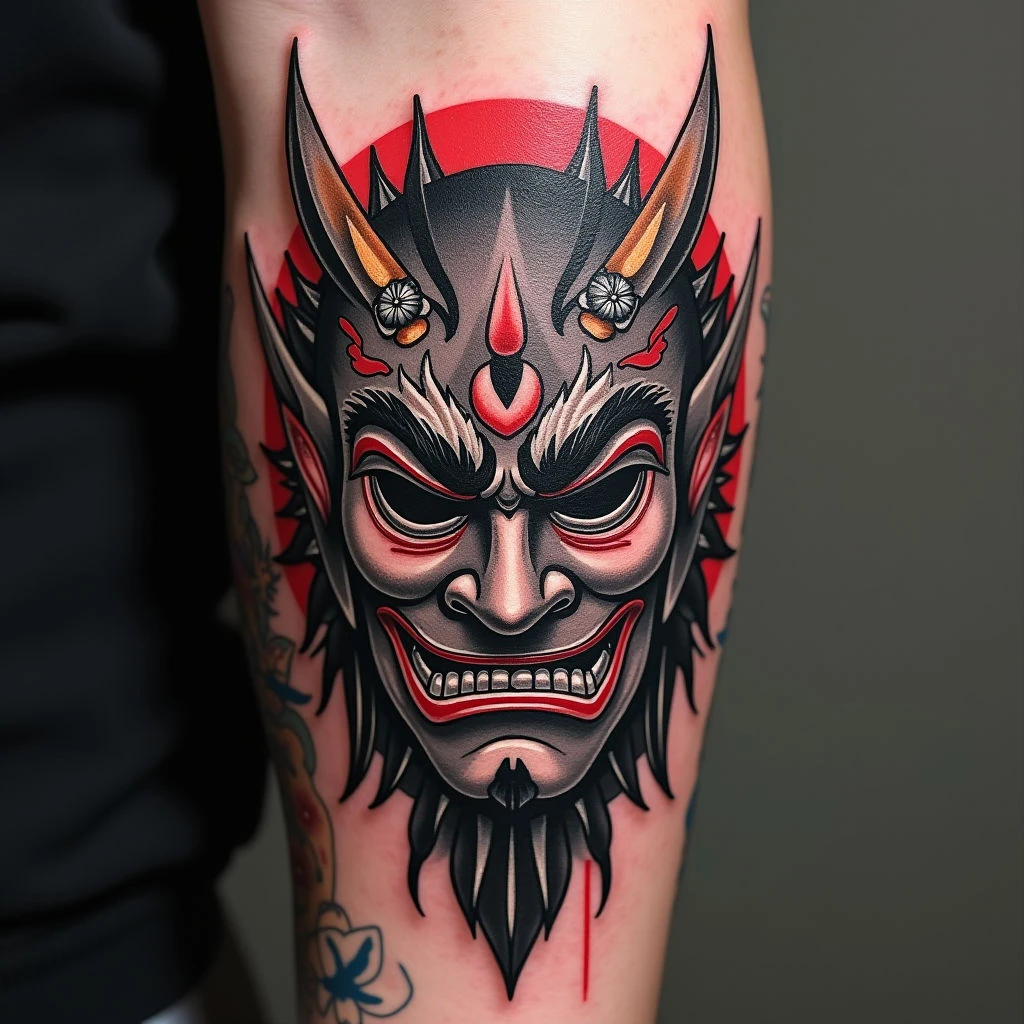
Oni Masks
Oni are fearsome ogres in Japanese mythology. They represent strength and protection, though sometimes they embody chaos. An Oni mask can symbolize overcoming adversity, warding off negative influences, or embracing your inner power.
Hyottoko Mask
This smiling mask is all about humor and good fortune—a symbol of happiness and a carefree spirit. It's a simple, joyful image.
Beyond the Specific Meanings
Of course, Japanese masks in tattoos can represent more than just their individual meanings. They often signify a connection to Japanese culture itself—to its artistry and deeply held beliefs. The style chosen – whether traditional, neo-traditional, or illustrative – further shapes the overall meaning and aesthetic of the tattoo.