Japanese mask tattoos carry deep tradition and symbolism, reflecting centuries of folklore, theater, and spiritual beliefs. These intricate designs offer a powerful way to connect with Japanese culture and express personal meaning.
Exploring Prominent Masks
Let's take a look at some of the most significant masks and what they represent.
Hannya Mask
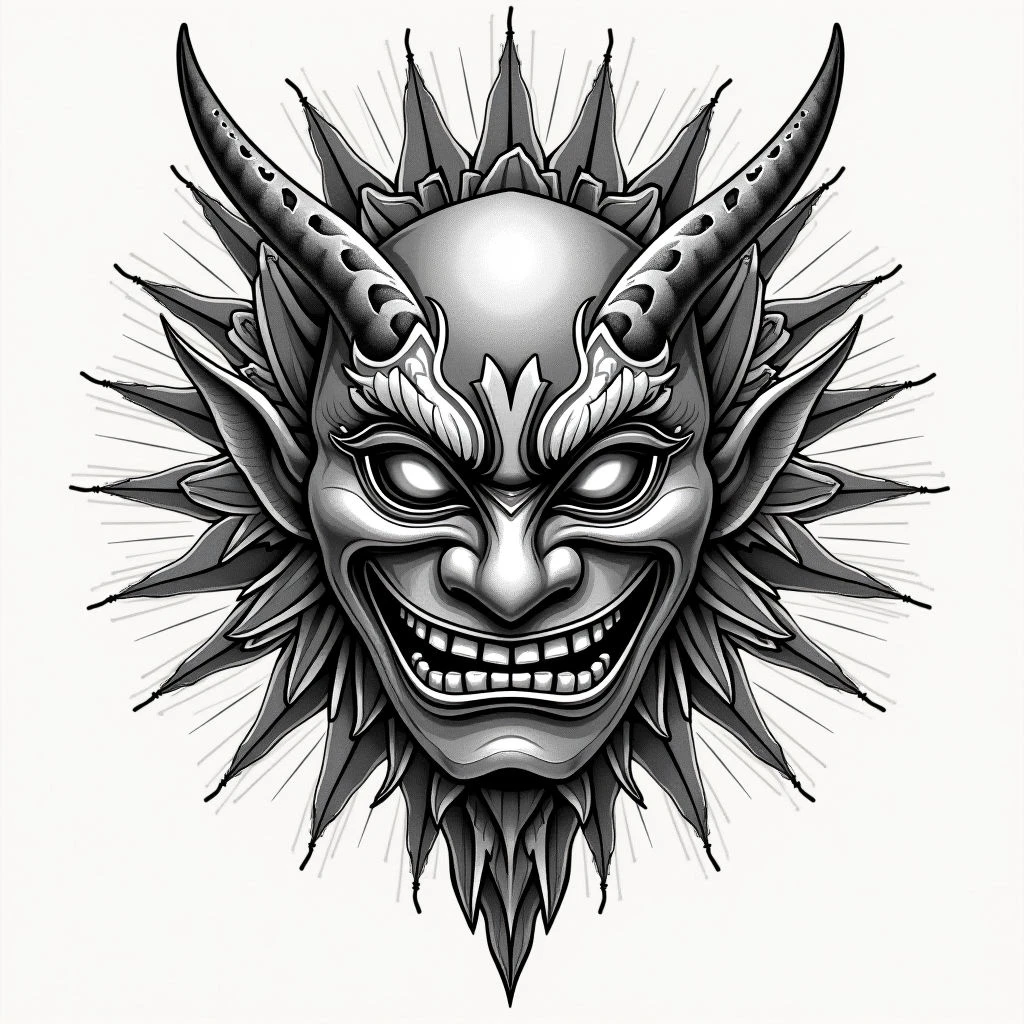
The Hannya mask is likely the most recognizable—it depicts a female demon consumed by jealousy and rage. Originating from Noh theater, it embodies suppressed emotions, inner demons, and the duality of human nature. The number of horns often indicates intensity; more horns generally mean greater fury.
Tengu Masks
These masks portray mountain spirits known as Tengu, frequently depicted with distinctive long noses and beaks. They symbolize strength, wisdom, and mastery in martial arts—often associated with protection and overcoming challenges.
Kitsune (Fox) Masks
Foxes hold a sacred place within Japanese mythology, acting as messengers for the Shinto god Inari. Kitsune masks represent intelligence, cunning, and transformation; depending on the design, they can symbolize prosperity or even trickery.
Hyakki Yagyō Masks
These masks are worn during the Hyakki Yagyō festival, a vibrant parade of demons and spirits. Each mask embodies a unique entity with its own story—often representing overcoming evil or celebrating the supernatural.
Choosing Your Mask
Selecting a Japanese mask tattoo is more than just picking a design; it's embracing a piece of cultural heritage. Understanding the symbolism behind your chosen mask will deepen your connection to this beautiful art form.