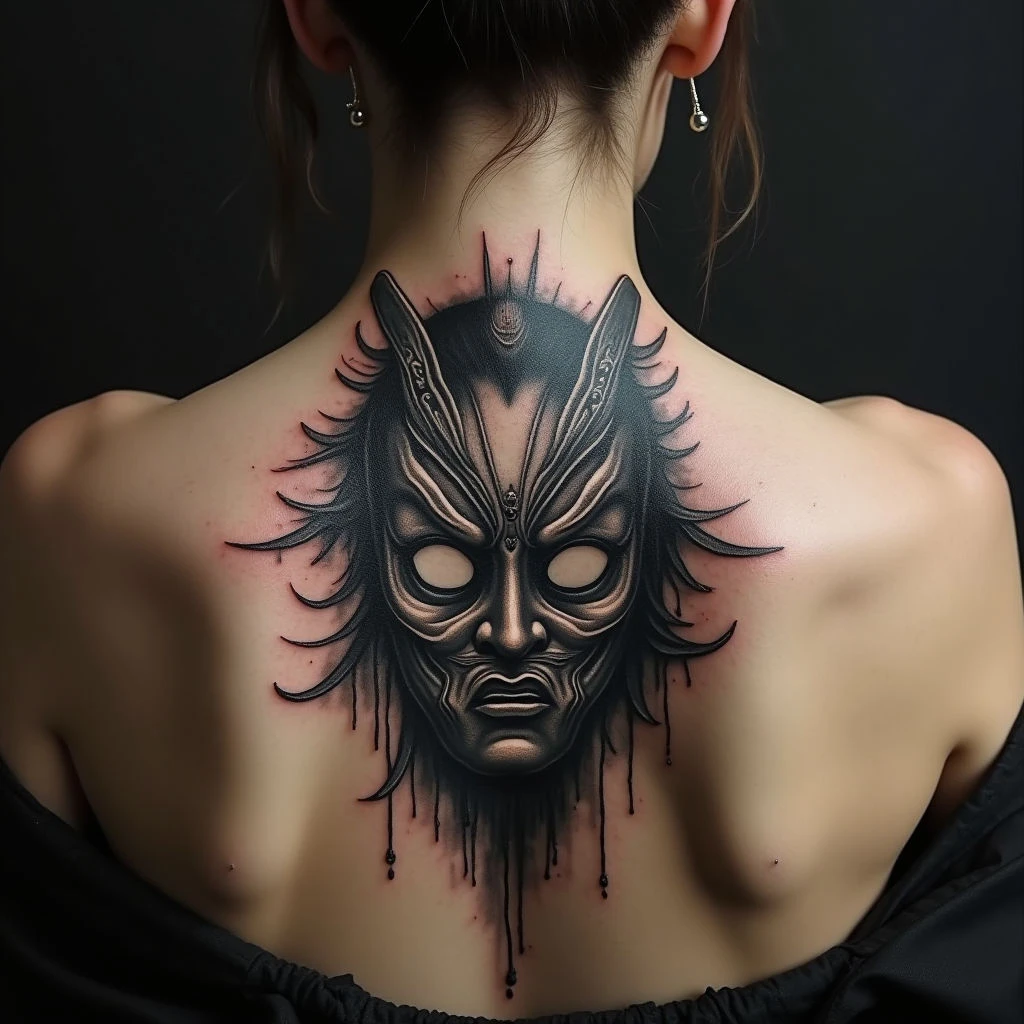
Japanese masks aren’t just beautiful art; they're steeped in cultural meaning, appearing everywhere from traditional theater to ancient folklore. When someone chooses to wear these designs as tattoos, it becomes a deeply personal statement—a powerful symbol of identity, emotion, and the stories we carry.
A Canvas for Strength: Masks & Women's Expression
For women especially, these intricate mask tattoos offer a unique way to express inner strength and resilience. It’s about connecting with Japanese heritage in a visible, meaningful way.
Popular Mask Styles & Their Meanings
Let's look at some of the most sought-after mask designs and what they represent:
-
Kitsune (Fox)
The Kitsune embodies intelligence, cleverness, and a touch of playful mischief. -
Hannya (Female Demon)
This mask often represents suppressed rage or the fierce, untamed feminine spirit—a powerful symbol of inner strength. -
Tengu (Mountain Spirit)
The Tengu is associated with ambition, courage, and a connection to the natural world. -
Noh Masks
Noh masks are incredibly diverse, portraying a wide range of emotions—from joy and serenity to sorrow and tragedy.
Placement & Personal Meaning
Where you choose to place your mask tattoo can add another layer of meaning. A mask on the back, for example, might represent hidden aspects of your personality—parts of yourself that aren't always visible. Placing it on your arm could symbolize a personal journey or a significant chapter in your life.
Finding the Right Artist
It's crucial to find a skilled Japanese tattoo artist who truly understands these cultural nuances. They can help you create a meaningful and beautiful piece that honors the tradition and reflects your personal story.