Japanese writing tattoos are incredibly popular—they’re a beautiful way to express something personal. But choosing the right characters, whether Kanji, Hiragana, or Katakana, is really important. It's not just about aesthetics; you want your tattoo to accurately convey what you intend and show respect for Japanese culture.
Understanding the Scripts
Let's quickly break down the three main writing systems:
- Kanji (漢字): These characters were adopted from Chinese and often carry deep, layered meanings—sometimes with multiple ways to read them. They’re ideal for expressing complex ideas or philosophies.
- Hiragana (ひらがな): This is a phonetic script primarily used for native Japanese words and grammatical particles. Think of it as the foundation of written Japanese.
- Katakana (カタカナ): Another phonetic script, but mainly used for foreign loanwords—things like "coffee" or "computer"—and onomatopoeia.
Popular Tattoo Options
Here are a few common choices, along with their meanings:
- Strength (力 – Chikara): A really popular choice for anyone wanting to represent inner strength and resilience. It’s a powerful message.
- Love (愛 – Ai): A classic, of course! Often paired with imagery like cherry blossoms to enhance the feeling.
- Dreams (夢 – Yume): Represents aspirations and pursuing your goals—a reminder to keep striving.
- Family (家族 – Kazoku): A beautiful way to honor loved ones; a lasting tribute.
Design Considerations
Beyond just choosing the right characters, there are other things to think about.
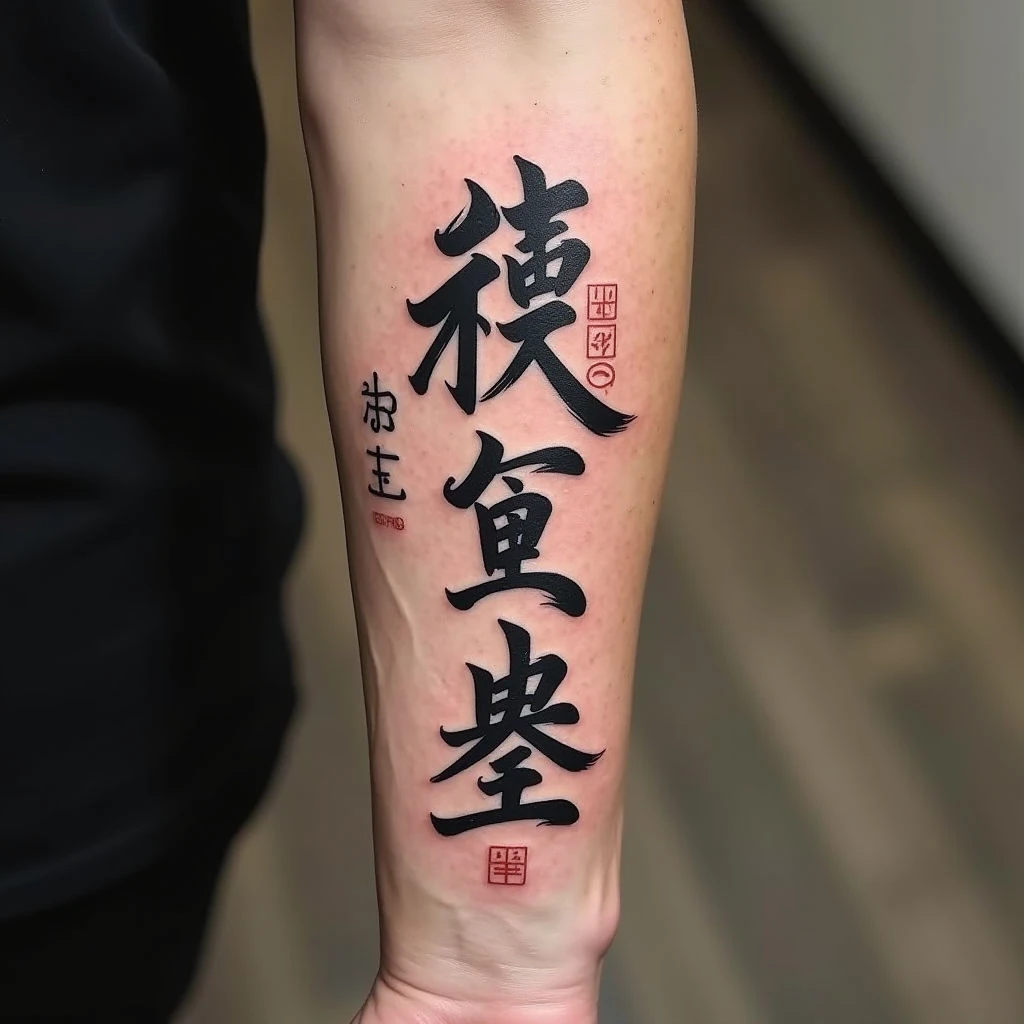
- Placement: Consider how the writing will flow with your body’s shape. The back, forearm, or thigh are common choices.
- Style: Traditional Japanese calligraphy often uses bold brushstrokes and elegant designs. Modern tattoos can mix styles for a unique look.
- Accuracy: This is absolutely critical! Please, please consult with an artist who truly understands both the language and the culture to avoid any misinterpretations—it’s far better to be safe than sorry.