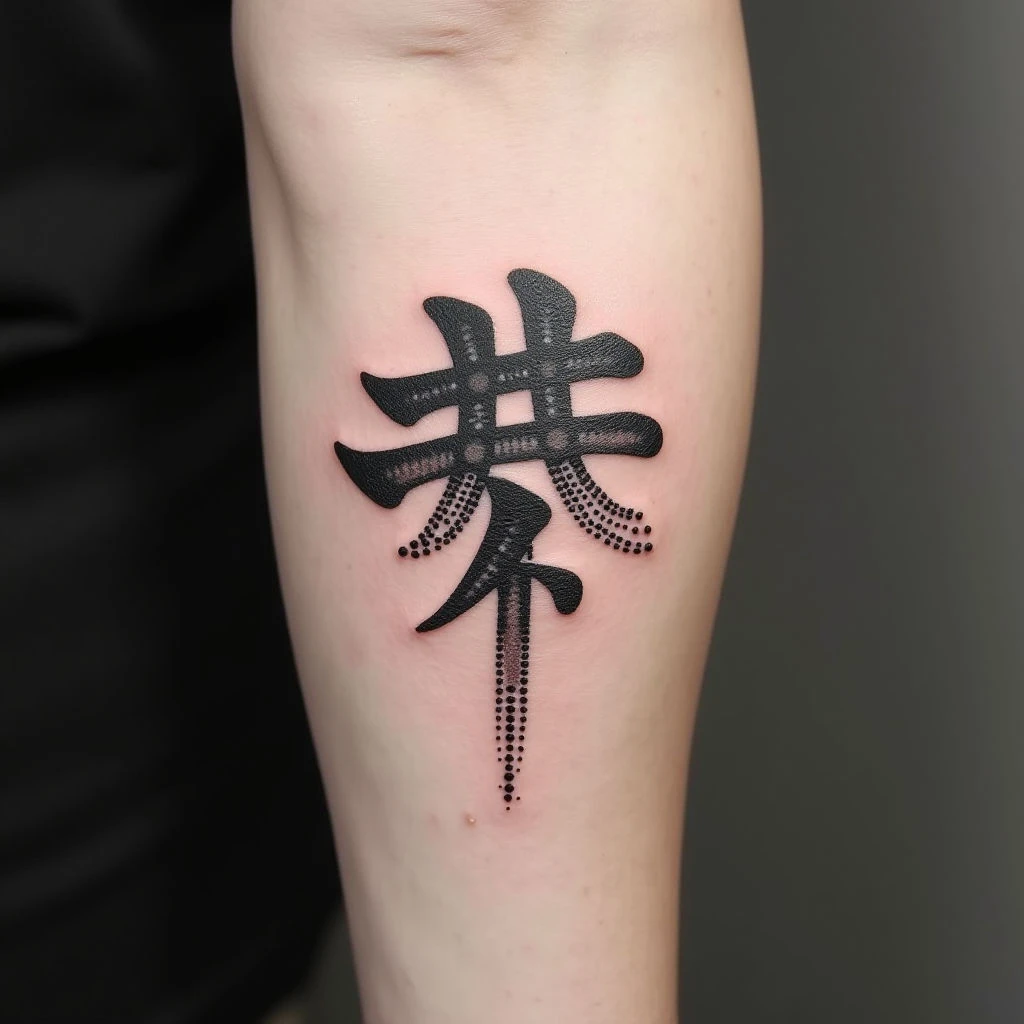
Kanji tattoos are gaining popularity—it's easy to see why. These intricate characters aren’t just words; they carry deep meaning, representing entire philosophies and values. Getting a Kanji tattoo is a thoughtful decision that requires careful consideration of accuracy and cultural sensitivity.
Understanding the Significance of Kanji
Kanji are characters originally from Chinese, adapted for use in Japanese. Each one can represent a single idea—a verb, adjective, or even a whole phrase. Because of this complexity, it's vital to understand exactly what you’re getting before committing to a tattoo.
Popular Kanji Tattoo Designs and Their Meanings
Here are some common choices, along with their significance:
-
Strength (力 - Chikara)
Represents inner strength, resilience, and the determination to overcome challenges. -
Life (命 - Inochi)
Symbolizes vitality, existence, and appreciating life’s preciousness. It's a powerful reminder to live fully. -
Dream (夢 - Yume)
Embodies aspirations, ambitions, and the drive to pursue your goals. A constant nudge toward what you want to achieve. -
Peace (平和 - Heiwa)
Represents serenity, tranquility, and finding harmony within yourself and the world around you. -
Love (愛 - Ai)
Embodies affection, compassion, and a deep connection with others. A beautiful expression of heartfelt emotion.
Important Design Considerations
Getting the design right is key to a meaningful and respectful tattoo. Here's what to keep in mind:
- Accuracy: Double-check that the Kanji is represented correctly. A small error can drastically change the meaning, so consult with an expert or experienced artist.
- Style: The artistic style should complement the character’s meaning. Traditional styles often convey respect for heritage, while modern approaches allow for personal expression.
- Placement: Where you put your tattoo affects its visual impact and overall significance. Popular spots include the arm, leg, back, and shoulder—consider what feels right for you.