


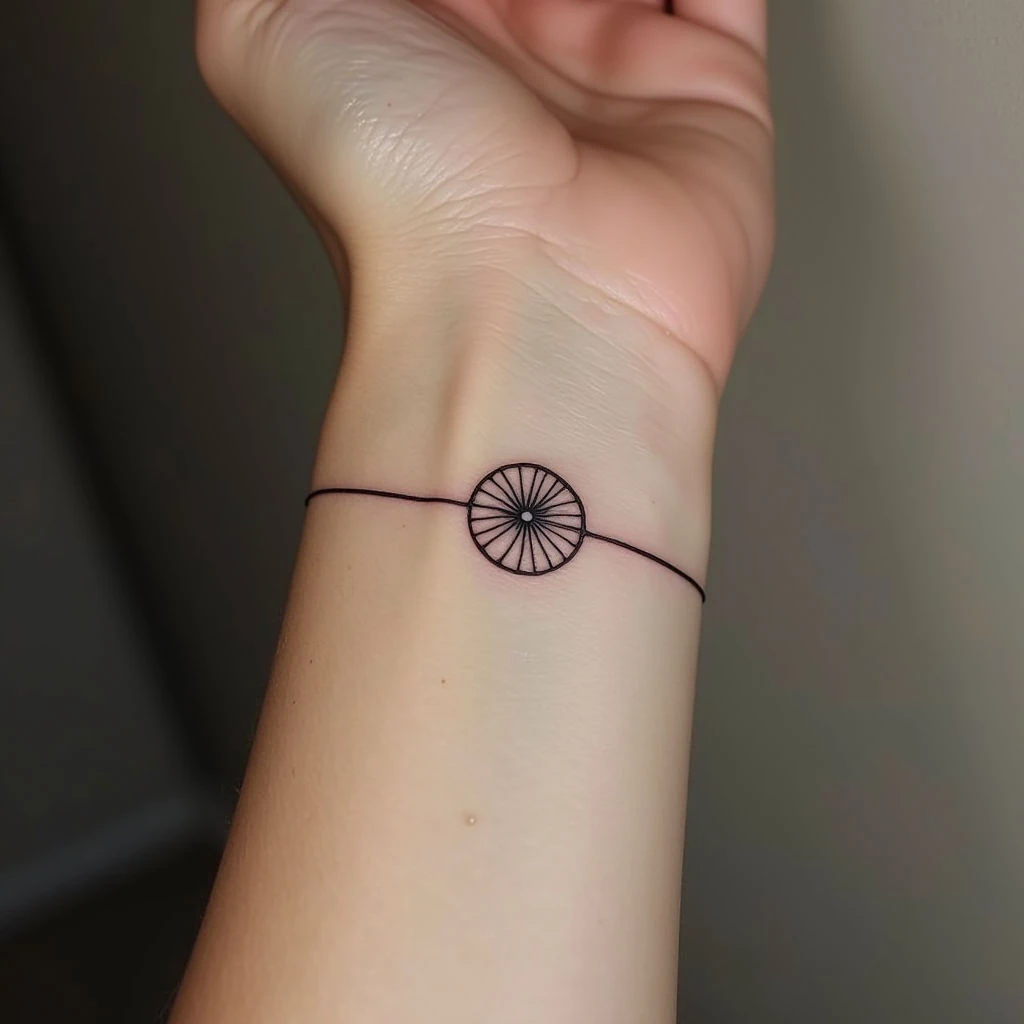
Line band tattoos are becoming increasingly popular—they're powerful symbols of strength, remembrance, and recovery. These designs often feature a simple line circling the wrist, ankle, finger, or even as a neckband.
A History Rooted in Remembrance
The story of line band tattoos begins with mourning. Historically, these bands were worn by people grieving a loss or experiencing significant life changes—a visual reminder and a way to honor those memories.
Beyond Grief: Resilience and Transformation
But the meaning has expanded. Today, line bands often represent resilience and personal growth, especially within communities facing hardship. For those dealing with PTSD or other mental health challenges, a line band can be about setting boundaries—creating clear limits for self-protection.
Placement Matters
Where you place the line band also carries significance. A wristband can symbolize a commitment to healing and moving forward, while an ankle band might represent stability and being grounded.
Solid or Dashed: Intentional Style
Even the style—solid versus dashed—can convey a specific message. A solid line often signifies unwavering strength, while a dashed line suggests ongoing recovery and hope for what's to come.
More Than Just Ink
Ultimately, a line band tattoo is more than just ink on skin. It’s a personal story—a testament to overcoming challenges and finding strength from within.