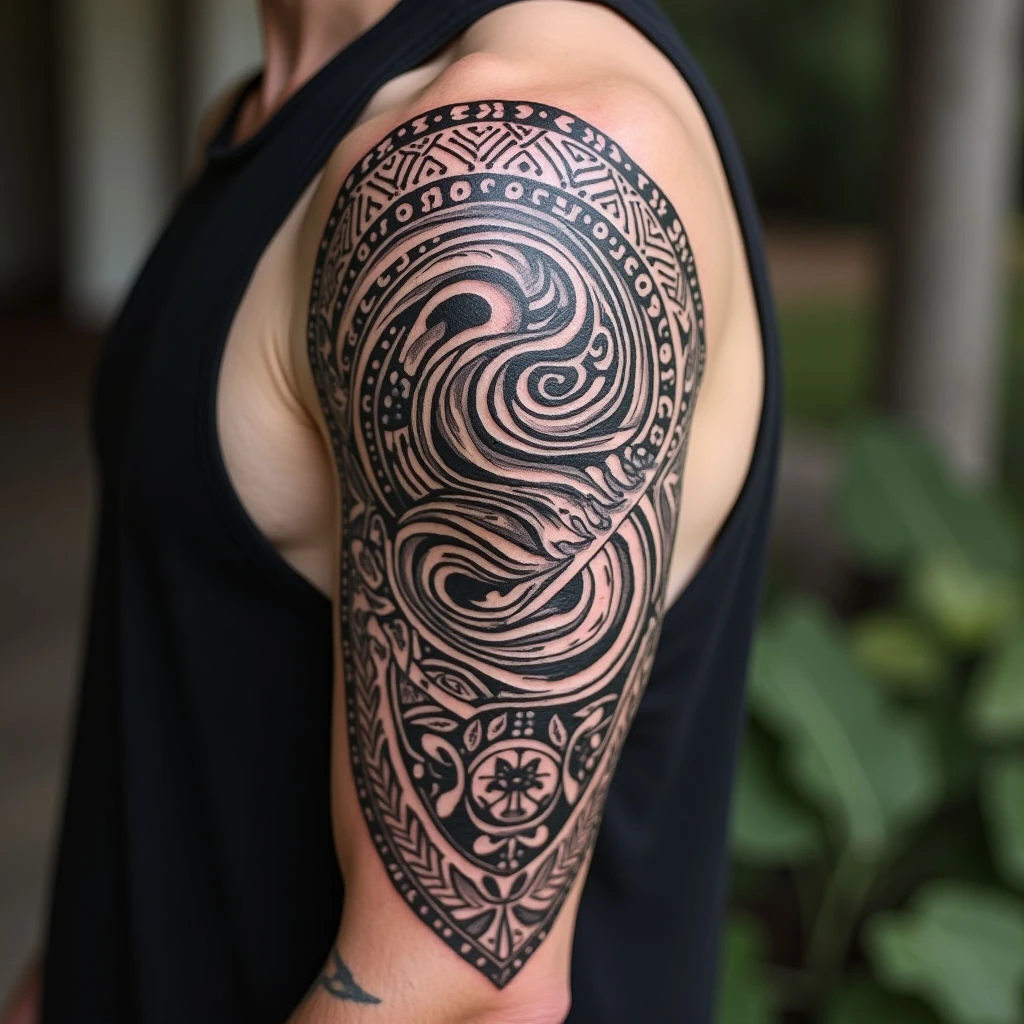
Maori tattoos carry deep cultural meaning for men, representing ancestry, status, and personal stories. These intricate designs—traditionally 'Tā moko' for women and 'Kirituhi' for men—are more than just body art; they’re living narratives etched onto the skin.
Understanding Kirituhi
Kirituhi isn't like generic tribal tattoos. It’s deeply rooted in Maori tradition, with designs incorporating spirals (koru), hooks (hei matau), and other symbols—each carrying specific meanings passed down through generations. Authenticity really hinges on respecting cultural protocols; often, that means consulting a tohunga tā moko, a traditional tattoo artist.
Popular Maori Tattoo Symbols for Men
Let's look at some common symbols. They’re all rich with history and significance.
-
Koru
Represents new life, growth, and a spiritual journey. It’s a powerful symbol of beginnings. -
Hei Matau
The fish hook symbolizes the lineage of Maui, the demigod who fished up the North Island. It’s a symbol of provision, safety, and prosperity—a really important motif. -
Moko Kauae (Chin Moko)
Traditionally worn by men, these intricate chin markings tell stories of ancestry and identity. They’re incredibly personal. -
Ataata
These patterns resemble ripples on water, symbolizing communication and connection—a visual representation of relationships.
Placement Ideas for Men
Where you place your Kirituhi is a personal choice, but common locations include the arms (upper arm or forearm), chest, legs (calf or thigh), back, and shoulders. The design’s complexity often dictates placement.
Important Considerations
Approaching Maori tattooing with reverence is absolutely crucial. Take the time to thoroughly research the meaning of any symbols you consider, and seek guidance from a respected artist who understands the cultural protocols—it’s about honoring tradition.