Korean tattoos are more than just beautiful artwork; they’re a way to connect with history and culture. These designs aren't simply about aesthetics—they carry deep symbolism rooted in Korean traditions.
Key Symbols & Their Meanings
Let’s explore some of the most popular and meaningful symbols you'll find in Korean tattoo art.
Taegeuk (太極)
The Taegeuk is probably the most recognizable symbol—it represents balance and harmony, that beautiful interplay of yin and yang. You'll often see it on Korean flags; it’s a core part of Korea's philosophical foundations.
Hanbok (한복)
The traditional Hanbok dress is all about grace and elegance, really embodying Korean cultural identity. Getting a Hanbok tattoo can be a powerful way to honor your heritage.
Haechi (해치)
This fascinating mythical creature acts as a guardian, protecting against evil spirits and misfortune. A Haechi tattoo is often chosen to symbolize protection, wisdom, and righteousness.
Korean Dragons
Unlike the dragons you might see in Western art, Korean dragons are benevolent beings. They’re associated with water, rain, and prosperity—symbols of strength, good fortune, and leadership.
Calligraphy & Typography
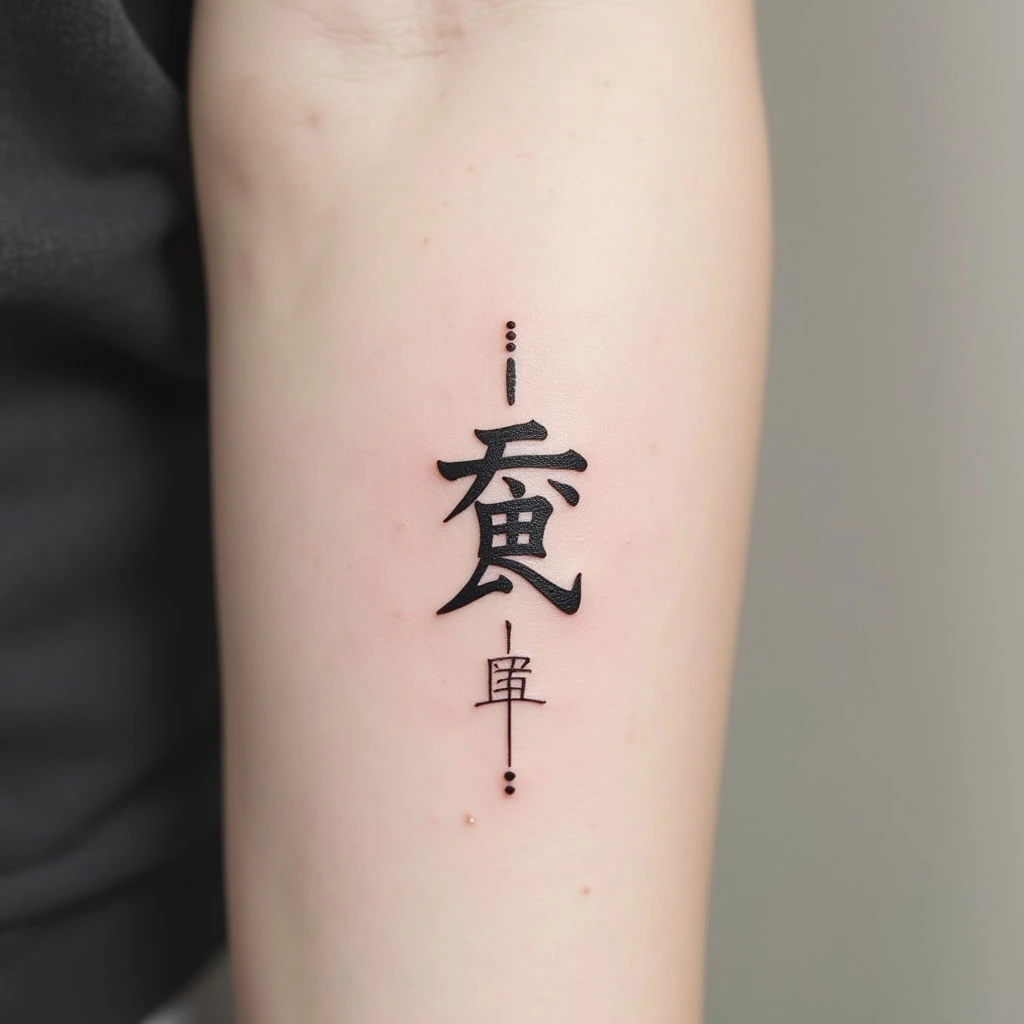
Elegant Korean script offers a really personal touch. You can use it to display names, phrases, or words that hold special meaning.
Micro Tattoo Considerations
When working with these intricate designs at a micro scale—and believe me, I’ve done quite a few—detail is absolutely everything. The line work needs to be crisp and precise, and the shading has to be carefully rendered to really capture the essence of each symbol.
Placement also matters; you want areas with consistent skin texture for optimal clarity. It’s a detail that makes all the difference.