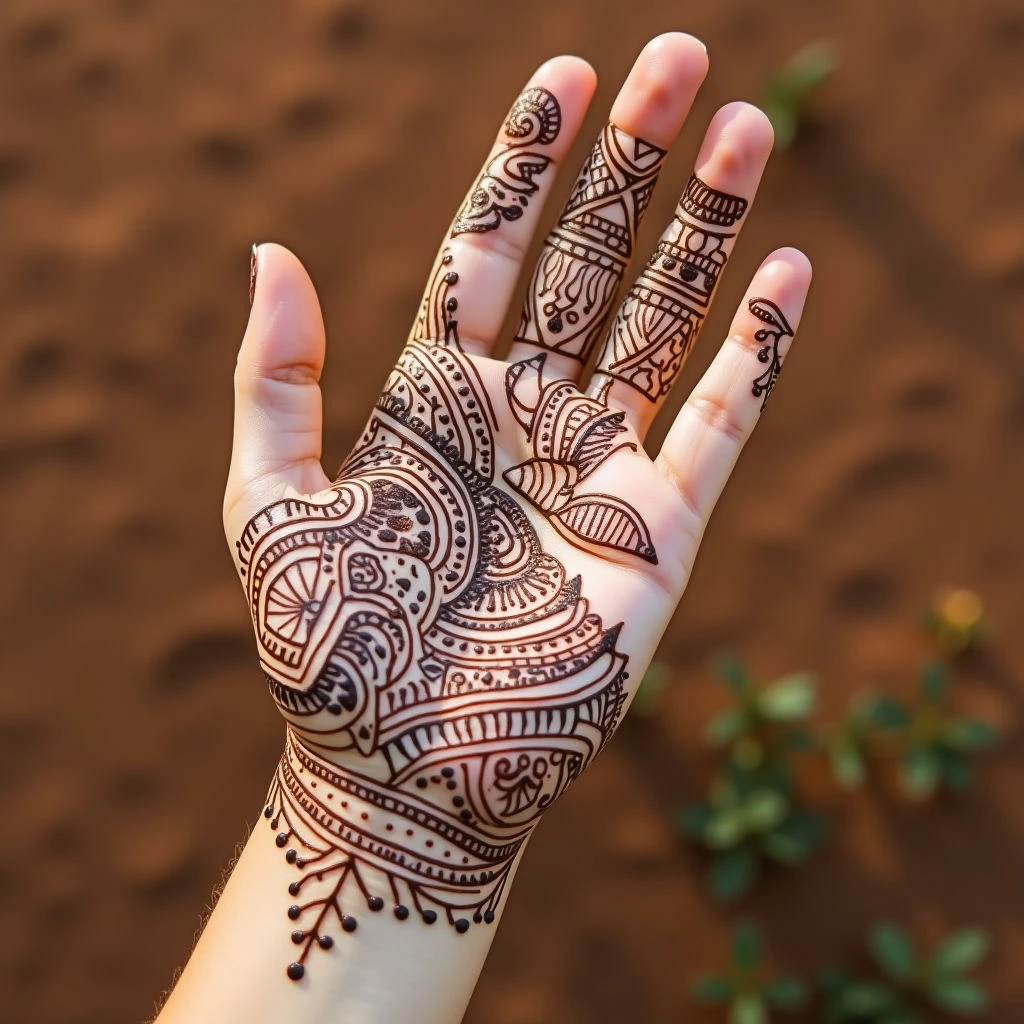
The dance of henna, or Mehndi, is an ancient tradition. It’s fascinating to consider weaving the stories painted across Australia's landscapes by our ancestors—the Aboriginal people—into these delicate swirls. This isn’t just about patterns; it’s a way to connect with Dreamtime, honor the spirits of the land, and acknowledge a deep cultural heritage.
Understanding Aboriginal Symbols
Aboriginal dot painting is so much more than just decoration. Each symbol carries meaning—animal totems representing strengths and journeys, like the Kangaroo for agility or the Emu for resilience. Waterholes signify life-giving sources, while circles represent gathering places and connections. They’re not simply pretty pictures; they are narratives etched into the earth.
Respectful Incorporation
It's vital to approach this blending with deep respect. We don’t copy Aboriginal art directly—that would be cultural appropriation. Instead, we draw inspiration, striving to understand the stories behind the symbols and ensuring any design honors their significance. Consider consulting an Aboriginal artist or cultural advisor for guidance.
Creating Your Design
Think about a story you want to tell on your hand—perhaps a journey of self-discovery, symbolized by an Emu’s path across the landscape. Use Mehndi paste as your canvas, applying dots and lines that echo Aboriginal techniques while making it uniquely yours. Research traditional colors like ochres and natural pigments; modern henna offers variations too.
A Note on Reciprocity
If you find yourself inspired by Aboriginal art, consider supporting Indigenous artists and communities directly—purchase their work or contribute to cultural preservation initiatives.