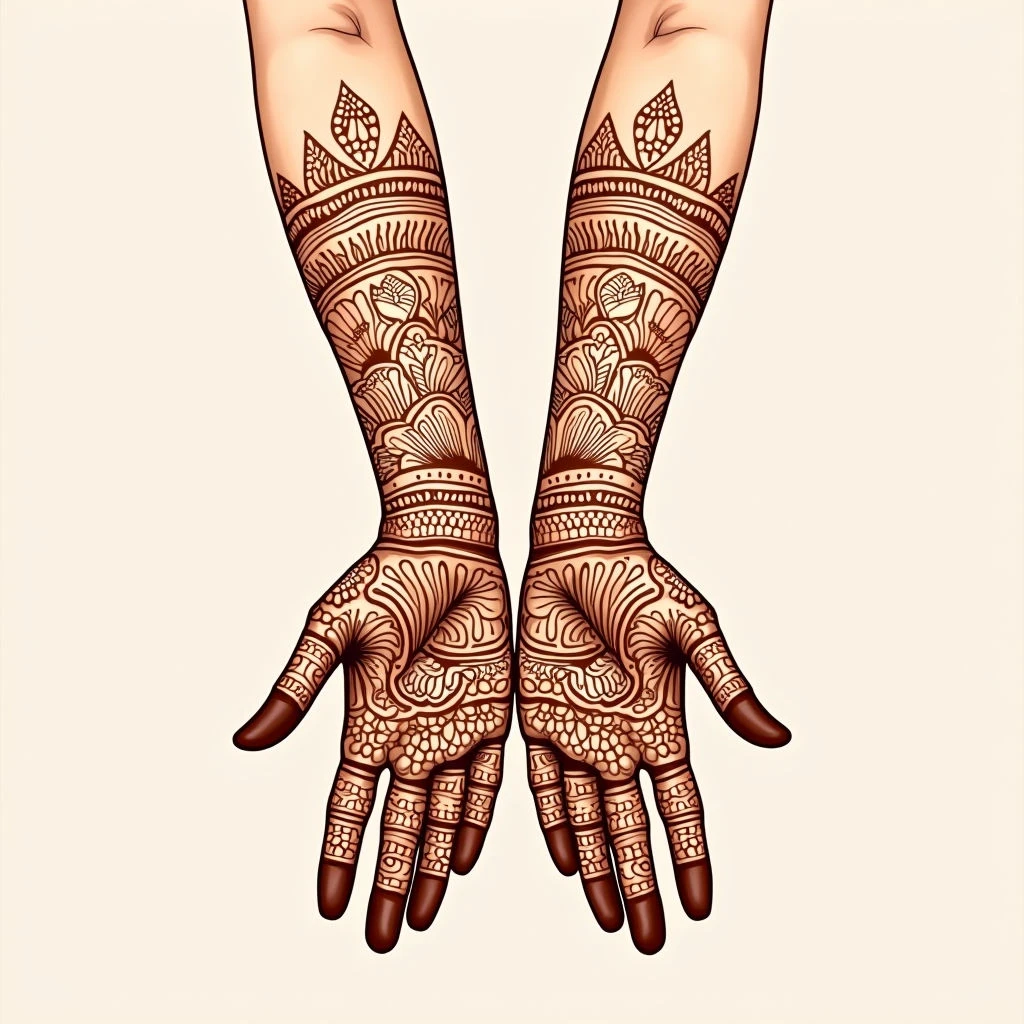
Mehndi, or henna as it’s also known, is deeply woven into Indian culture—especially during celebrations like weddings, Diwali, and Eid. These intricate designs aren't just beautiful; they carry powerful symbolism representing joy, prosperity, and good fortune.
Regional Styles of Mehndi
Let’s take a look at the diverse range of mehndi designs you'll find across different regions of India. Each style has its own unique character and history.
Rajasthani Mehndi
Rajasthani mehndi is instantly recognizable for its bold, dark hues and elaborate designs. You'll see lots of paisleys, floral motifs, and incredibly detailed work—often applied thickly to cover the entire hand or foot.
Gujarati Mehndi
Gujarati designs are characterized by their symmetry and geometric patterns. They often extend up the arms and shoulders, incorporating elements of nature like flowers, vines, and leaves.
Arabic Mehndi
While originating in the Middle East, Arabic mehndi has become incredibly popular across India. These designs often feature large floral motifs, tear drop shapes, and a more contemporary feel.
Pakistani Mehndi
Pakistani mehndi shares similarities with Rajasthani styles. You’ll often find blessings written in Urdu or other languages incorporated into the design.
South Indian Mehndi
Compared to northern styles, South Indian mehndi tends to be simpler. It focuses on clean lines, dots, and small floral patterns—applied with a lighter touch.
The Meaning Behind the Designs
Beyond their visual appeal, mehndi designs often hold deep symbolic meaning. It’s more than just decoration; it's a form of storytelling.
- Paisleys: Represent fertility and abundance.
- Floral Motifs: Symbolize love, beauty, and happiness.
- Geometric Patterns: Represent balance and harmony.
Choosing the Perfect Design
Ultimately, the best mehndi design is a matter of personal preference—and it depends on the occasion and your individual style. Think about what you’re wearing and how much detail you want to incorporate.