


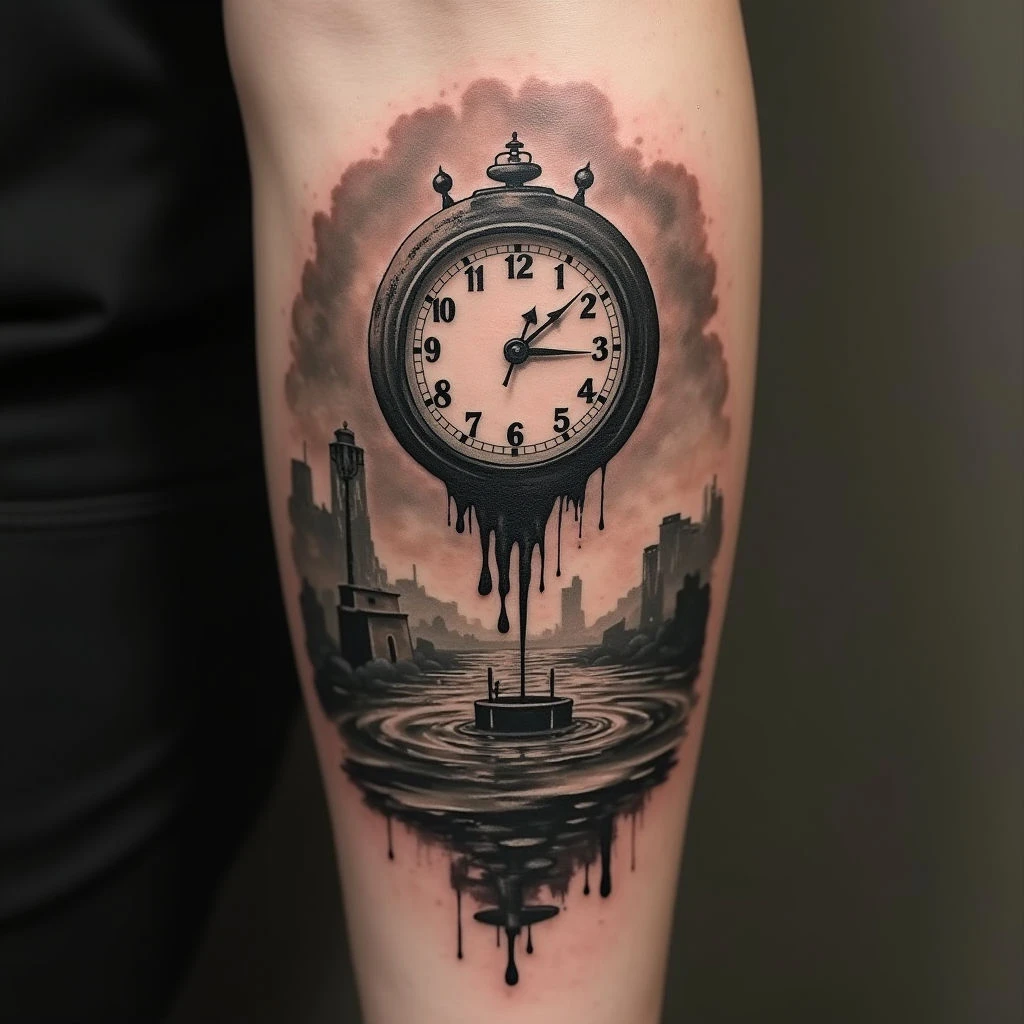
That iconic image – a melting clock, forever linked to Salvador Dalí’s “Persistence of Memory.” But what does it really signify when you see it inked on someone's skin? It's far more than just an aesthetic choice; a melting clock tattoo carries deep symbolism, reflecting our relationship with time, dreams, and the subconscious.
A History Rooted in Surrealism
Dalí’s painting wasn't just about clocks—it was a deep dive into Einstein's theory of relativity. He challenged the idea that time is fixed and linear, suggesting instead it’s something we each experience differently, bending to our own perception.
Symbolism Breakdown
Let's break down the common interpretations:
-
Time’s Relativity
The most immediate meaning is a questioning of strict schedules. A melting clock can be about letting go and embracing spontaneity—a welcome change from rigid timelines. -
Dreams and the Subconscious
Dalí drew heavily on Freudian psychology, and dreams were a core theme in his work. Melting clocks often represent entering a dreamlike state or exploring your subconscious. -
Memory and Decay
The melting itself suggests impermanence—the relentless march of time and the eventual fading of memories. -
Personal Interpretation
Ultimately, it's deeply personal. What does time mean to you? What are the dreams that stick with you?
Design Considerations
Melting clock tattoos can be incredibly versatile. You could opt for a realistic reproduction of Dalí’s original painting, or something more abstract—perhaps incorporating other symbols like eyes (representing perception) or landscapes to represent the journey through time.