Mehndi, or henna, designs on the hands are a beautiful art form—a blend of tradition and modern style. This guide explores some stunning options, especially the rising popularity of geometric patterns and dotwork.
Geometric Mehndi: Precision & Symmetry
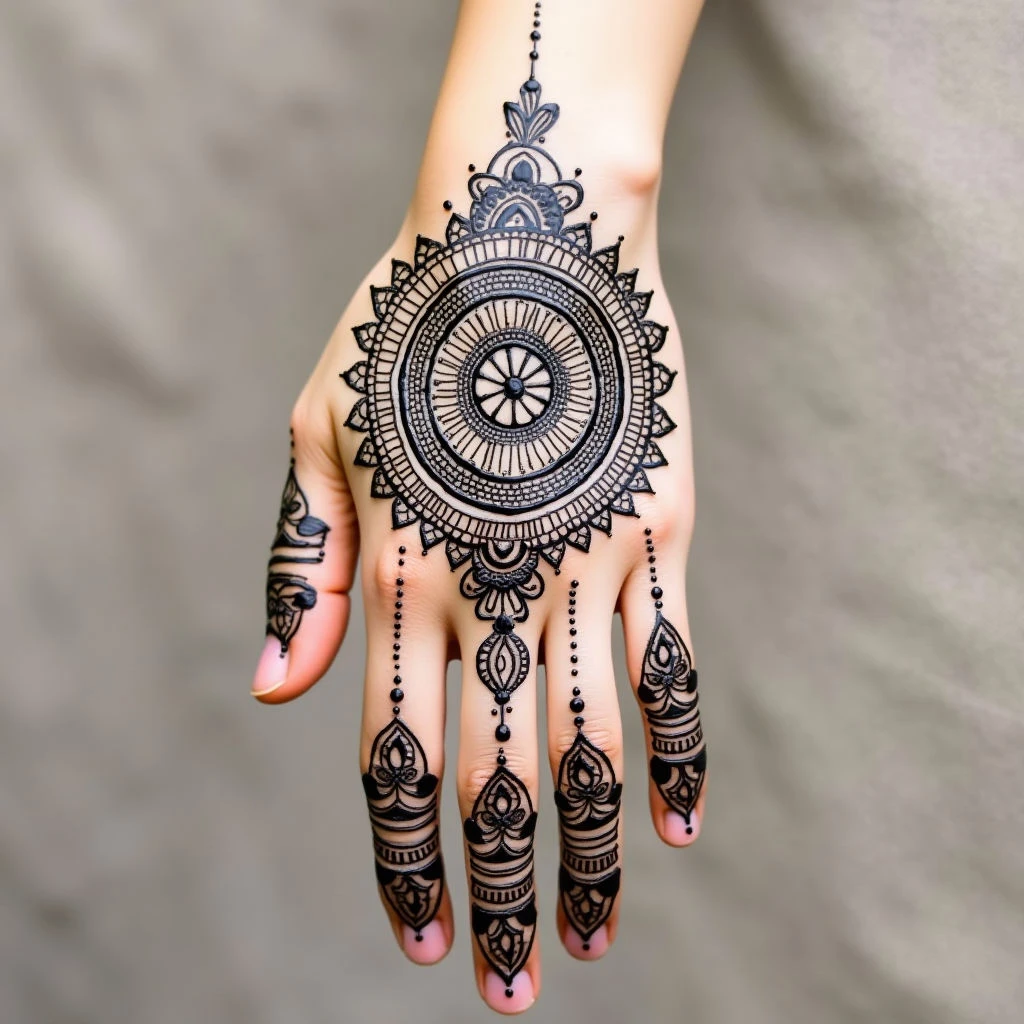
Geometric mehndi uses precise lines and symmetrical shapes—often with fractal elements inspired by sacred geometry. It's a contemporary take on traditional designs, perfect for those who appreciate clean aesthetics and mathematical harmony.
Common Geometric Features
Here are some common elements you'll see:
- Mandalas: Intricate circular patterns representing the universe.
- Fractals: Repeating patterns that create stunning visual complexity.
- Polygons & Polyhedra: Shapes like triangles, squares, pentagons, and more complex 3D forms are utilized.
- Dotwork: Thousands of precisely placed dots create shading and detail.
Dotwork Mehndi: Texture & Depth
Dotwork adds texture and depth to mehndi designs. The density of the dots creates shading, giving the artwork a three-dimensional feel. It can be combined with geometric patterns or used alone for unique, abstract looks.
Placement Considerations for Front Hands
The front of your hands offers plenty of space for elaborate designs. Here are a few ideas:
- Palms: Large mandalas or intricate geometric arrangements work well here.
- Fingers: Detailed dotwork patterns or delicate vines look lovely on the fingers.
- Back of Hand: A bolder statement piece with geometric elements can make a real impact.
Cultural Significance & Symbolism
Traditional mehndi designs often carry symbolic meanings—blessings for prosperity, fertility, and good luck. When incorporating geometric or dotwork elements, it's important to respect these cultural nuances.
Finding the Right Artist
It’s worth seeking out an artist experienced in geometric and dotwork techniques. Clear communication about your desired style and placement is key to getting exactly what you want.