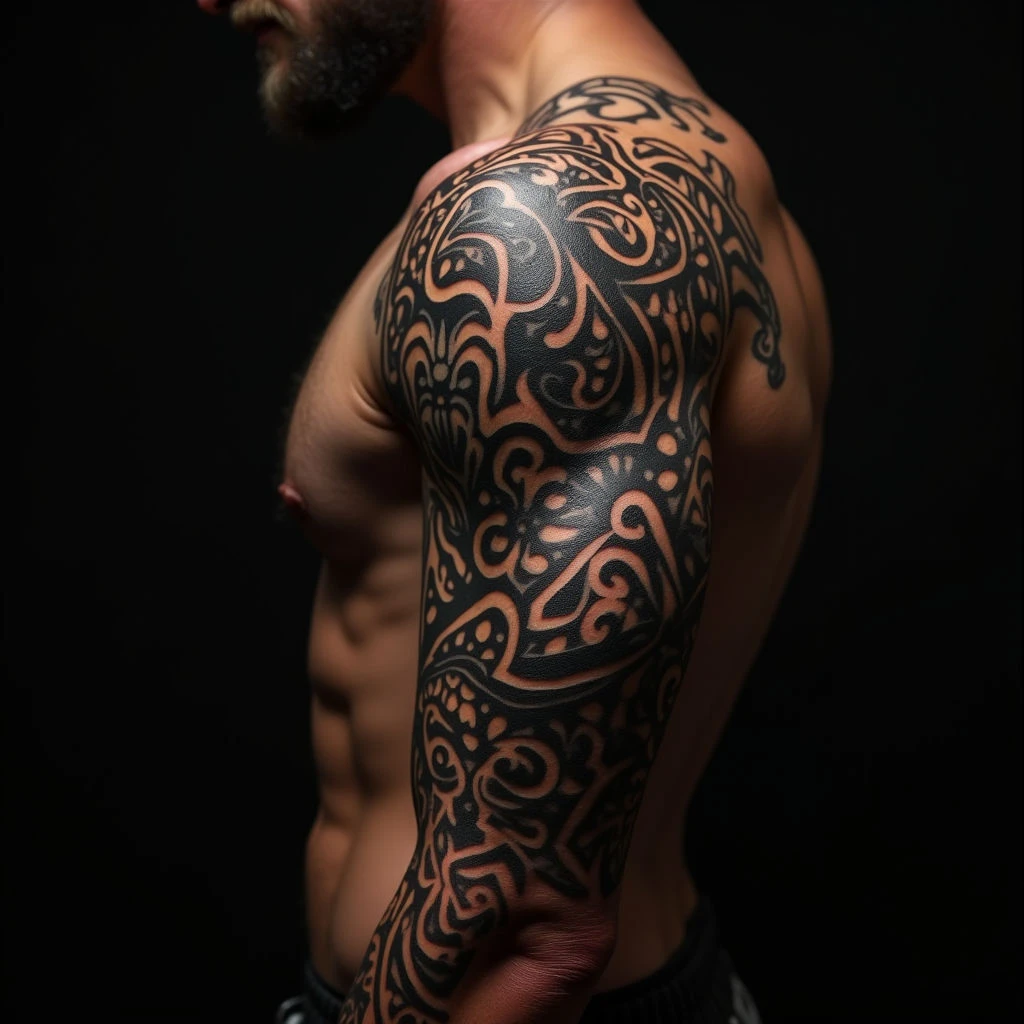
Polynesian tattoos are so much more than just decoration; they’re a powerful visual language with centuries of history. These intricate designs served as chronicles—stories etched onto skin, detailing lineage, accomplishments, social status, and deeply held spiritual beliefs.
Understanding the Cultural Significance
Historically, elaborate Polynesian tattoos (called tatau) weren't something everyone could wear. They were reserved for those of high rank—a mark of distinction and responsibility.
The tattooing process itself was a significant spiritual event, often involving rituals and the guidance of skilled artists. Every detail mattered: where the tattoo would sit on the body, the patterns chosen – each element told a unique story.
Common Motifs and Their Meanings
Let's look at some common Polynesian tattoo motifs. Each carries layers of symbolism:
-
Turtle (Honu)
Represents longevity, patience, peace—and the skill of navigation. It's a beautiful symbol of resilience. -
Shark (Mano)
A powerful image symbolizing strength, fearlessness, and deep respect for the ocean's power. -
Waves (Nalu)
These represent life’s journey—the challenges we face and the perseverance needed to overcome them, all while staying connected to something larger than ourselves. -
Tiki
A representation of ancestors—a tangible link between the living and the spiritual realm. A constant reminder of where we come from. -
Tribal Patterns (Kirituhi)
Abstract designs that speak to strength, unity, and the enduring ties of ancestry. Today, you'll often see these patterns blended with modern artistic styles.
Design Considerations for Men
Polynesian tattoos tend to be larger and more detailed, making them well-suited for areas like the arm, leg, chest, or back. Think carefully about placement—it significantly impacts both the visual impact and personal meaning of your tattoo.
Finding a Skilled Artist
It’s absolutely crucial to find an artist who truly understands Polynesian tattooing. Look for someone experienced in traditional techniques, including hand-tapped methods—the authentic way these tattoos have been created for generations.
Beyond technique, a good artist will also respect the cultural protocols surrounding this art form. Research portfolios thoroughly and don’t hesitate to ask about their experience with Polynesian tattooing.