

The swallow tattoo, a familiar image in traditional Americana ink, holds a significance that goes far beyond its cheerful look. For centuries, sailors crossing vast oceans had these tattoos—each one marking a mile traveled and representing a promise of safe return home.
Beyond the Romanticism: A History of Loss
But there's more to this story. Beneath the romantic ideal lies a darker history, one woven with superstition and the harsh realities faced by those at sea.
Sailor Jerry and the Talisman
Legendary tattoo artist Sailor Jerry Collins helped popularize the swallow design, but his influence came from a real need. Sailors sought these tattoos as protective charms—believing they’d guide lost souls or carry messages to loved ones. Seeing a swallow return with a ring in its beak meant safe passage back to land.
What if the Swallow Didn't Return?
Now, consider this: what happens when a swallow doesn’t return?
The symbolism shifts dramatically. It becomes a stark reminder of unfinished journeys and lives lost to the sea.
A Modern Macabre Twist
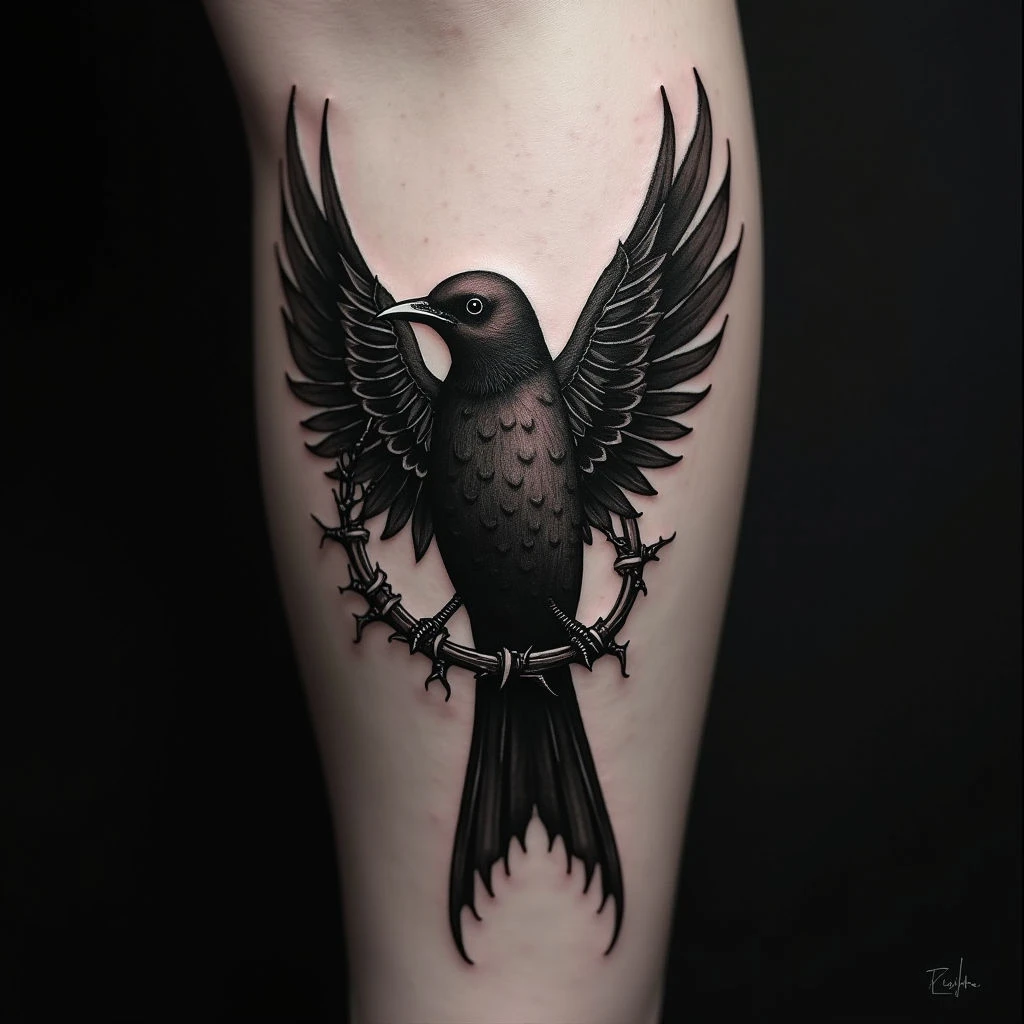
Today, artists are reimagining this classic design, blending traditional elements with a gothic horror aesthetic. Imagine a swallow tattoo rendered in stark black and grey—its beak subtly elongated into a predatory curve, its eyes glowing with an unsettling intensity, feathers transforming into thorny vines. It's a beautiful yet disturbing reflection of the ocean’s power.
Confronting Mortality
This modern take on the swallow tattoo isn’t just about coming home anymore. It's a confrontation with the inevitable—a reminder of the abyss that awaits us all.