

Home > Categories > tattoo process techniques > Simple & Easy Mehndi Designs for Back Hand: A Beginner's Guide

Looking for simple and easy mehndi designs for the back of your hand? This guide offers beginner-friendly patterns, tips & inspiration!

Simple Mehndi Designs for Beginners

Mendhi, or henna, is a beautiful ancient art form—a way to adorn your skin with intricate, temporary designs. If you’re new to this tradition and eager to try something simple yet stunning on the back of your hand, you've found the right guide.

Why Simple Designs Are Perfect for Starting Out

Choosing simpler patterns when you’re learning is a smart move. They're easier to apply, take less time, and still look absolutely gorgeous with just a bit of practice.

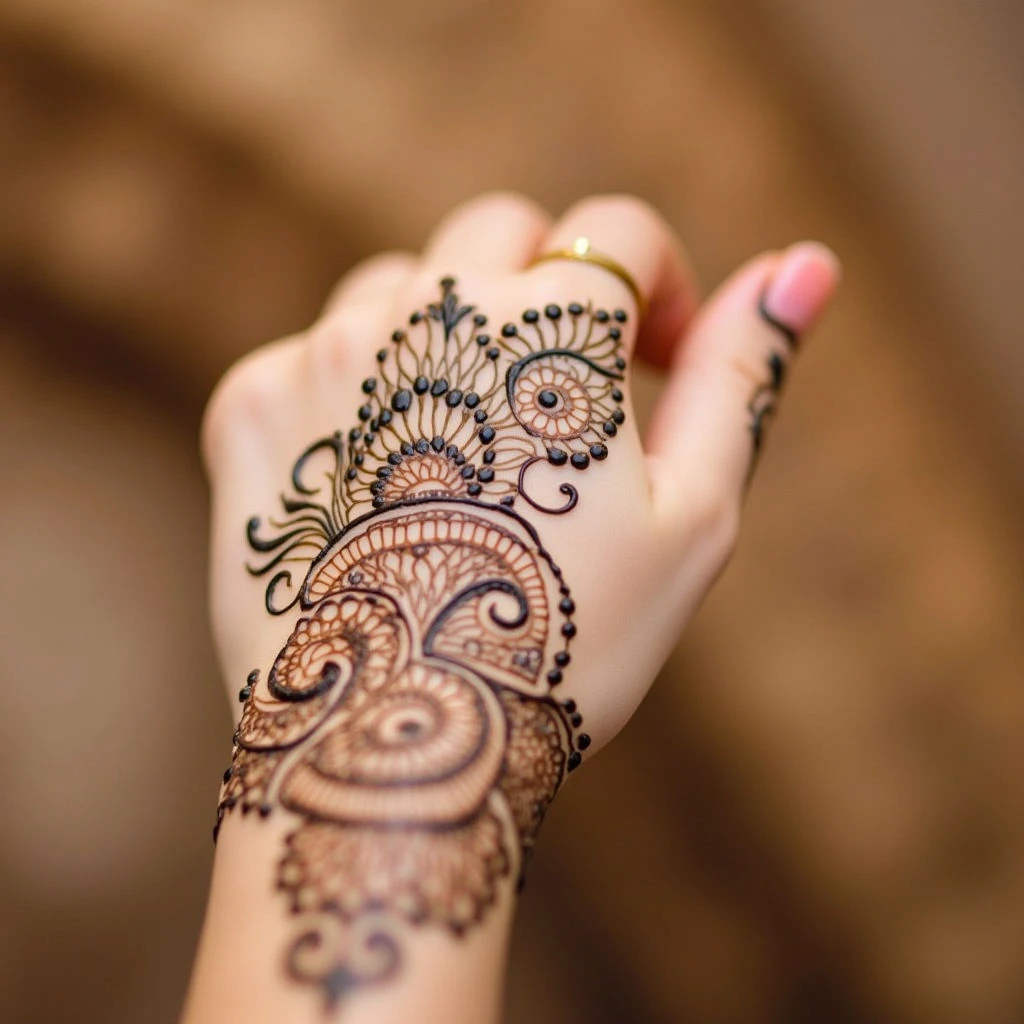
Easy Mehndi Designs for Your Back Hand

Here are some beginner-friendly designs to get you started:

  • Dots & Circles

    Start with basic dots and circles arranged in patterns. It's surprisingly forgiving, and the results are lovely.

  • Simple Floral Motifs

    Use teardrop shapes to create simple flower petals—combining them creates a cute floral design.

  • Leaf Patterns

    Simple leaf outlines are easy to draw and can be combined to form vines or borders.

  • Geometric Shapes

    Try triangles, squares, or diamonds arranged in symmetrical patterns—it’s a very modern and chic look.

  • Swirls & Waves

    These flowing designs work especially well on the back of your hand, as they conform nicely to its shape.

Tips for Applying Mehndi Paste

A few things can make the process smoother:

  • Use cones—they really simplify application, especially when you’re just starting out.
  • Apply a thick, even layer of paste to ensure a deeper color stain.
  • Keep the paste moist by covering it with tissue paper and a warm cloth while it dries; this helps enhance the final stain.

Finding Inspiration

Pinterest, Instagram, or YouTube are great places to find visual inspiration. Before you apply anything to your hand, it’s a good idea to practice the designs on paper first.

Simple & Easy Mehndi Designs for Back Hand: A Beginner's Guide

Home > Categories > tattoo process techniques > Simple & Easy Mehndi Designs for Back Hand: A Beginner's Guide

Looking for simple and easy mehndi designs for the back of your hand? This guide offers beginner-friendly patterns, tips & inspiration!

Simple Mehndi Designs for Beginners

Mendhi, or henna, is a beautiful ancient art form—a way to adorn your skin with intricate, temporary designs. If you’re new to this tradition and eager to try something simple yet stunning on the back of your hand, you've found the right guide.

Why Simple Designs Are Perfect for Starting Out

Choosing simpler patterns when you’re learning is a smart move. They're easier to apply, take less time, and still look absolutely gorgeous with just a bit of practice.

Easy Mehndi Designs for Your Back Hand

Here are some beginner-friendly designs to get you started:

  • Dots & Circles

    Start with basic dots and circles arranged in patterns. It's surprisingly forgiving, and the results are lovely.

  • Simple Floral Motifs

    Use teardrop shapes to create simple flower petals—combining them creates a cute floral design.

  • Leaf Patterns

    Simple leaf outlines are easy to draw and can be combined to form vines or borders.

  • Geometric Shapes

    Try triangles, squares, or diamonds arranged in symmetrical patterns—it’s a very modern and chic look.

  • Swirls & Waves

    These flowing designs work especially well on the back of your hand, as they conform nicely to its shape.

Tips for Applying Mehndi Paste

A few things can make the process smoother:

  • Use cones—they really simplify application, especially when you’re just starting out.
  • Apply a thick, even layer of paste to ensure a deeper color stain.
  • Keep the paste moist by covering it with tissue paper and a warm cloth while it dries; this helps enhance the final stain.

Finding Inspiration

Pinterest, Instagram, or YouTube are great places to find visual inspiration. Before you apply anything to your hand, it’s a good idea to practice the designs on paper first.