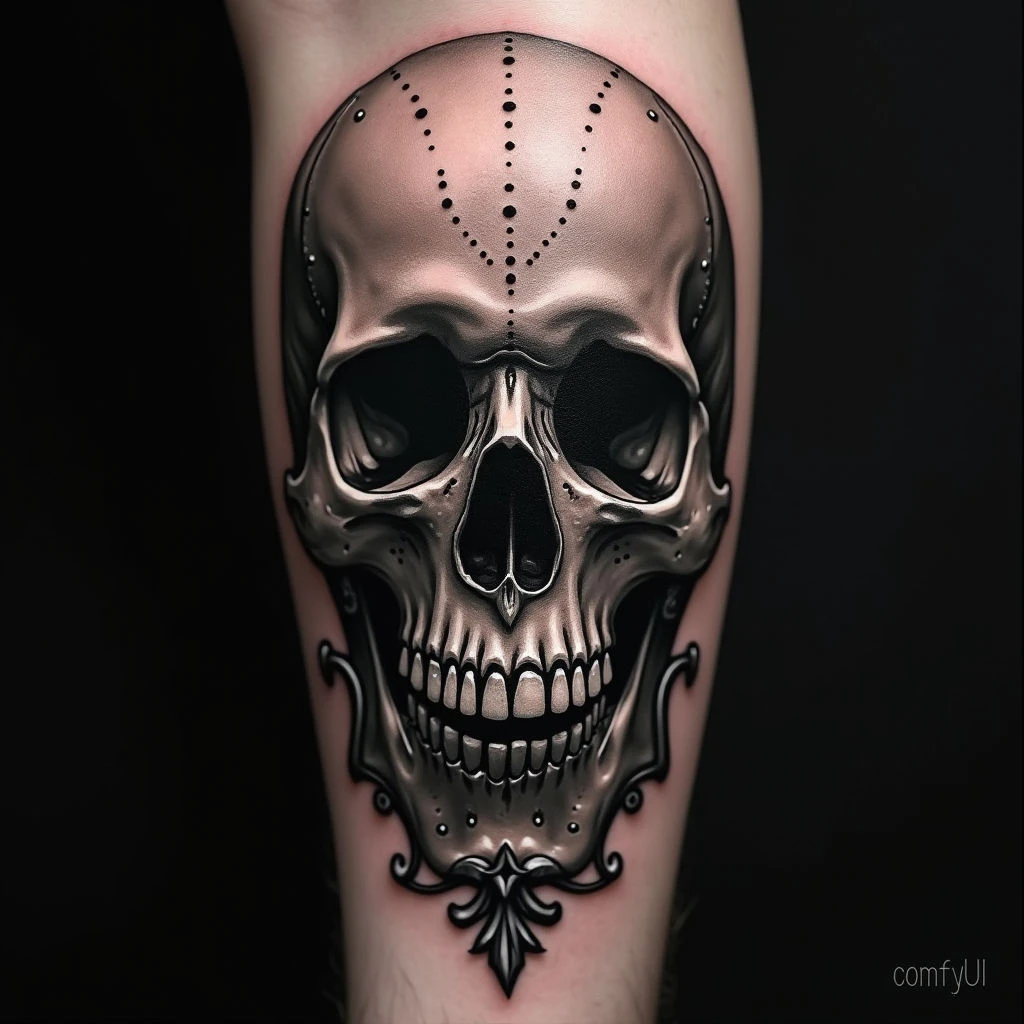
A skull tattoo isn’t just a picture; it's an emblem steeped in history and meaning, echoing across cultures and time. It's more than macabre imagery—it prompts reflection on mortality, remembrance, and the fleeting nature of life itself.
A History Rooted in Ancient Traditions
The skull's story within human culture stretches far beyond modern tattooing. Think about it: the Aztecs incorporated skulls into their rituals, while early Christians used them to symbolize triumph over death—each adding layers of significance.
The Victorian Era and Memento Mori
During the Victorian era, memento mori jewelry featuring skulls became popular. These pieces served as a tangible reminder of life’s brevity—a powerful visual cue reinforcing mortality.
Modern Interpretations: A Diverse Range of Meanings
Today, the meaning behind a skull tattoo is incredibly varied. For some, it's about accepting death and truly living—a 'memento mori' philosophy in action. Others see skulls as protective symbols, drawing on ancient beliefs about their power to ward off evil.
Beyond the Basics: Customization and Context
Biker culture often uses skulls as a symbol of rebellion, a visual statement of defiance. But it's the added details that really personalize these tattoos. Roses can represent love transcending mortality; flames symbolize passion and destruction; sugar skulls celebrate life and honor deceased loved ones—each element tells a story.
Design Matters: Realism vs. Style
The design itself is key. A realistic skull tattoo emphasizes anatomical detail, while stylized versions might incorporate tribal patterns or illustrative flourishes—it’s about finding the right visual language.
Consider the context too. A pirate's skull and crossbones evokes adventure and danger, whereas a sugar skull is a vibrant tribute to cultural heritage.