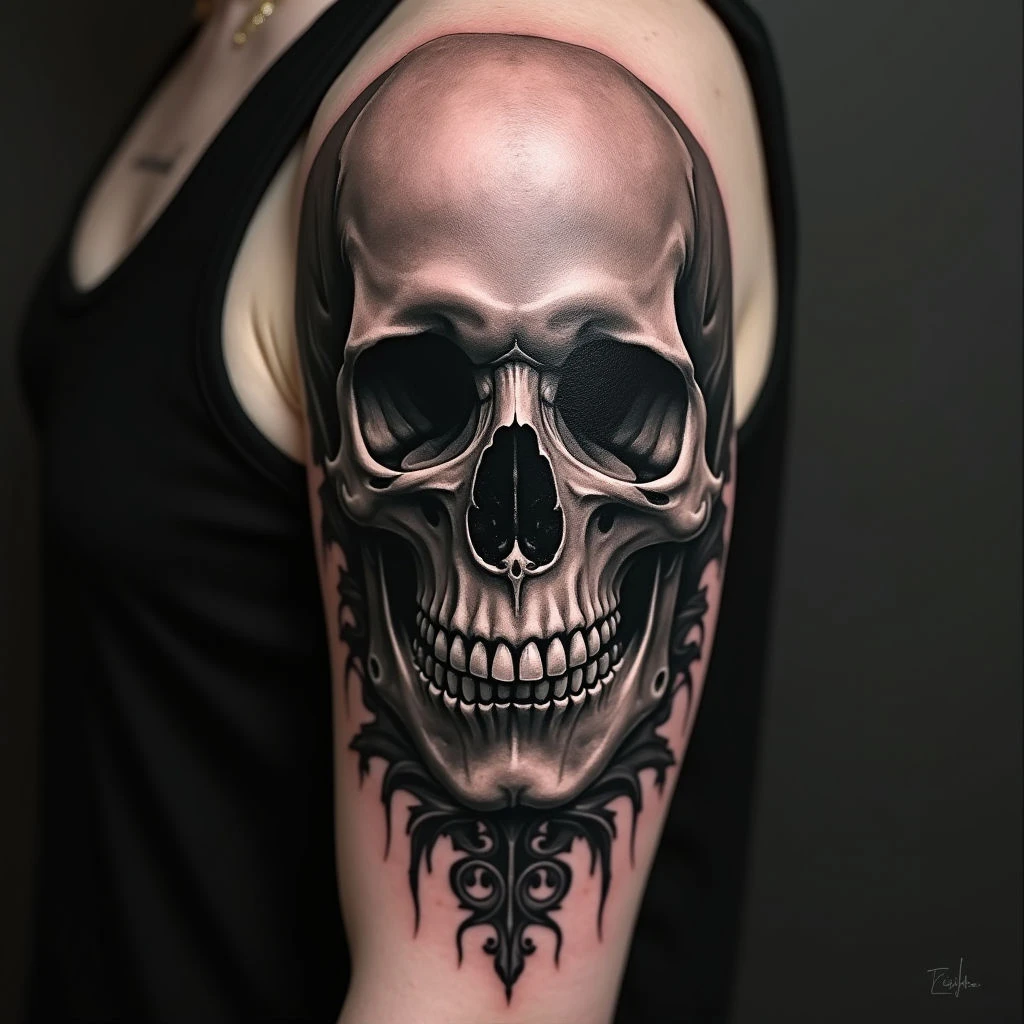
The skull—it’s more than just a decoration. Across cultures and throughout history, skulls have represented remembrance, protection, rebellion, and transformation. But what does it really mean when someone chooses to wear this powerful symbol?
A History Etched in Bone
Skulls have been part of human symbolism since ancient times. Civilizations like those in Mesoamerica revered them as offerings to deities, symbols of sacrifice and rebirth. Some cultures believed skulls held the spirits of ancestors, offering protection.
Gothic Art & Romantic Mortality
The Victorian era’s fascination with death and mourning significantly influenced gothic art and tattoo culture. Skulls became linked to romanticism—an appreciation for beauty alongside a sense of melancholy and an acceptance of life's impermanence. This aesthetic remains central to goth subcultures.
Modern Meanings: Embracing the Darkness
Today, skull tattoos carry a wide range of meanings. They can represent mortality and remembrance—a reminder of our fleeting time here and honoring those we’ve lost. Or perhaps it's rebellion and defiance, rejecting norms and embracing individuality. The skull also symbolizes transformation: the end of one cycle opening the way for a new beginning – death as rebirth. Some see them as offering protection and strength in difficult times.
Choosing a skull tattoo isn’t just about picking a design; it's a statement about your view on life, death, and everything between. Consider the details: roses intertwined? A pirate’s crossbones? These additions add layers of meaning.