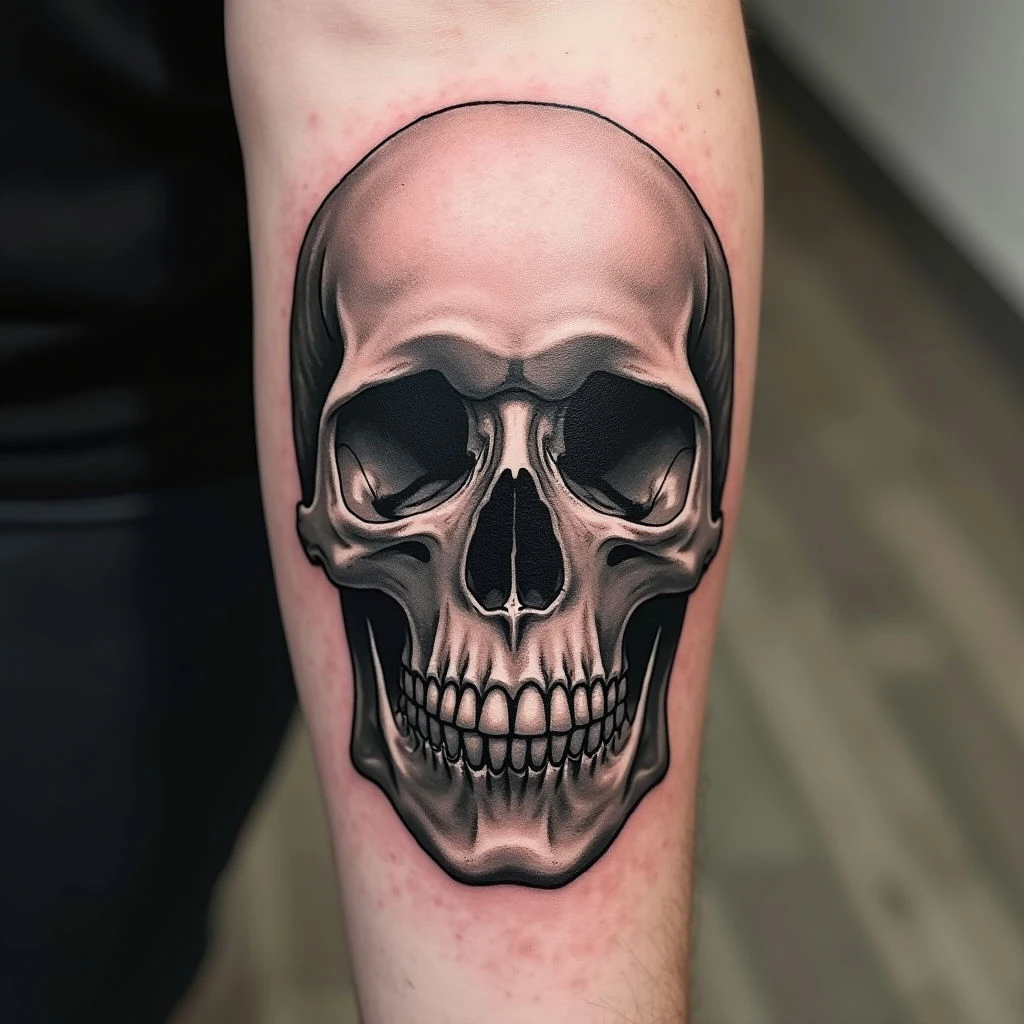
Skull tattoos are instantly recognizable, and they carry a lot of weight. This guide explores the history, cultural significance, and different interpretations behind these striking designs.
A History Rooted in Mortality
The use of skulls as symbols on bodies goes way back. Ancient cultures often incorporated them into rituals and art—a visual reminder of life’s cycle. Think about pre-Columbian Mesoamerica, where skulls were part of ceremonies, or Roman soldiers who carried them to confront the reality of death during battle.
Symbolism Across Cultures
What do skull tattoos really mean? It varies, but here are some common interpretations:
-
Mortality & Remembrance
Most often, a skull tattoo serves as a powerful reminder of our own mortality—a nudge to appreciate each moment. It’s about acknowledging that life is finite. -
Rebellion & Defiance
More recently, skull tattoos have become a symbol of rebellion against authority and societal norms. A grinning skull can be a bold statement—a way to push back against limitations. -
Protection & Strength
Historically, skulls have been linked to protection from evil spirits and the strength needed to face challenges. You’ll often see this symbolism in biker culture or among those seeking resilience. -
Memento Mori
Drawing from the 'memento mori' tradition, a skull tattoo can be an encouragement to live life to the fullest—knowing that death is inevitable.
Modern Interpretations
Today, a skull tattoo’s meaning can be deeply personal. It might represent overcoming hardship, celebrating individuality, or simply appreciating the design itself.