


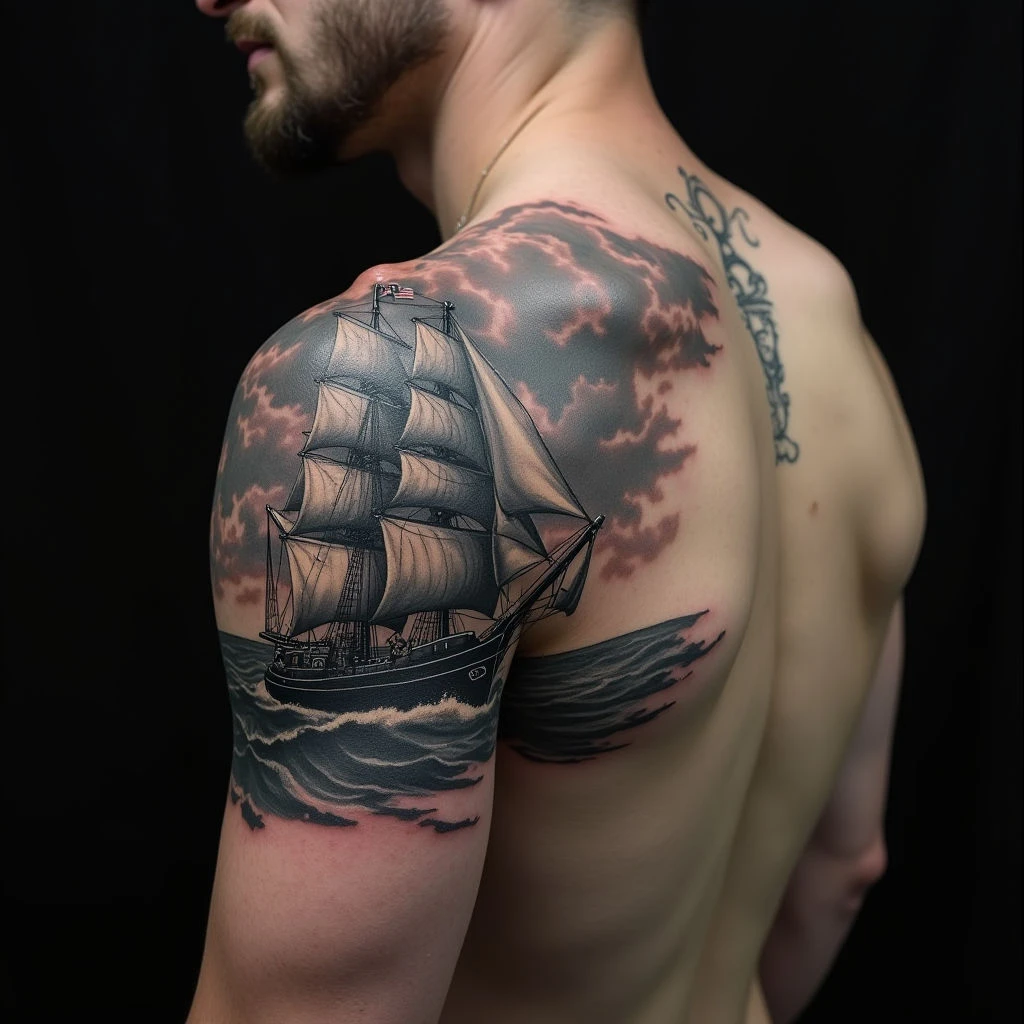
Okay, so you’ve got a tattoo on your shoulder that isn't quite working out. It happens—I've seen it countless times as an apprentice. Sometimes it’s a design you regret from when you were younger; other times, the ink has simply faded and needs refreshing.
Covering up a tattoo isn't just about adding something new on top. It requires understanding your existing piece, its placement, and how to create something that truly works. The shoulder offers a decent canvas – there’s space, but you also need to think about movement and clothing.
Understanding Your Current Tattoo
Before anything else, take a good look at what you’re working with. What style is it? How faded has it become? Does the placement lend itself to certain cover-up designs?
Style Considerations
Different styles offer different advantages when covering up a tattoo.
Traditional/Neo-Traditional
Bold lines and strong imagery are fantastic for simpler tattoos. Think anchors, roses, or classic Americana—the density of the ink really helps obscure what’s underneath.
Realism
Realism can work well for smaller areas with detailed designs, but it requires a skilled artist. Layering realism over existing work can be tricky and easily muddy the image.
Blackwork/Tribal
Solid black patterns are amazing for covering up; they create a visual barrier that hides the original tattoo almost completely. I’ve seen some incredible transformations using this technique—it's really powerful!
Watercolor
While visually stunning, watercolor isn’t always ideal because of its translucency. It can be used strategically, but often in combination with other techniques.
Design Ideas
You have a few options for your cover-up design.
Incorporating the Existing Tattoo
Sometimes, you don’t need to completely erase your old tattoo. Incorporating it into a new design can be really creative—it just requires an artist who's comfortable working with existing lines.
Full Coverage
A larger, bolder design that completely obscures the previous tattoo is often the best approach for more problematic pieces.
One important tip: covering up a tattoo takes skill! Find an experienced artist who specializes in cover-ups. Be prepared to discuss your goals and expectations thoroughly.