The Body as a Mandala
In traditional Chinese understanding, the body possesses meridians – pathways of vital energy known as qi. Placement should consider harmony with these flows. The chest embodies courage and heart, while the back represents strength and resilience. The arm signifies action and determination; the leg, grounded stability.
Shoulder
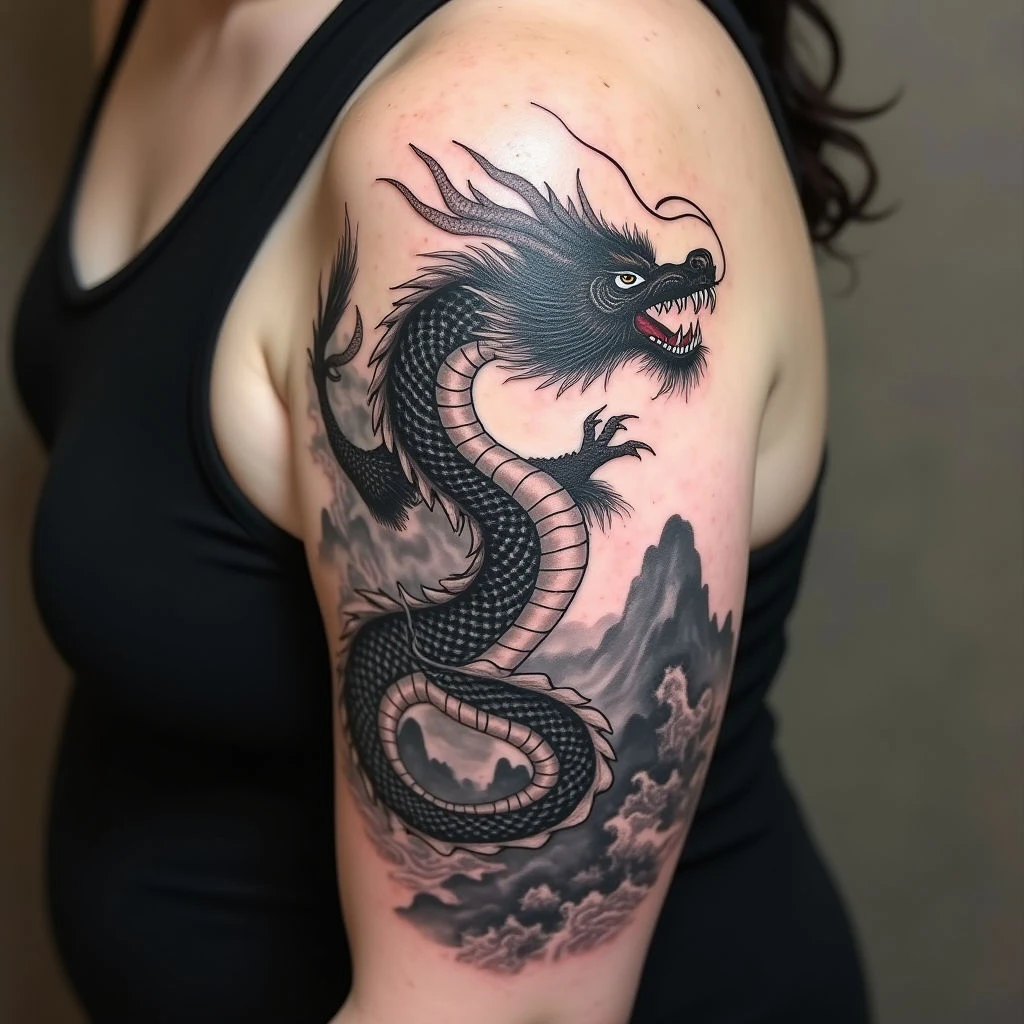
The shoulder often welcomes depictions of protectors or guiding spirits - a guardian dragon, for example, signifying strength and direction.
Ribcage
The ribcage, an intimate space, may hold memories or personal symbols – perhaps a phoenix rising from adversity.
Forearm
A tattoo on the forearm speaks of ambition and outward expression; it is visible to all, declaring your intentions.
Calf
The placement on the calf represents journey and change. A small, symbolic detail can signify adaptability.
Ankle
The placement on the ankle represents journey and change. A small, symbolic detail can signify adaptability.
Beyond Location – The Resonance of Symbolism
When considering location, remember that each space carries its own energy. A dragon’s fiery breath is best suited for a broader expanse like the back or shoulder, while delicate calligraphy might find solace on the forearm or wrist.
Ultimately, the 'best' placement resonates with your story. Consult with an artist who understands both technique and cultural significance.