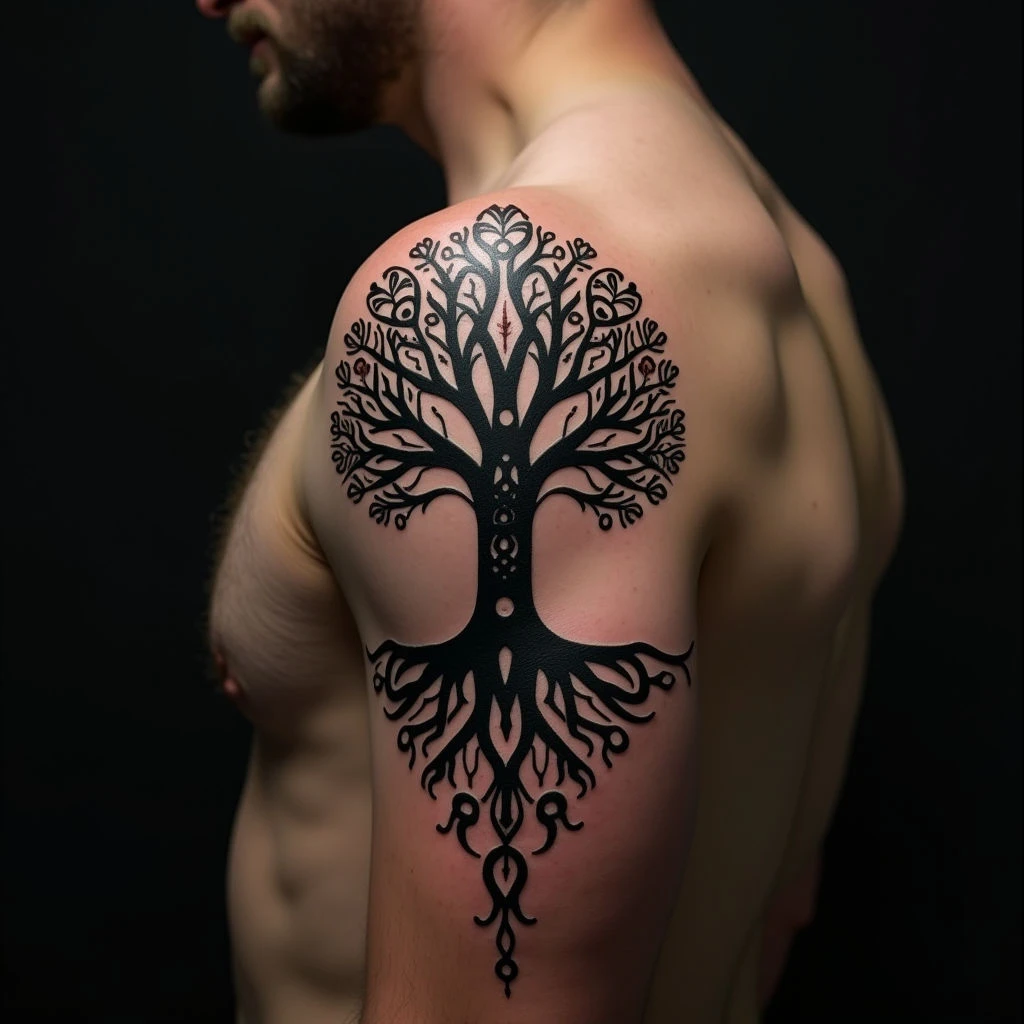
Family tree tattoos have evolved beyond literal representations, embracing artistic interpretations that blend tradition with personal expression. Some designs incorporate abstract shapes and patterns to symbolize complex family dynamics. Others feature stylized depictions of ancestors or significant life events. The beauty lies in the ability to create a unique piece that tells your story—a visual narrative of who you are and where you come from. Placement is key to conveying the meaning and impact of a family tree tattoo. A sprawling design might grace the back, symbolizing strength and stability. A smaller, more intimate design could be placed on the wrist or ankle, representing personal connection and remembrance. The choice is yours—let your creativity guide you.
The Enduring Symbolism of Family Tree Tattoos
In many cultures, the family tree is more than just a chart; it’s a living symbol of heritage, connection to ancestors, and the wisdom passed down through generations—a powerful concept that resonates deeply with those considering a lasting tattoo.
Ta Moko: A Cultural Foundation
The Māori tradition of ta moko, from Aotearoa (New Zealand), exemplifies this connection. Family lineages aren’t just represented; they're woven into the very fabric of the design, using patterns to tell stories and honor shared history.
Understanding the Elements
Beyond simple branches, Polynesian family tree tattoos carry layers of meaning. Roots ground you in your past; branches represent growth and resilience; leaves symbolize individual family members. Think about adding details specific to your background—traditional patterns, important dates, or even names rendered in a symbolic script.
If you’re considering ta moko, working with an experienced artist is crucial for respecting the cultural significance and ensuring authenticity. It's not just about aesthetics; it's about honoring a sacred practice.
Modern Interpretations & Artistic Expression
Family tree tattoos have evolved. Now, they blend tradition with personal expression, moving beyond literal depictions to embrace artistic interpretations that capture complex family dynamics and significant life events.
The beauty of this style lies in its ability to tell your unique story—a visual narrative of who you are and where you come from. It’s a chance to create something truly personal.
Placement & Impact
Where you place your tattoo matters. A large, sprawling design on the back can symbolize strength and stability. A smaller, more intimate piece on the wrist or ankle might represent a personal connection—the choice is entirely yours.