Tribal tattoos aren’t just ink; they're powerful narratives—stories etched onto skin, echoing ancient cultures. They’re not about fleeting trends; these are legacies.
A Deep Dive into Tribal Design
We'll explore the world of tribal design, from its origins to how it’s interpreted today. The roots are surprisingly deep.
Historical Significance
Historically, these markings were more than decoration; they denoted status, lineage, and a profound spiritual connection within communities. Think of the Maori in New Zealand, Polynesian islanders, or the Haida people of the Pacific Northwest—each stroke held meaning.
For example, a warrior’s strength might be represented by one design element, while another could symbolize a shaman's wisdom or a family bond. It was all about communicating identity and belonging.
Distinct Styles
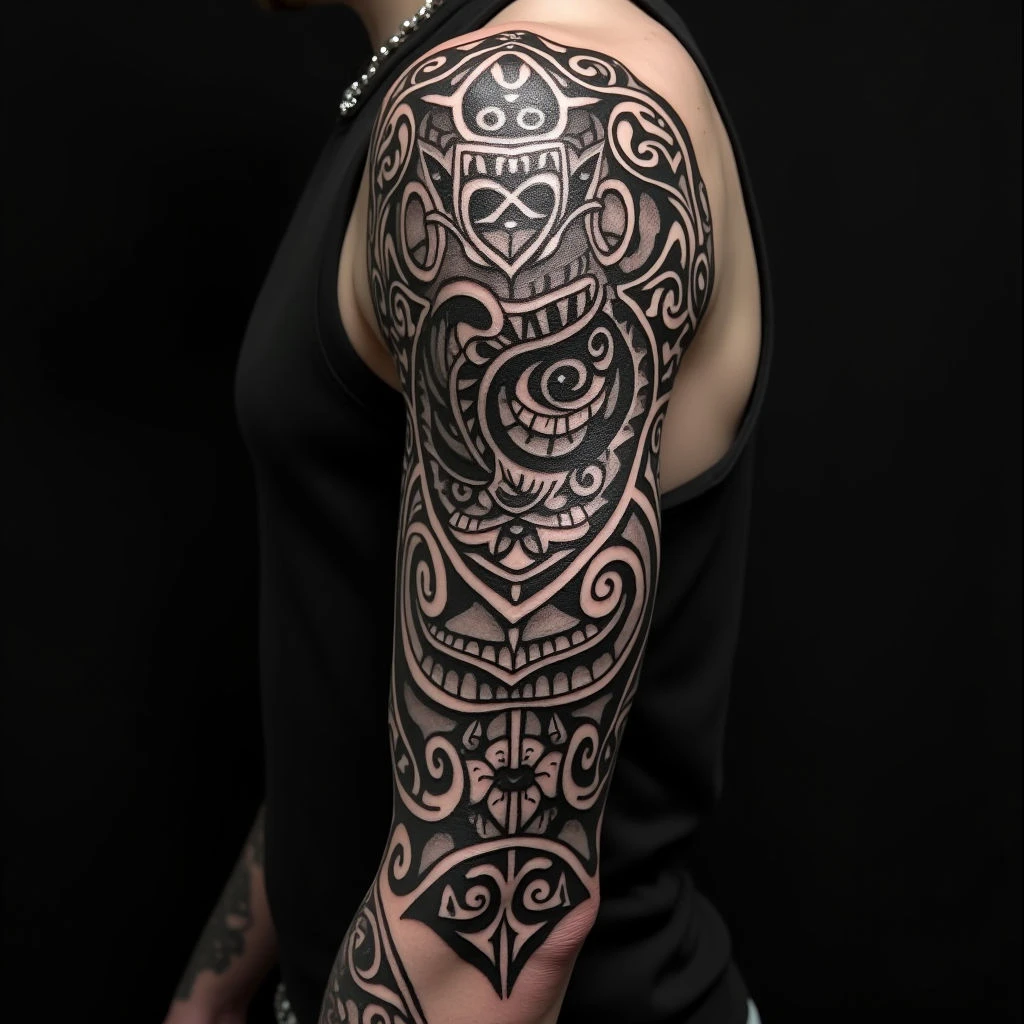
The styles themselves vary dramatically. Polynesian tattoos, for instance, often emphasize bold blackwork and intricate patterns that speak to ancestry and navigation—a visual map of their journey.
Maori Designs
Maori designs frequently incorporate spirals, known as koru, representing new life and growth—a constant reminder of the cyclical nature of existence.
Haida Art
Then there’s Haida art, which features stylized animal forms. These aren't just pretty pictures; they convey mythology and clan identity—a visual language passed down through generations.
Designing Your Own Tattoo
Choosing a tribal tattoo isn't just about aesthetics; it’s about telling a story. What do you want your ink to say?
Respect and Responsibility
It's crucial to research the cultural significance of any design—avoid appropriation. Work with an experienced artist who specializes in tribal techniques; they can guide you toward a meaningful and respectful piece.