
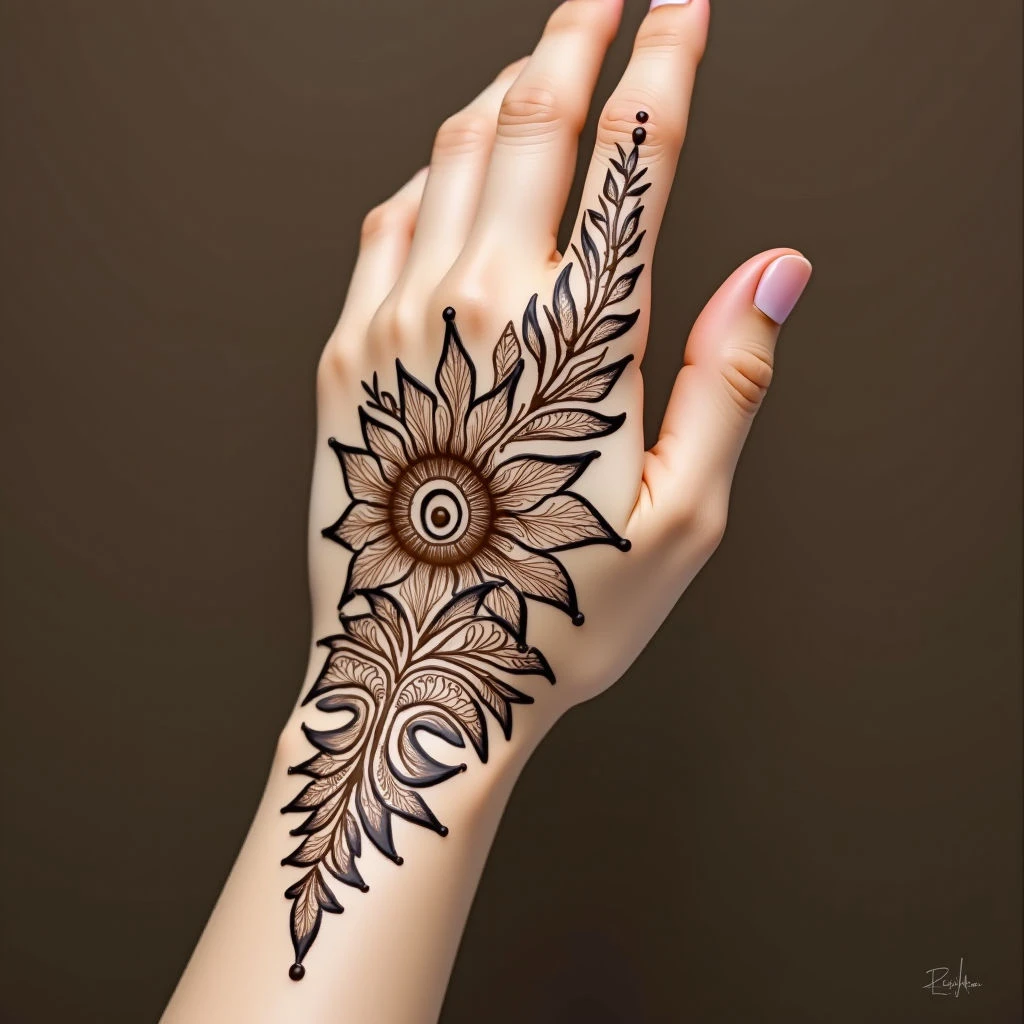
Henna body art isn't just a trend—it’s an ancient tradition, rich with cultural significance and spiritual meaning. It spans continents, evolving from tribal practices in North Africa, the Middle East, and South Asia into a stunning variety of styles.
A Tapestry of Traditions
The earliest evidence of henna use goes back almost 5000 years, discovered in ancient Egyptian tombs. From there, the practice traveled along trade routes and through cultural exchange.
Regional Styles
Today, you’ll find a remarkable range of approaches to henna. Here's a glimpse:
-
Sudanese Henna
Bold, black patterns are characteristic of Sudanese henna, often covering the entire arm or leg. These designs carry deep spiritual significance, intended for protection. -
Moroccan Henna
Moroccan henna is known for its intricate floral motifs, precise geometric patterns, and delicate lines. It’s frequently used to mark important life events. -
Indian Mehndi
Vibrant and elaborate, Indian mehndi incorporates rich symbolism. Each element is meant to convey blessings of prosperity, fertility, and joy—you'll often see paisleys, elephants, and peacock feathers. -
African Tribal Henna
Often using darker henna pastes, African tribal designs feature geometric shapes reminiscent of scarification patterns—a powerful expression of tribal identity and protection.
Beyond Decoration: Meaning & Ritual
Historically, henna wasn't just about aesthetics; it was believed to offer protection. It’s a common sight at weddings, births, and other significant ceremonies—a blessing meant to ward off negativity.
Interestingly, the darkness of the stain is often seen as an indicator of good fortune. Ultimately, the true artistry lies in understanding this heritage: respecting tradition and appreciating the profound meaning behind each swirl and dot.