
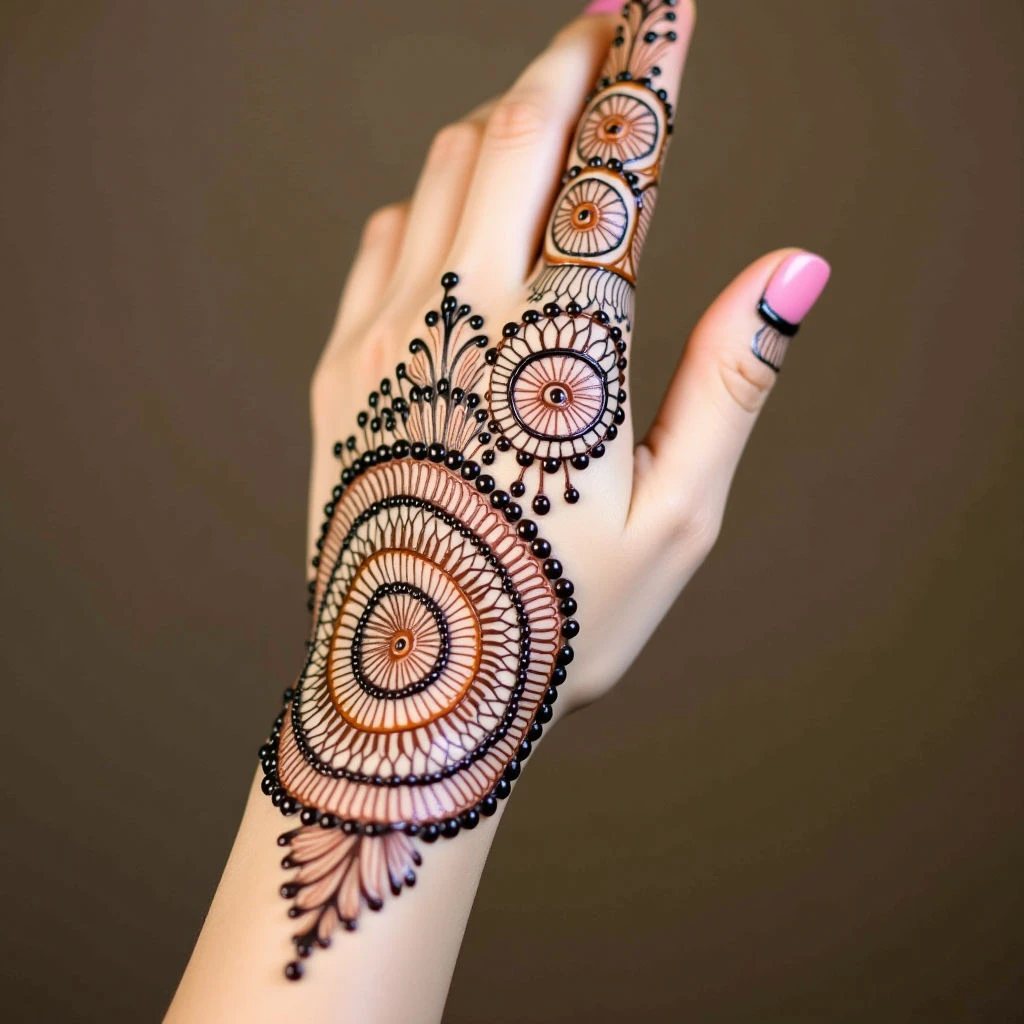
Mehndi, or henna as it's also known, is an ancient art form deeply woven into the cultures of South Asia, the Middle East, and Africa. It’s more than just decoration; these designs often carry blessings and wishes for good luck—a true celebration in visual form.
Popular Mehndi Styles
So, how many different types of mehndi designs are there? Quite a few! Let's break down some popular styles.
Indian/Traditional
These are probably what you picture first: intricate paisley (or mango) patterns, delicate floral motifs, and detailed line work. They often cover the hands and feet completely.
Rajasthani
A sub-style of Indian mehndi, Rajasthani designs are exceptionally elaborate. Think bold lines and dense patterns—often featuring animals like camels or peacocks.
Pakistani
Similar to Indian styles, Pakistani mehndi often uses a darker henna paste for a richer stain. While they can be quite detailed, you'll also find simpler, more elegant patterns.
Arabic (or Moroccan)
Arabic designs are characterized by larger floral and vine-like patterns that flow gracefully across the hand or foot. They tend to have fewer details than Indian styles, focusing instead on creating a visually striking overall effect—think graceful curves.
African
African mehndi incorporates bolder, geometric shapes inspired by tribal art. It's less about intricate detail and more about creating impactful imagery.
Gujarati
Known for its bold and symmetrical patterns that often extend to the wrists, Gujarati mehndi incorporates thick lines and striking motifs.
Modern/Fusion
This category is all about blending tradition with contemporary aesthetics. Expect minimalist designs, abstract shapes, or even personalized combinations of different styles.
Bridal Mehndi
A special type of Indian mehndi reserved for weddings, bridal designs are incredibly detailed and often cover a significant portion of the hands and feet. A darker stain is considered particularly auspicious.
The Meaning Behind the Designs
Many symbols are incorporated into mehndi designs, each with its own unique meaning. For example, paisleys traditionally represent fertility, while elephants symbolize strength and wisdom.