The echoes of ancient warriors seem to live on in the world of Viking rune tattoos. These weren't just symbols; they held deep meaning for Norse people—a connection between our world and something beyond.
Understanding Runes: A Glimpse into Norse Lore
The Elder Futhark contains 24 runes, each representing a concept or force. Think of Fehu—it embodies wealth and prosperity—or Thurisaz, which offers protection. These symbols were incredibly important; warriors would carve them into weapons and shields for safety, while others used them to tell stories or seek guidance.
Meaningful Designs for Men
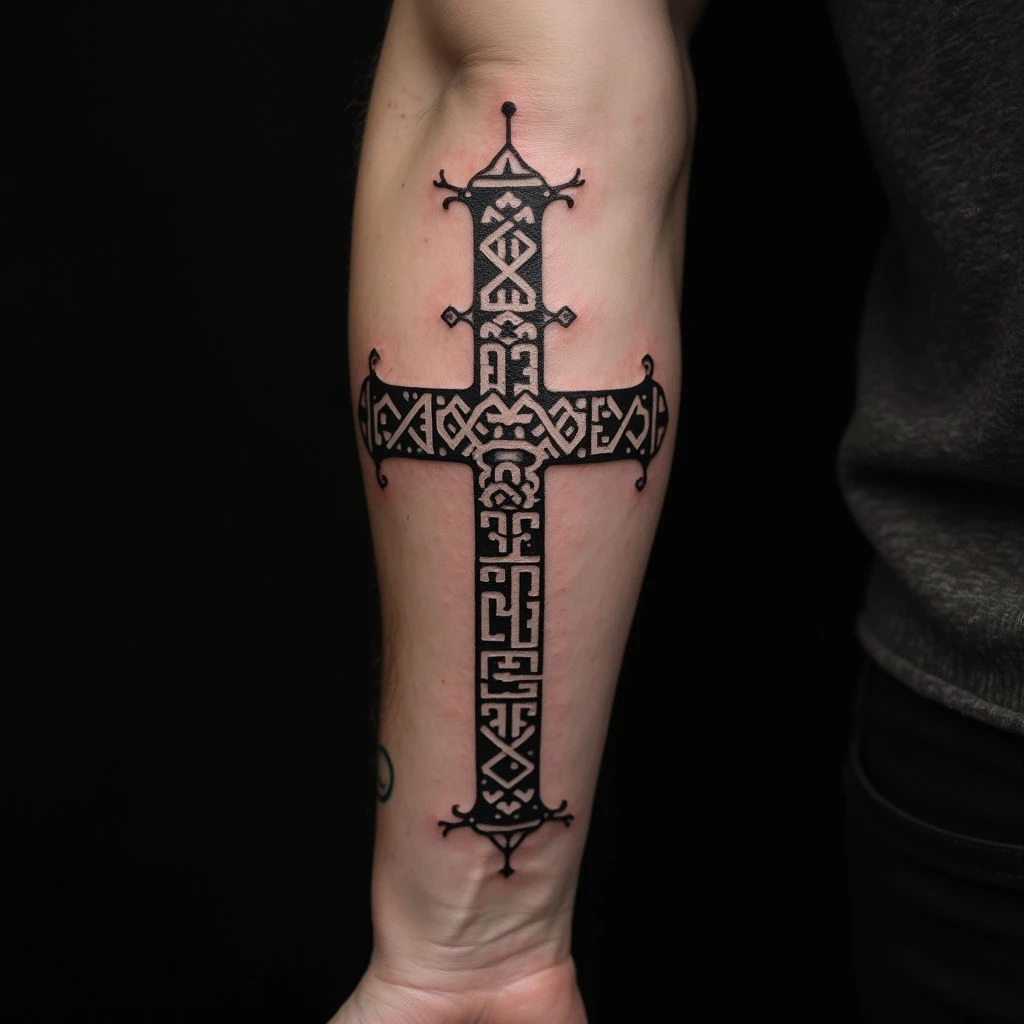
Let's explore some design ideas. A single rune can be a powerful statement—Algiz, symbolizing protection, or Ansuz, representing wisdom and communication, are popular choices. Placement often happens on the forearm, shoulder, or chest.
Single Rune Tattoos
A solitary rune makes for a striking image.
Rune Combinations
Combining runes lets you create more complex meanings. For instance, pairing Raido (journey) with Wunjo (joy) could represent a life filled with purpose and happiness—a pretty powerful message, wouldn't you say?
Runestone Tattoos
Replicating an entire runestone is visually impressive and historically accurate. These tend to be larger pieces, often suited for the back or thigh.
Placement Ideas for Maximum Impact
- Forearm: A classic spot, visible and flexible.
- Shoulder: Offers plenty of room for detail.
- Chest: A bolder choice, showing a strong connection to Norse heritage.
- Back: Perfect for larger runestone designs or intricate combinations.
Respecting the Tradition
It’s important to approach Viking runes with respect. Really dig into their meanings and consider talking to an artist who understands Norse symbolism—it's a powerful tradition.