
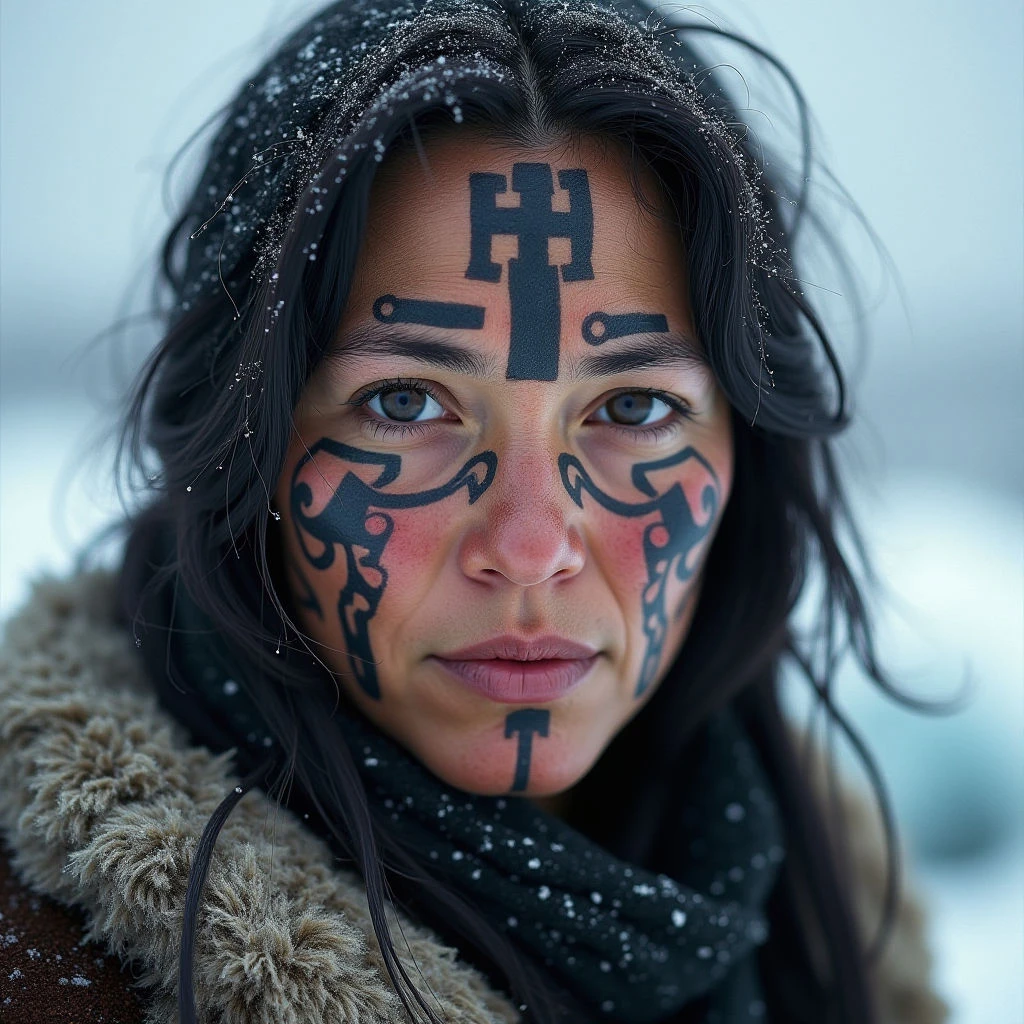
The practice of facial tattooing among Inuit peoples is a rich tradition—one that’s often misunderstood. It wasn't common everywhere, but where it existed, these markings held deep significance.
Historical Context
Facial tattoos were primarily a practice among women in certain Inuit communities, particularly in the Eastern Arctic—think Baffin Island and Greenland. They weren't just decoration; they served many purposes.
Why Facial Tattoos?
The reasons behind the practice varied across regions and time, but some common themes emerged. It’s fascinating to consider the different motivations.
Rite of Passage
Often, tattoos marked important life events—reaching adulthood, or demonstrating incredible resilience during difficult times. The process itself was undeniably painful, and enduring it showed strength and determination.
Spiritual Significance
Designs weren’t random; they were frequently connected to Inuit beliefs about spirits, animals like the polar bear or raven, and ancestors. Some saw them as protective charms—powerful amulets against harm.
Beauty and Status
While practical reasons often took precedence, facial tattoos also served as a form of adornment. The complexity and placement of the designs could even indicate social standing within a community.
Protection from Spirits
There was a belief that these markings offered protection against malevolent spirits—a tangible connection to the spiritual realm.
The Tattooing Process
Traditionally, the pigment was made from soot (charcoal) mixed with seal oil or fish fat. This mixture was applied using a needle crafted from bone or thorn and tapped gently with a piece of walrus tusk.
Decline and Revival
Sadly, European contact and the influence of missionaries led to the suppression of many Inuit traditions—including facial tattooing. But in recent years, there’s been a wonderful resurgence of interest; women are reclaiming this ancient practice as a powerful symbol of identity and connection to their ancestors.
Modern Meaning
Today, Inuit facial tattoos represent so much more than just markings on the skin. They’re statements of pride, acts of resistance, and a powerful way to reaffirm Indigenous culture—a link to the past and a commitment to preserving cultural heritage.