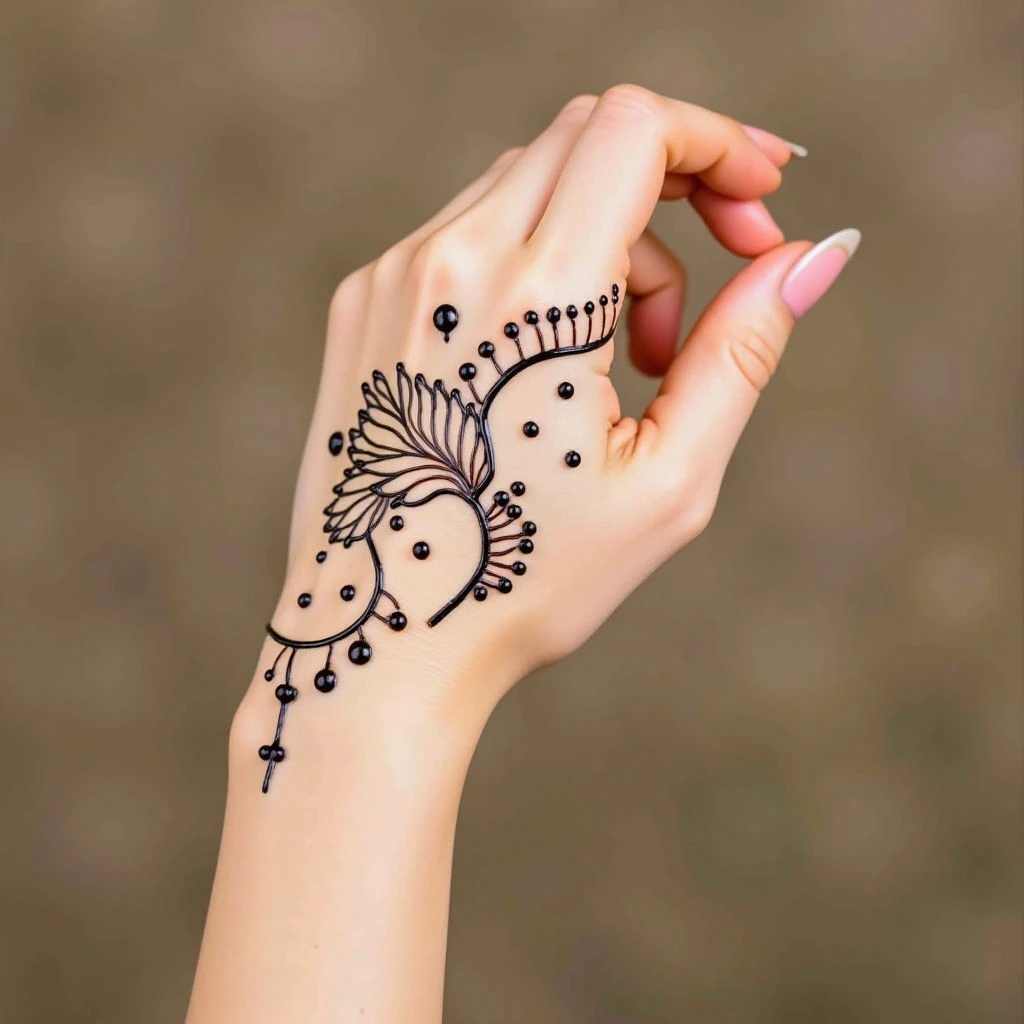
Mehndi, or henna, is a beautiful traditional art form used to create temporary body adornments. If you're just starting out, focusing on simple front hand designs is the smartest way to go. This guide will walk you through easy patterns that anyone can master.
Getting Started: The Essentials
Let's cover the basics before we dive into design ideas. Having the right tools and a little practice will make all the difference.
Your Toolkit
You’ll need a few key items: fresh, natural henna powder—this is crucial for vibrant results; a cone or bottle applicator (cones are generally easier to control); a small stick for precise application; and a mixture of lemon juice and sugar. The lemon/sugar helps prevent the henna from cracking as it dries.
A Little Practice Goes a Long Way
Begin with your non-dominant hand—it's less critical when you’re learning. Before applying henna directly to your skin, practice drawing on paper first. It really helps build confidence and control.
Simple Design Ideas You Can Try
Here are a few easy designs to get you started, progressing from the absolute simplest to slightly more involved patterns.
1. Dots and Circles
Seriously, this is the easiest starting point! Just create a pattern of dots and circles—vary their sizes to make it visually interesting.
2. Leaf Pattern
Draw some basic leaf shapes along your fingers or wrist, then connect them with simple lines. It’s a surprisingly elegant look.
3. Diagonal Lines
Create diagonal lines across your hand and add small dots or teardrop shapes between them for extra detail.
4. Petal Design
Clustered petal shapes are beautiful and forgiving—even if you make slight mistakes, they still look great.
5. Floral Border
A simple floral border along the edge of your hand is another easy and attractive option.
Tips for Beginner Success
Here are a few things to keep in mind as you’re learning:
- Don't rush the process! Take your time with each element.
- Use a reference image—there are tons of great examples online.
- Start by keeping your designs symmetrical; it makes them easier to execute.
- Darker henna tends to be less finicky and can be easier to work with.