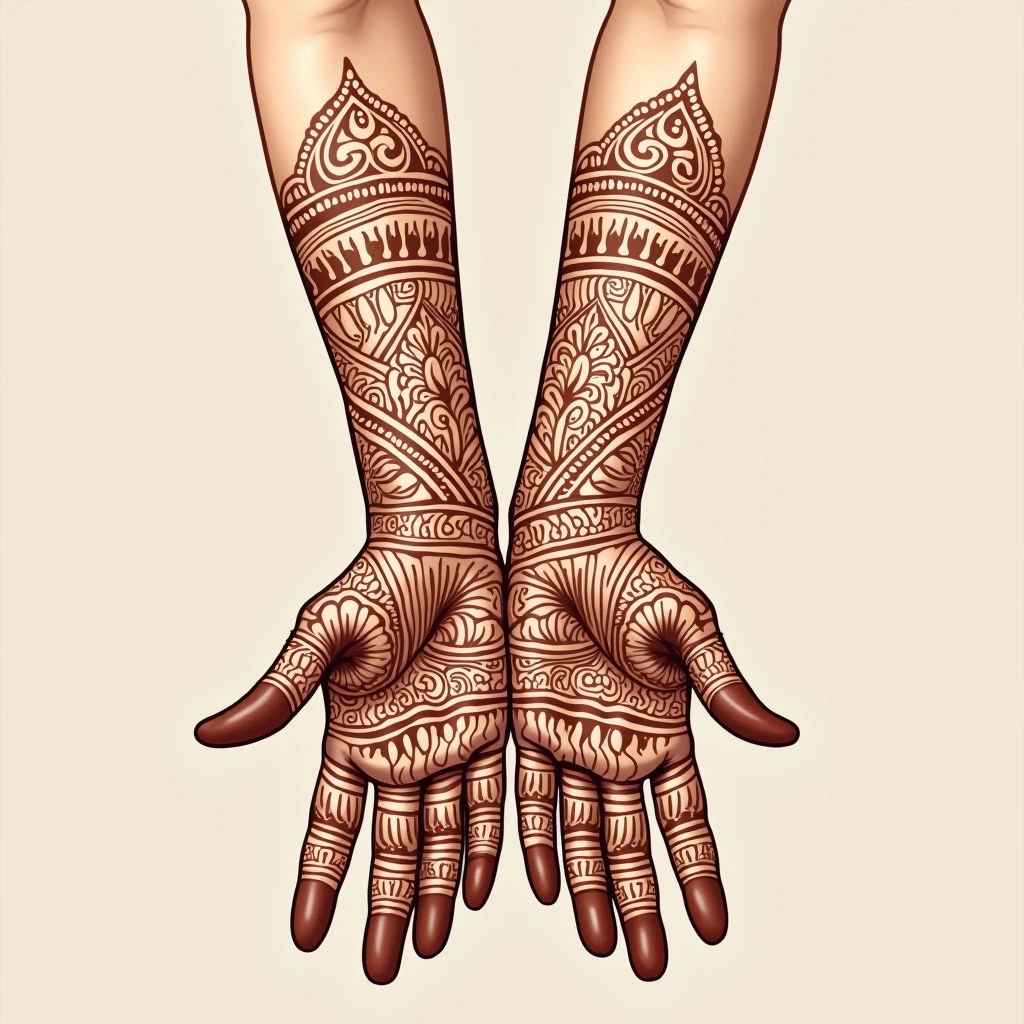
Henna designs aren't just beautiful temporary body art; they’re deeply rooted in history, culture, and symbolism. For centuries, communities across South Asia, Africa, and the Middle East have used henna to mark important life events—weddings, births, religious ceremonies, rites of passage—each application a meaningful tradition.
A History Etched in Tradition
The practice of adorning skin with henna stretches back thousands of years. While early examples suggest use in ancient Egypt, it's most closely linked to the Indian subcontinent and Arab cultures. Traditionally, these intricate designs were applied by skilled women, often passed down through generations.
Decoding the Symbols: What Do They Mean?
The symbols within a henna design aren't random; they carry specific meanings, adding layers of significance to each piece. Let’s look at some common motifs:
-
Paisleys (boteh)
These swirling shapes often represent fertility, abundance, and good luck. Their origins trace back to Persia, symbolizing life's journey. -
Floral Motifs
Flowers universally symbolize joy, happiness, and new beginnings. Specific flowers can carry even deeper cultural meaning—lotuses, for example, often represent enlightenment or purity. -
Geometric Patterns (Mandalas)
These intricate designs frequently signify the universe and spiritual harmony, appearing in various forms across different cultures. -
Animals & Birds
Elephants often symbolize strength, wisdom, and loyalty. Birds, on the other hand, represent freedom and good fortune.
Cultural Variations: A World of Meanings
The specific meanings behind henna designs can vary considerably depending on the region and community. In some cultures, a darker stain is considered more desirable—a sign of blessings and protection. Even where the design is placed on the body carries significance; hands and feet often symbolize blessing or connection to family.
Modern Interpretations: A Personal Touch
While traditional meanings remain important, modern artists are increasingly adapting henna designs with personal symbols or contemporary motifs. This allows individuals to express their unique identities and stories through this beautiful art form.