
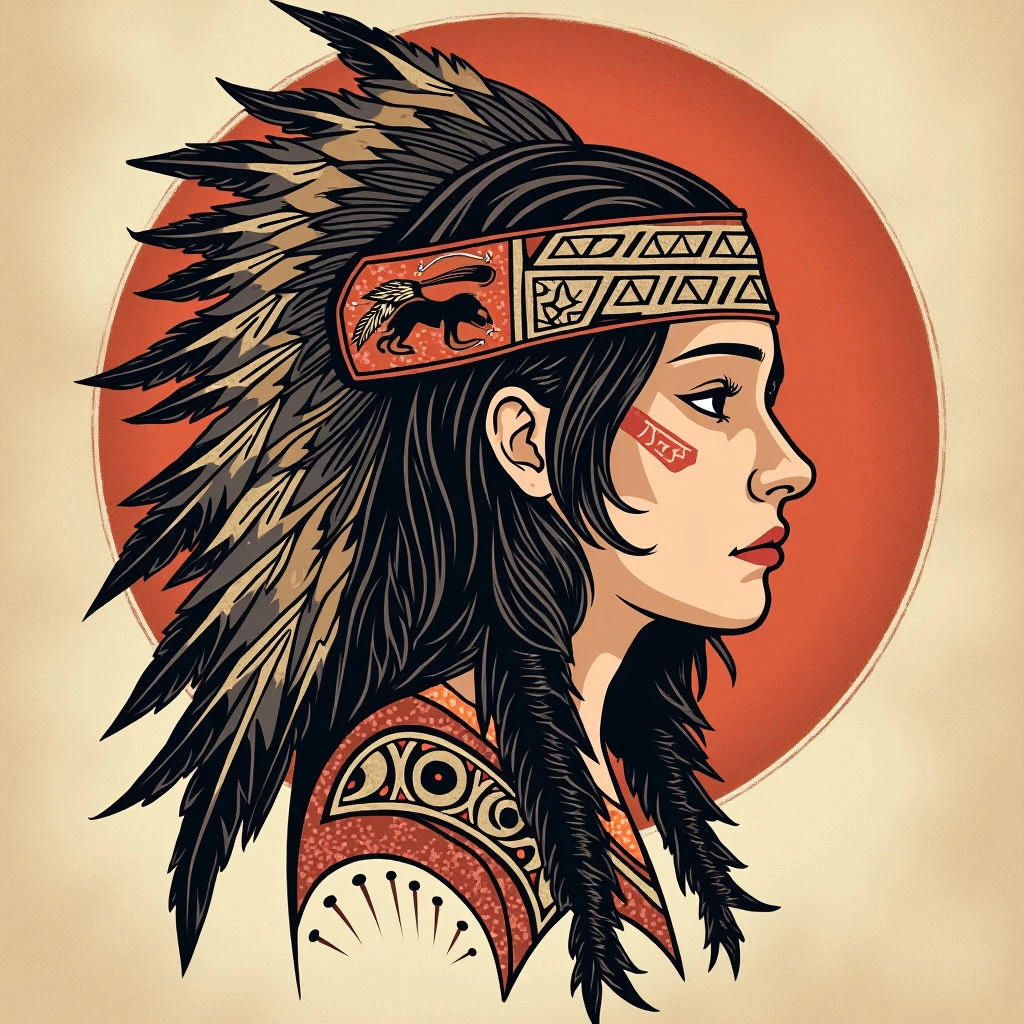
Historically, tattoo traditions among Native American cultures were deeply connected to spirituality, social status, and rites of passage. Head tattoos—though not common everywhere—held real significance when they appeared.
Understanding the Diversity
It's important to remember that "Native American" isn’t a single entity. It represents hundreds of distinct tribes, each with its own unique beliefs and practices. This means there's no universal meaning attached to these markings.
Symbolism and Tribal Variations
The designs themselves varied considerably. Some marked clan affiliation, while others celebrated achievements in warfare or profound spiritual experiences. Animal motifs were frequently used—an eagle for strength, a bear to signify courage, or a wolf representing loyalty – all conveying personal attributes and tribal identity. Facial markings could also indicate someone’s place within the tribe's social structure.
Historical Context: Colonial Impact
Sadly, these practices faced harsh suppression during colonization. Policies designed to erase cultural identities often outlawed traditional customs—including tattooing—leading to a heartbreaking loss of ancestral artistic traditions.
Respectful Representation Today
For contemporary artists wanting to incorporate Native American motifs, deep respect and sensitivity are essential. It’s crucial to consult with tribal elders or knowledge keepers—avoiding appropriation, which is the adoption of cultural elements without understanding or respecting their original context.